
The complete guide
How to Choose a Countertop Wine Rack That Actually Fits Your Kitchen
The problem with keeping wine on the counter
Wine has a habit of outgrowing wherever you put it. You buy a mixed six, someone brings two bottles to dinner, you grab a case on special, and suddenly there are bottles standing on the floor next to the pantry. Standing them up is the default, because it is easy. It is also the least space-efficient way to store wine, and it is bad news for corks over time.
The other problem is movement. Loose bottles on a counter get bumped. They roll toward the edge when you open a drawer below. Anyone who has caught a bottle mid-fall knows the feeling.
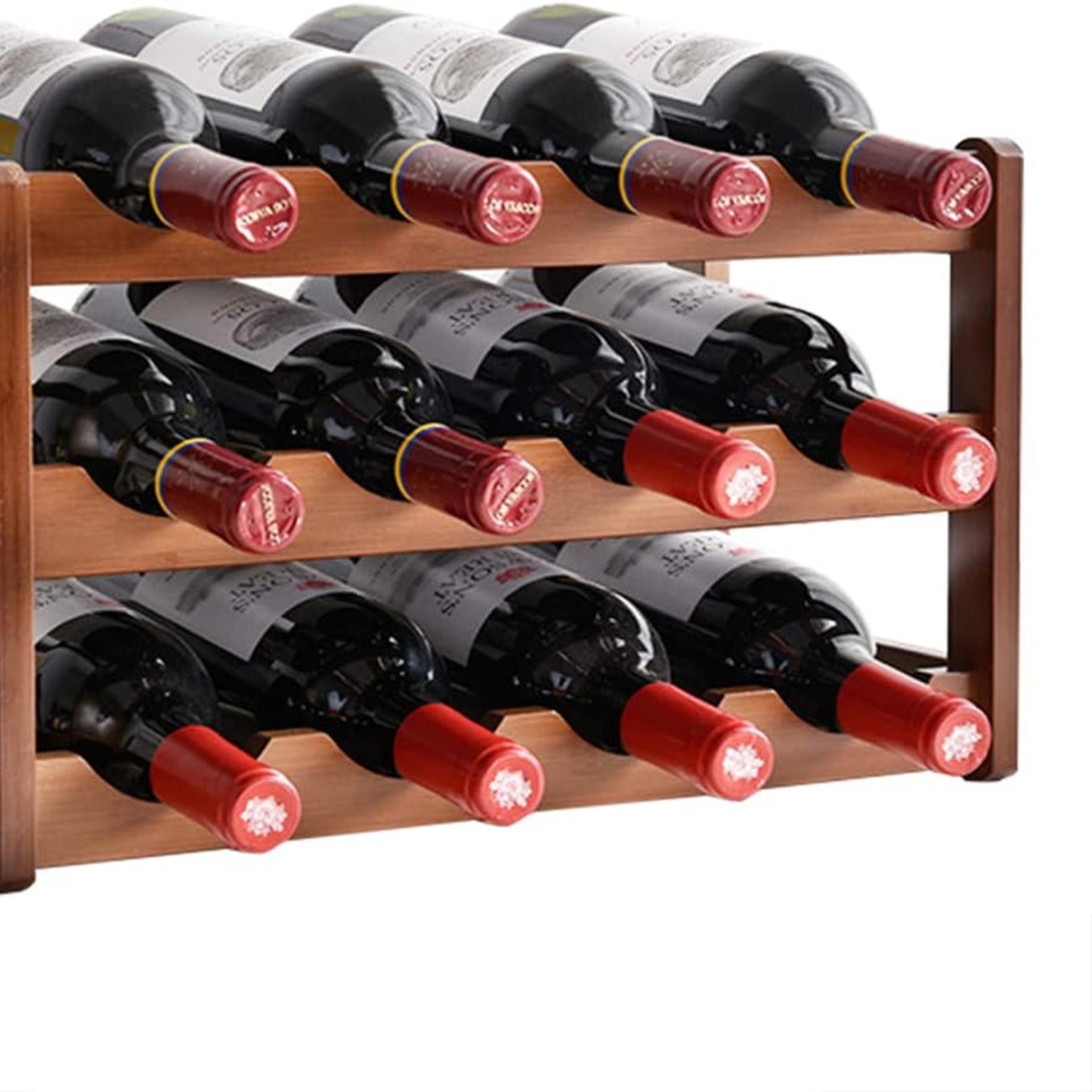
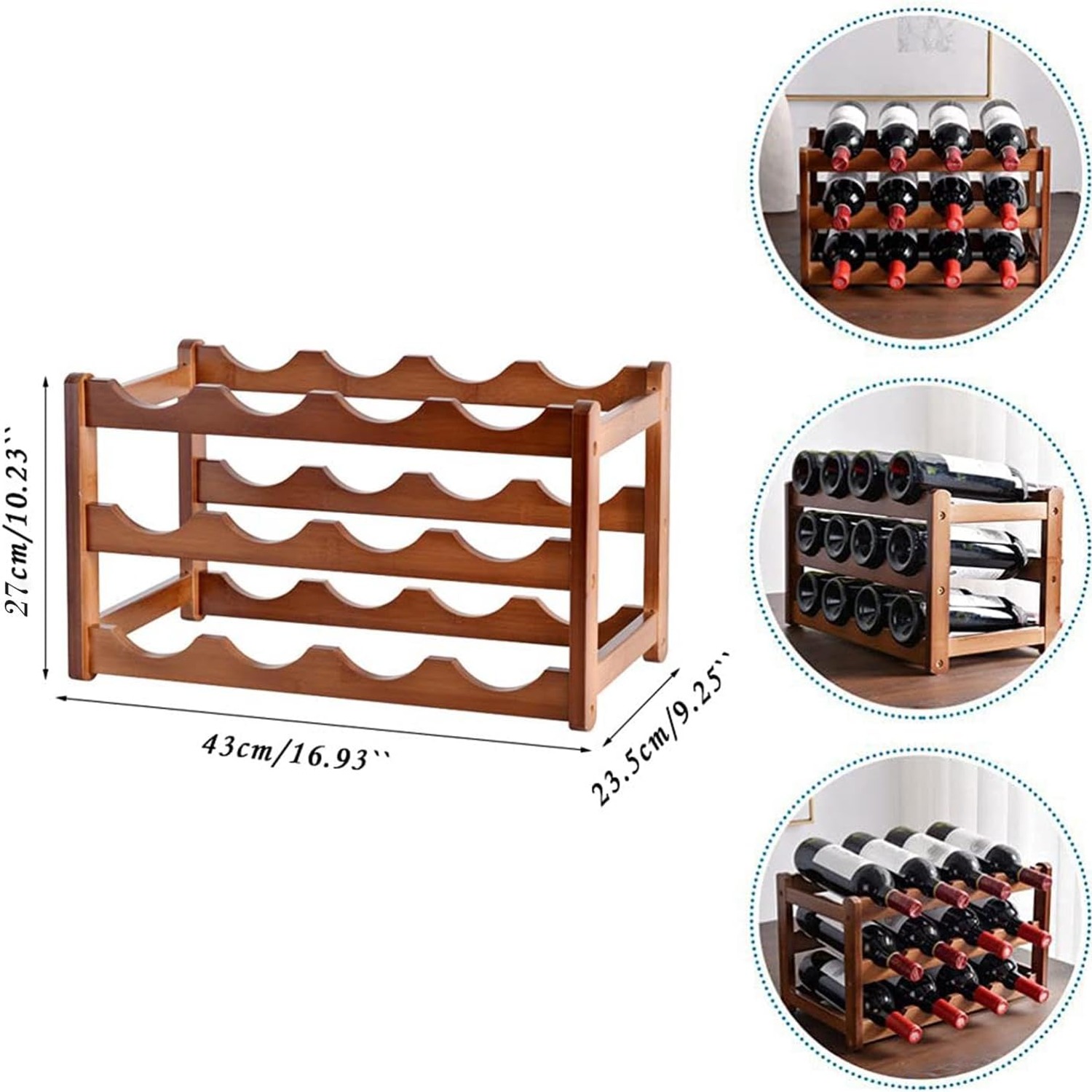
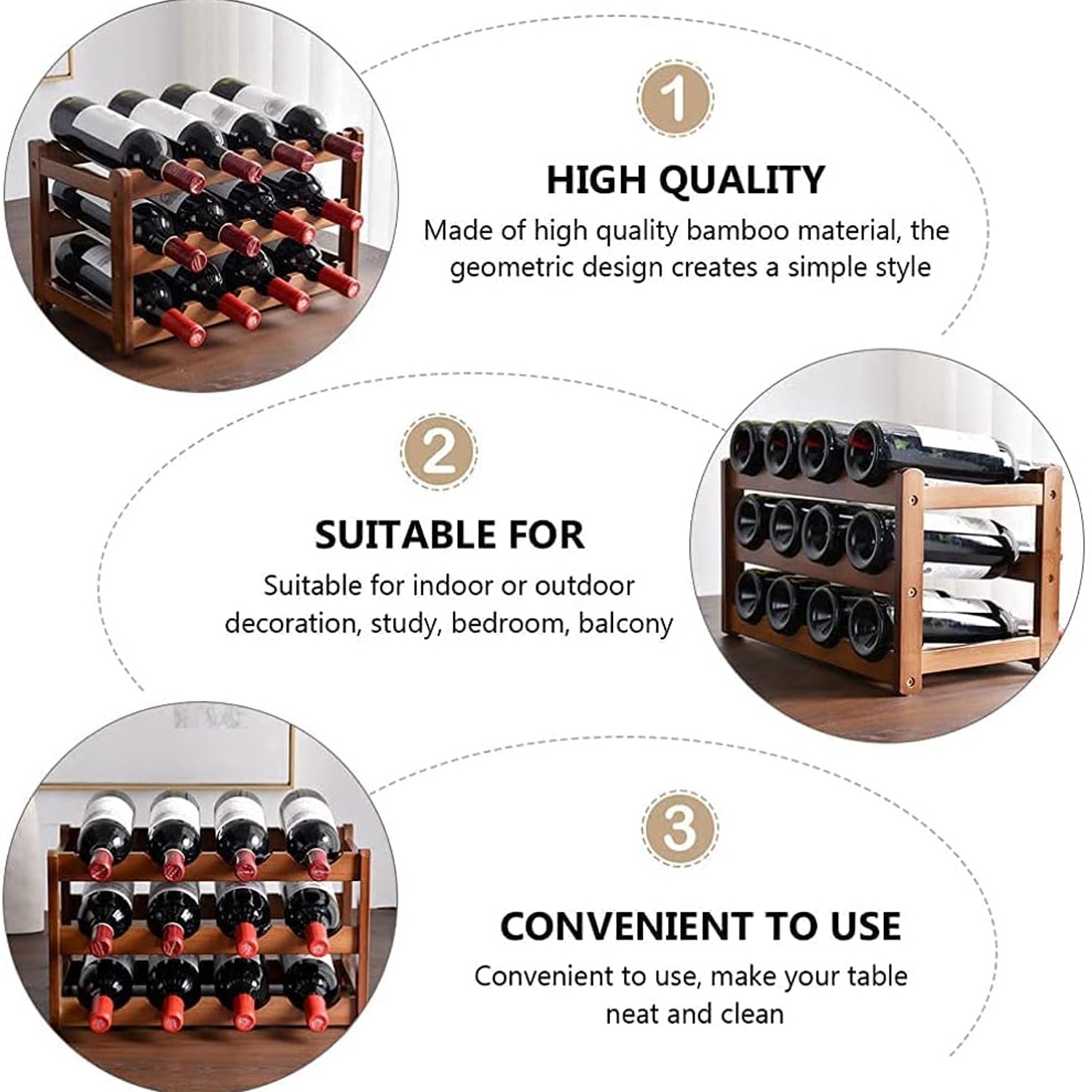
A countertop rack fixes both problems at once. It gives every bottle a defined slot, it stacks them in layers so twelve bottles take up the floor area of four, and it keeps everything lying flat where corks stay moist. The bamboo rack on this page does that in 43cm of counter width and 23.5cm of depth.
How this rack works
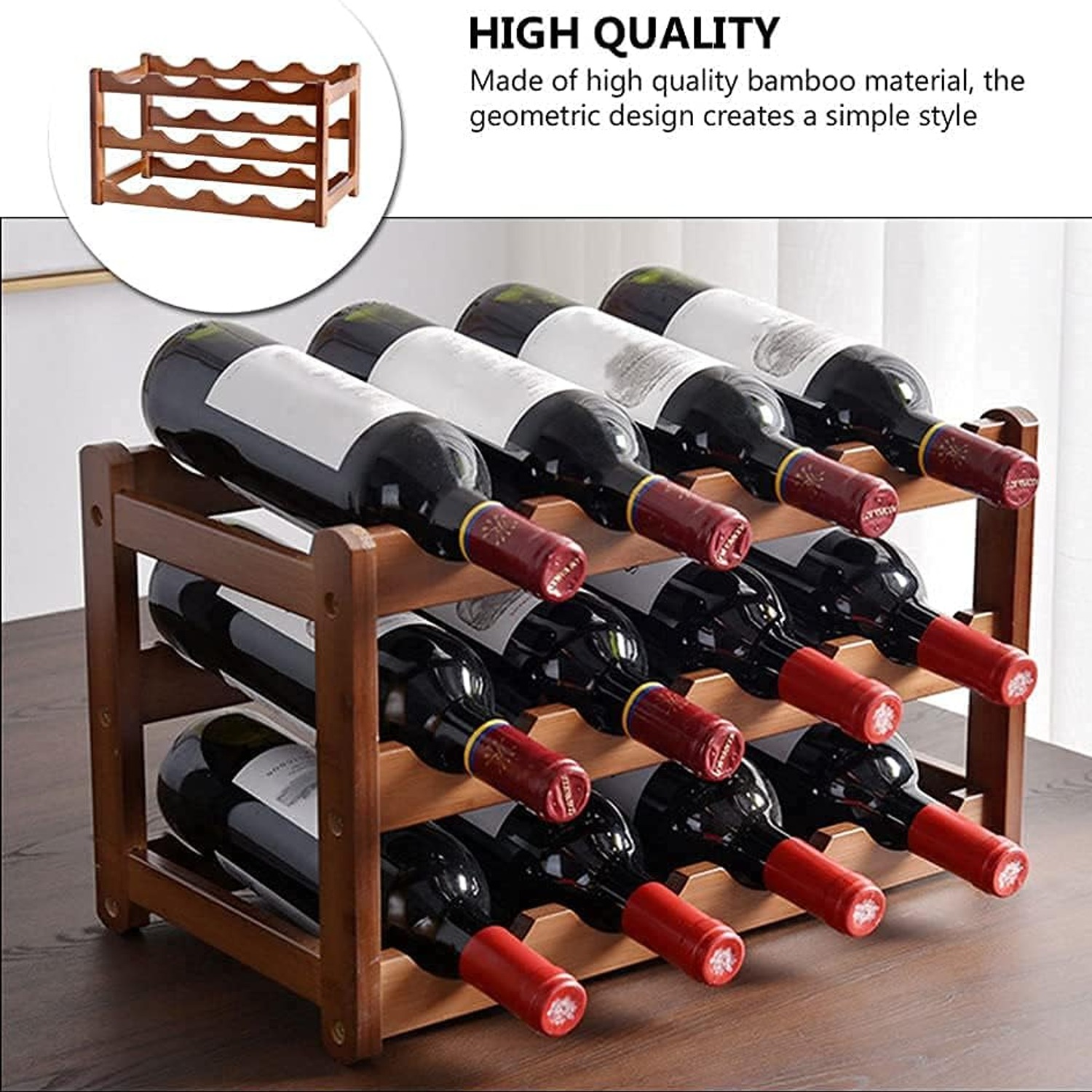
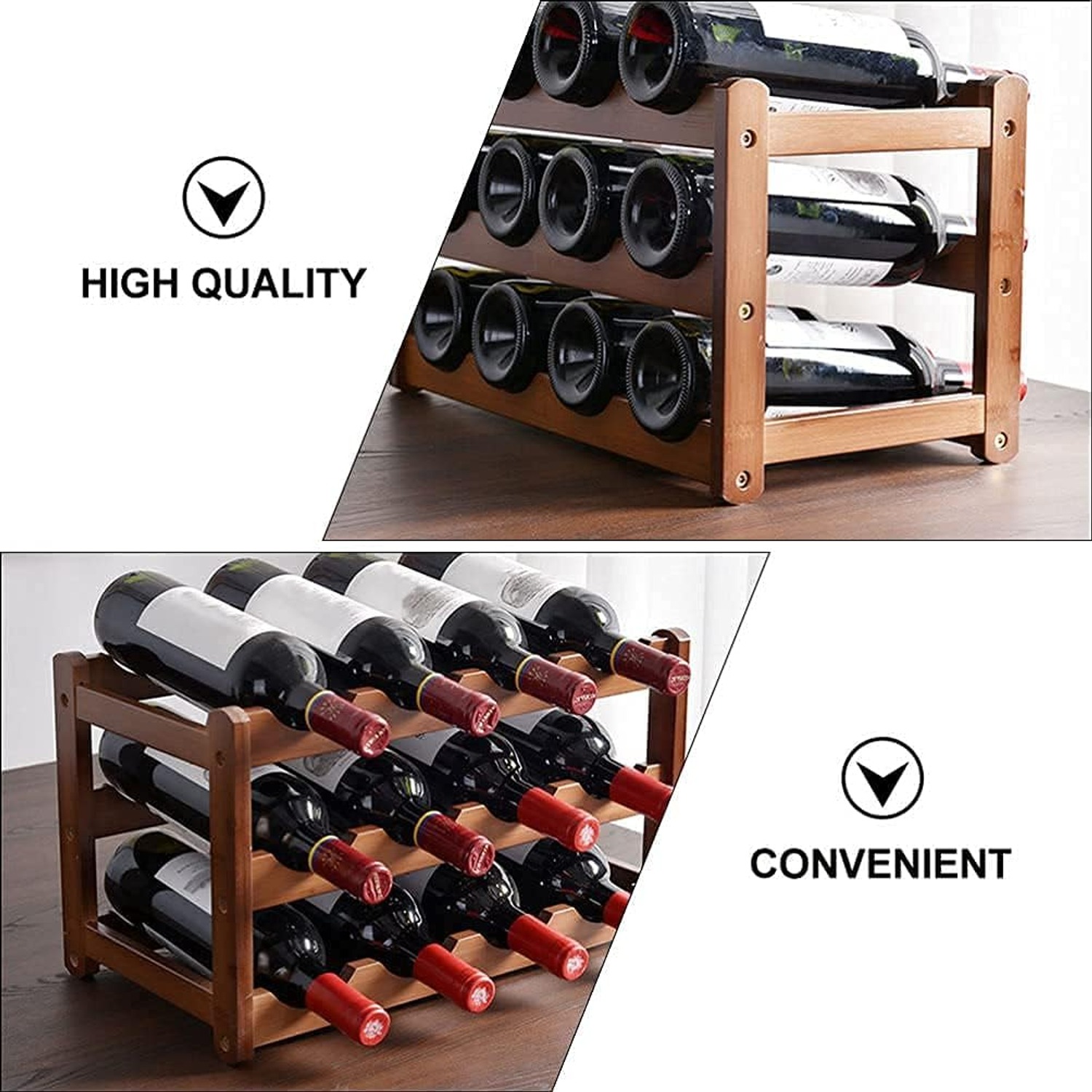
The design is simple on purpose. Three bamboo tiers, four bottles per tier, twelve bottles in total. Each shelf is cut with a wavy profile, so bottles nestle into dips rather than resting on a flat plank. That shape is what stops them drifting sideways when you pull one out.
The frame goes together with locating pins that interlock at each connection point. This is the detail that matters most in a flat-pack rack. Pins keep the joints aligned so the structure stays square under load, which is what separates a rack that feels solid from one that racks and sways every time you reach for a bottle.
The bamboo has a painted finish and the edges are smoothed off. Assembled, the rack stands 27cm tall and weighs 1.1 kilograms. Twelve full bottles are a different story, roughly fifteen kilograms, so the surface underneath needs to be up to it. A kitchen counter, a solid sideboard or a sturdy buffet are all fine. A flimsy folding table is not.
Why flat storage is worth it
If a bottle has a cork, lying it down is the right call. The wine stays in contact with the cork, the cork stays swollen, and the seal holds. Stand that same bottle upright for a year and the cork slowly dries, shrinks and lets air in. Oxidised wine is a sad thing to open.
Screwcap bottles do not care. The seal is mechanical and it works in any position. You still get the space saving from lying them down, and you still get to read the labels at a glance, so there is no reason to treat them differently.
Most people end up with a mix. The nice thing about an open rack is that you can see the whole lineup, so the bottle you have been meaning to drink does not disappear behind the everyday ones.
Who this suits
This rack makes sense if you keep somewhere between six and twelve bottles at home and you want them visible and organized rather than hidden in a cupboard. Renters like it because there is nothing to mount or drill. It sits on a surface and moves with you.
It also suits people who entertain at home. Having twelve bottles out on the sideboard during a dinner party saves a lot of back-and-forth to the kitchen, and it doubles as part of the table setting. A compact wine rack does more work on a night like that than a cupboard ever will.
Where it is less suited is serious long-term cellaring. If you are laying bottles down for five or ten years, you want cool, dark, stable conditions, and a kitchen counter is none of those. Think of this as everyday storage for the wine you plan to drink in the next few months.
Choosing the right size and spot
Depth is the number people forget. A standard kitchen counter is usually around 60cm deep, and most of that is working space. At 23.5cm, this rack leaves you plenty of room in front. Measure the depth from splashback to counter edge before you order, and then measure the width of the gap you have in mind.
Height matters too if you are putting it under an overhead cupboard. At 27cm it clears most, but check. You also need room above to lift a bottle out of the top tier, which takes a few extra centimeters of clearance.
Think about the environment as well. Heat and light are the two enemies of wine. Keep the rack away from the oven, the dishwasher vent and any window that gets strong afternoon sun. Steam is bad for the bamboo as well as the wine, so avoid the spot directly beside the kettle. A shaded corner of the counter or a sideboard in a cooler room is ideal for a freestanding wine rack.
If you want more capacity later, the design stacks, so a second rack can sit on top. Load the lower one first and keep the stack against a wall.
Putting it together
Flat-pack has a bad reputation, mostly earned by furniture with forty screws and a cryptic diagram. This is not that. The parts fit together using locating pins, and the sequence is logical once the pieces are laid out.
Work on a flat surface with a cloth underneath to protect the bamboo. Lay out all the pieces first and match them against the instructions before you start joining anything. If a joint feels tight, check the orientation rather than forcing it. Bamboo is strong but it will split if you fight it.
Once it is together, set it in position before loading. Moving a full rack is awkward and it puts stress on joints that were never meant to carry a load sideways. Load from the bottom tier up, which keeps the center of gravity low.
Looking after it
Care is genuinely easy. Wipe it with a dry cloth when it gets dusty. If wine or oil drips, use a barely damp cloth and dry straight afterward. The thing to avoid is leaving moisture sitting on the bamboo, because that is what causes swelling and lifting of the finish over time.
Never put it in the dishwasher and skip bleach, ammonia and solvent cleaners. They strip the finish and dull the surface.
Every few months, give the joints a quick check. If the rack has been moved around or reloaded a lot, a pin can work slightly loose. Press it back home and you are done. That small habit keeps a wooden rack solid for years.
The short version
Twelve bottles, three tiers, bamboo, 43 x 23.5 x 27cm, 1.1 kilograms, flat pack. It sits on a counter or sideboard, lays bottles flat so corks stay moist, and keeps everything visible instead of buried in a cupboard.
Measure your counter depth first. Keep it out of the sun and away from steam. Wipe it dry, check the joints now and then, and it will quietly do its job every day. If you buy wine faster than you drink it, this is the kind of small fix that makes the kitchen feel organized again.