



The complete guide
How To Choose A Countertop Wine Rack That Actually Fits Your Kitchen
The problem with a growing wine collection
Nobody plans to store wine badly. It just happens. You buy three bottles because they were on special, someone brings two to dinner, you hold on to a nice one for a birthday, and before long there are bottles in a cupboard, bottles on the floor beside the fridge, and one lying on its side behind the cereal.
The problem is not really storage. It is that bottles standing upright in a cupboard are invisible. You forget what you have, you buy duplicates, and the good bottle you were saving gets opened on a Tuesday because it was the only one you could find.
A countertop wine rack fixes the visibility problem first and the tidiness problem second. Nine bottles sitting in a honeycomb frame on the counter are nine bottles you can see, count and choose from. That alone changes how you drink your own collection.
How a honeycomb countertop rack works
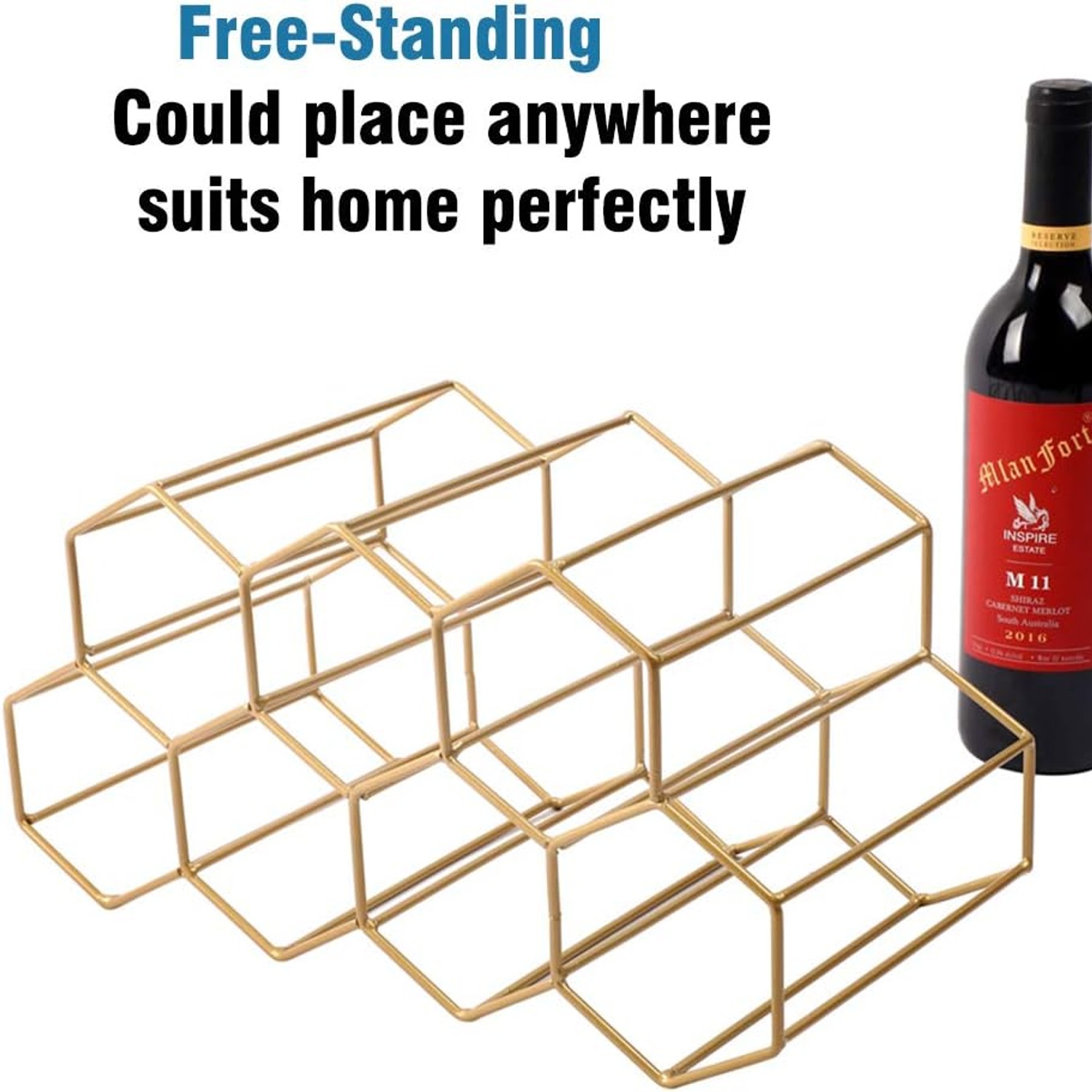
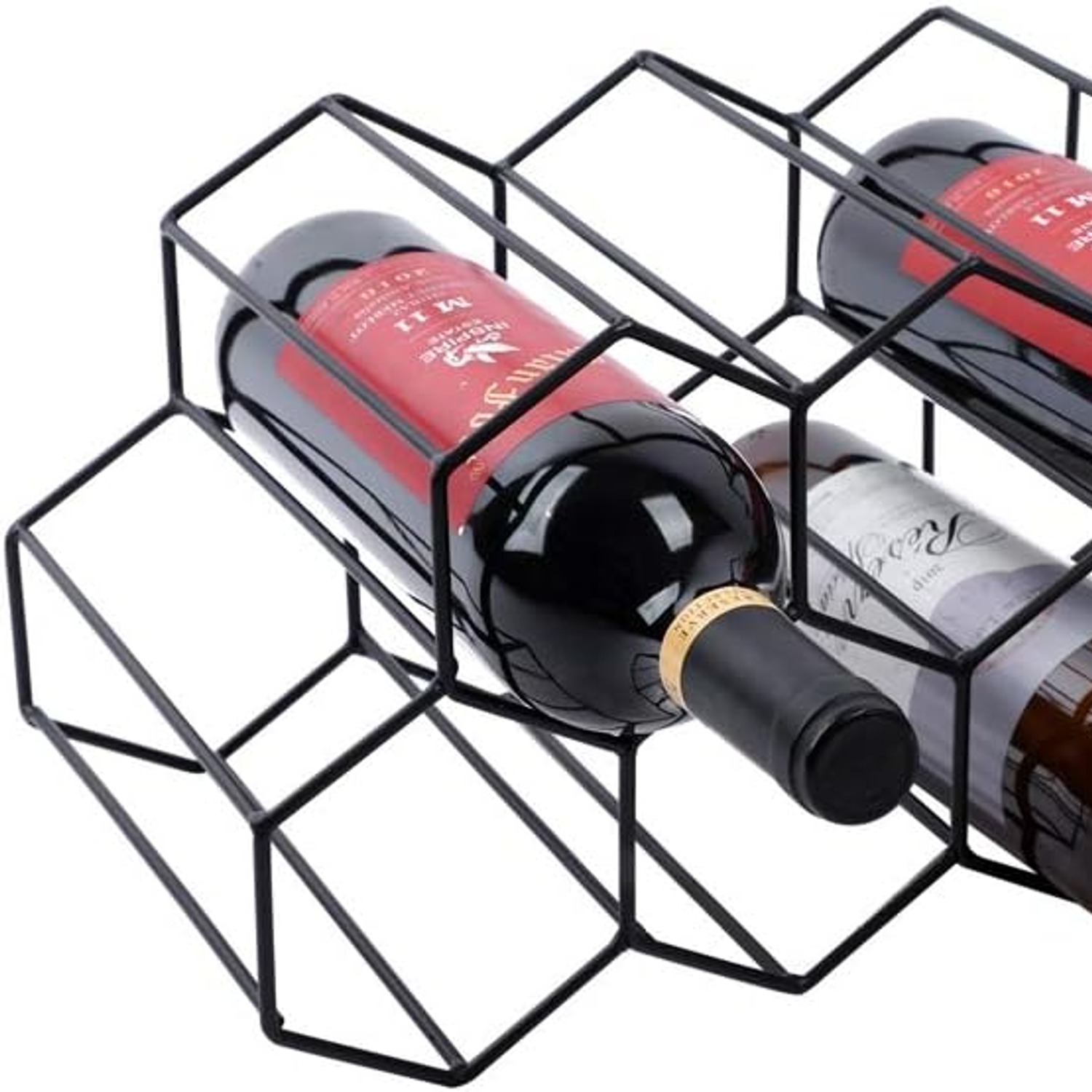
The design here is simple on purpose. A metal frame holds a cluster of hexagonal openings, each sized to cradle a bottle on its side. Bottles slide in from the front and sit with their necks out, so labels face you. Seven bottles live inside the frame. Two more sit in the cradle formed across the top, which is handy for taller or heavier bottles that do not seat perfectly in a cell.
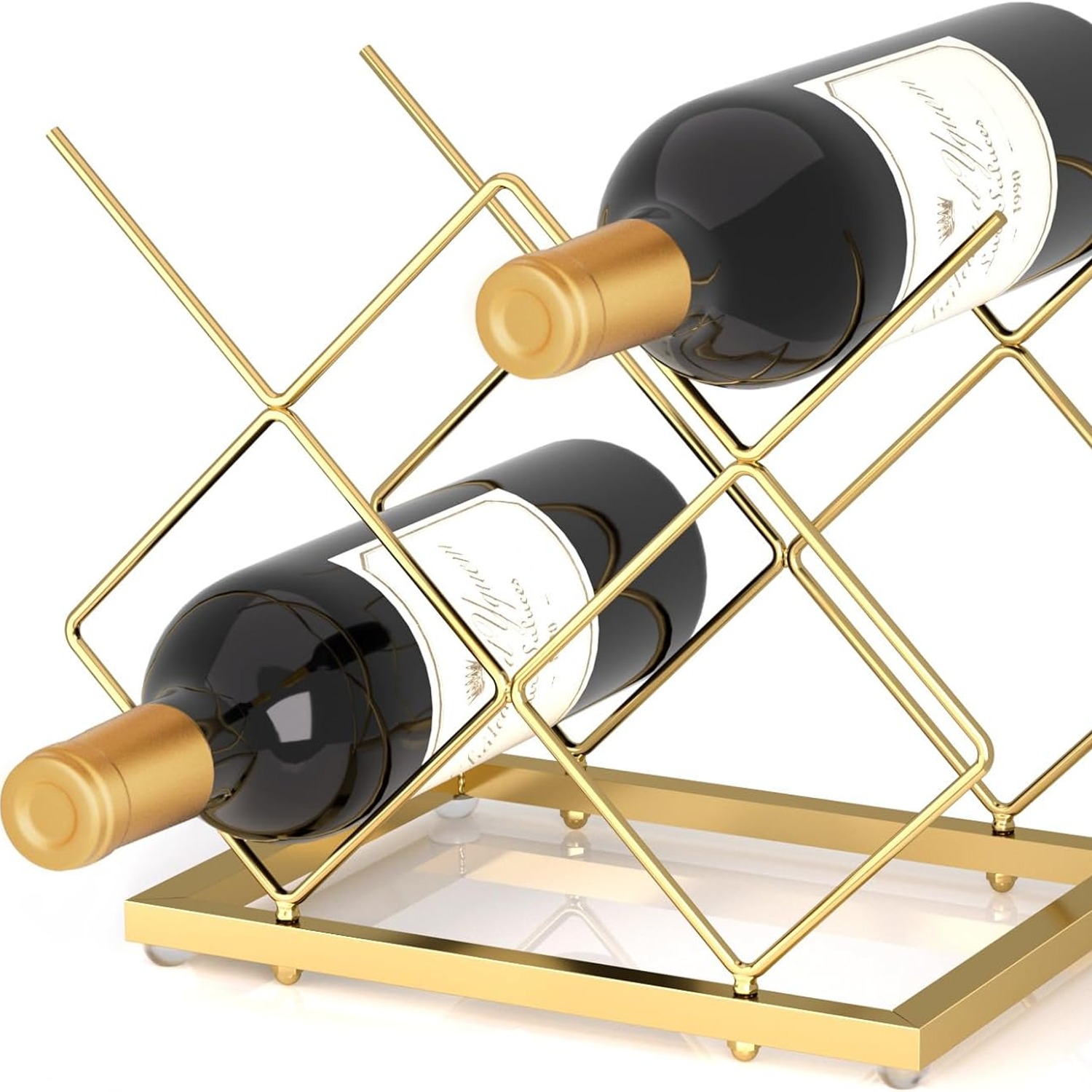
Storing bottles horizontally is not just a styling choice. Corks need contact with the wine to stay swollen and sealed. A dry cork lets air creep in, and air is what turns a good bottle into vinegar. If your wine has a screw cap, the angle matters less, but horizontal storage still saves vertical space, which is the whole point on a kitchen counter.
The brushed gold finish is worth a mention because it behaves differently to polished metal. Brushed surfaces scatter light rather than reflecting it, so fingerprints and small marks are far less obvious. In a kitchen, where things get touched constantly, that is a practical advantage dressed up as a design choice.
Who this suits
This rack makes most sense for people with more wine than space. Apartment kitchens, rentals where you cannot install shelving, galley kitchens where every centimeter of counter is contested. Nine bottles is a realistic working collection for most households, enough to have options without turning your kitchen into a cellar.
It also suits people building a small home bar. Sitting the rack on a sideboard or the lower shelf of a bar cart gives you a visible bottle selection without committing to furniture. If you already have glassware hanging or a tray of spirits, a warm metal rack ties the arrangement together.
Collectors with fifty bottles and a dedicated cellar are not the audience. Neither is anyone needing temperature control, since this is a rack and not a cooler. But if you buy wine to drink over the coming weeks and months rather than to age for a decade, a counter rack covers the job.
Measuring before you buy
This is where most countertop rack purchases go wrong. People check the width and forget the height.
The rack is 36.8cm wide, 19.3cm deep and 19.3cm tall. Three numbers, all of which matter.
Width is usually the easiest. Find a clear stretch of counter or shelf and make sure you have 36.8cm plus a little breathing room on either side so it does not look wedged in.
Depth matters if you are putting it on a shelf. Many kitchen shelves and bar cart tiers run 20 to 25cm deep, so 19.3cm fits, but only just. Check that bottle necks protruding at the front are not going to catch on a cupboard door when it swings.
Height is the one that catches people out. The rack itself is 19.3cm, but bottles resting on the top cradle add more. If you are sliding this under overhead cabinets, measure from the countertop to the underside of the cabinet and allow around 30cm total to load the top comfortably.
A trick that saves disappointment: cut a piece of cardboard to 36.8 by 19.3 centimeters and sit it where you want the rack to go. Live with it for a day. You will know quickly whether that counter space was actually spare.
Metal versus timber versus plastic
Metal racks like this one have a few advantages. They are thin in profile, so a frame holding nine bottles takes less room than a timber equivalent. They do not absorb moisture or odours. And a brushed metal finish wipes clean in seconds, which matters more than you think once a bottle drips.
Timber racks look warmer and suit country or farmhouse kitchens, but they are bulkier for the same capacity and they can mark if wine spills and sits. Plastic racks are cheap and light, and they look it. For a piece that lives permanently on display in the kitchen, metal usually wins on the balance of looks, durability and footprint.
The other consideration is weight. At 748 grams empty, this rack is easy to lift when you want to wipe the counter underneath. Loaded with nine bottles it is a different story, around twelve kilograms all up, so unload before you move it.
Looking after it
Care is genuinely simple. Move the bottles, wipe the frame with a soft damp cloth, dry it. That is the manufacturer's instruction and it is enough for normal kitchen grime.
A few things to avoid. Skip abrasive scourers, because they will leave fine scratches that break up the even brushed grain. Skip bleach and oven cleaner. Avoid parking the rack directly beside the sink where it sits in splashes, or right next to a kettle that vents steam at it several times a day.
When you load and unload bottles, lift them clear rather than dragging the base of each bottle across the metal. Glass is harder than most finishes, and repeated dragging is the quickest way to wear a shiny line into a brushed surface.
If a bottle leaks or a cork weeps, clean it up the same day. Dried wine is sticky and takes more scrubbing than you want to be doing on a finished surface.
Getting the most out of nine spaces
A small rack rewards a bit of thought about what goes in it. Many people use the top cradle for whatever is next to be opened, and the lower cells for the rest. Others sort by color, reds on one side, whites on the other, so there is no hunting when guests arrive.
If you keep whites in the fridge, the rack becomes a red wine display with a couple of slots for the sparkling you keep on hand. That is fine. Nine spaces filled with bottles you actually intend to drink beats nine spaces half filled with bottles you are vaguely saving.
One habit worth building: when you open a bottle, replace it within a week. A rack with gaps looks neglected, and a full rack reminds you what you have before you reach for the same old favorite again.
The short version
If your wine is scattered around the kitchen and you want it visible, tidy and off the floor, a nine bottle countertop rack is the straightforward answer. This one is metal with a brushed gold finish, holds seven bottles in the frame plus two on top, needs no assembly, and takes up 36.8 by 19.3 centimeters of counter.
Measure first, especially the height clearance. Keep it away from steam and standing water. Wipe it with a damp cloth when it needs it. Do those things and it will sit there quietly doing its job for years, looking better than a cardboard box ever did.