

The complete guide
How To Choose A Countertop Wine Rack That Actually Fits Your Kitchen
The problem with loose bottles
Wine has a way of colonising a kitchen. One bottle on the counter from last weekend, two in the cupboard behind the pasta, one standing upright in the pantry where you forgot about it. None of them are stored properly, half of them are hard to see, and when you want a particular bottle you end up moving everything to find it.
A proper cellar solves this, but almost nobody has one. Most households have five bottles at a time, maybe eight at Christmas, and nowhere sensible to put them. That gap is exactly what a countertop rack fills. It is not furniture, it does not need a floor plan, and it takes a pile of loose bottles and turns it into one small, deliberate object.
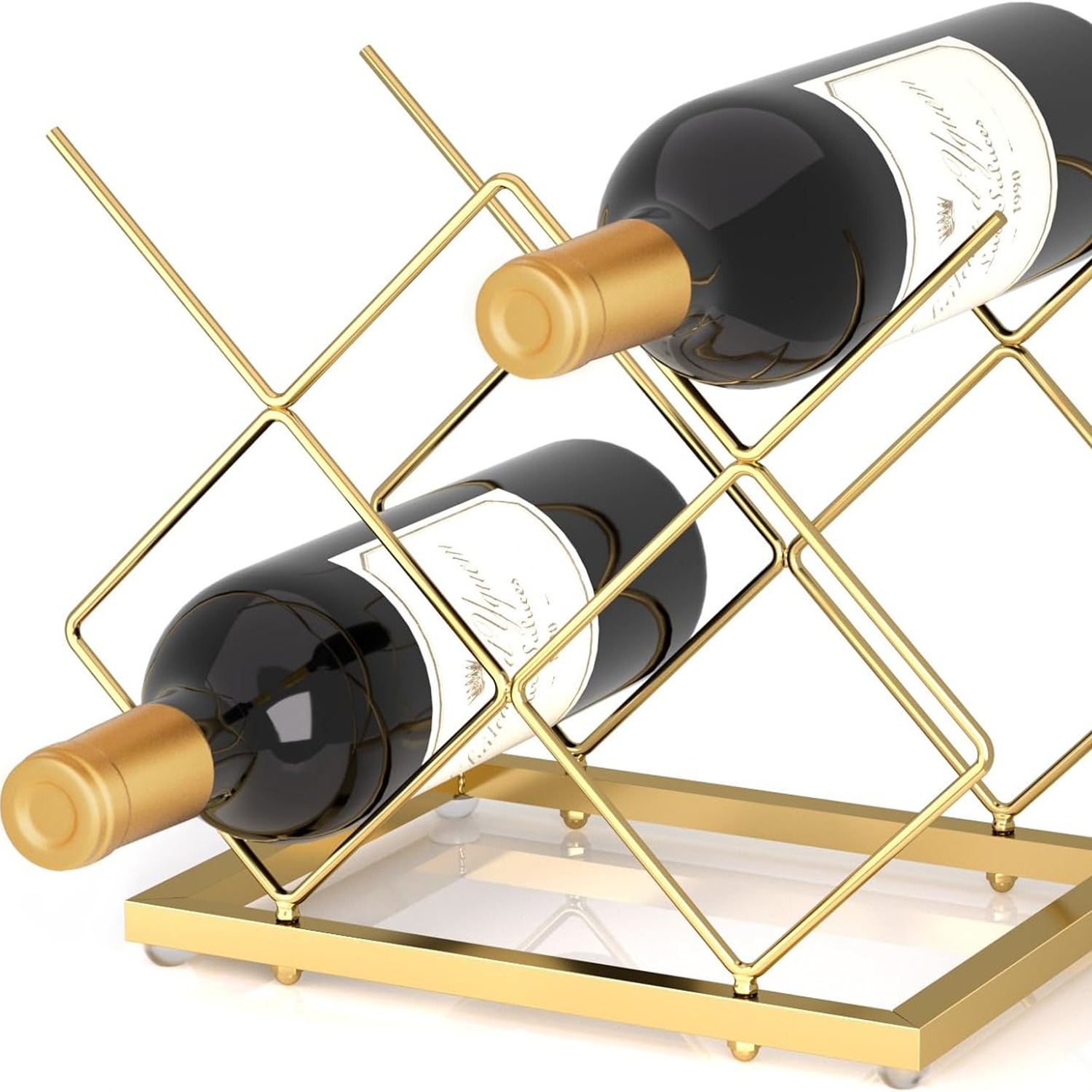
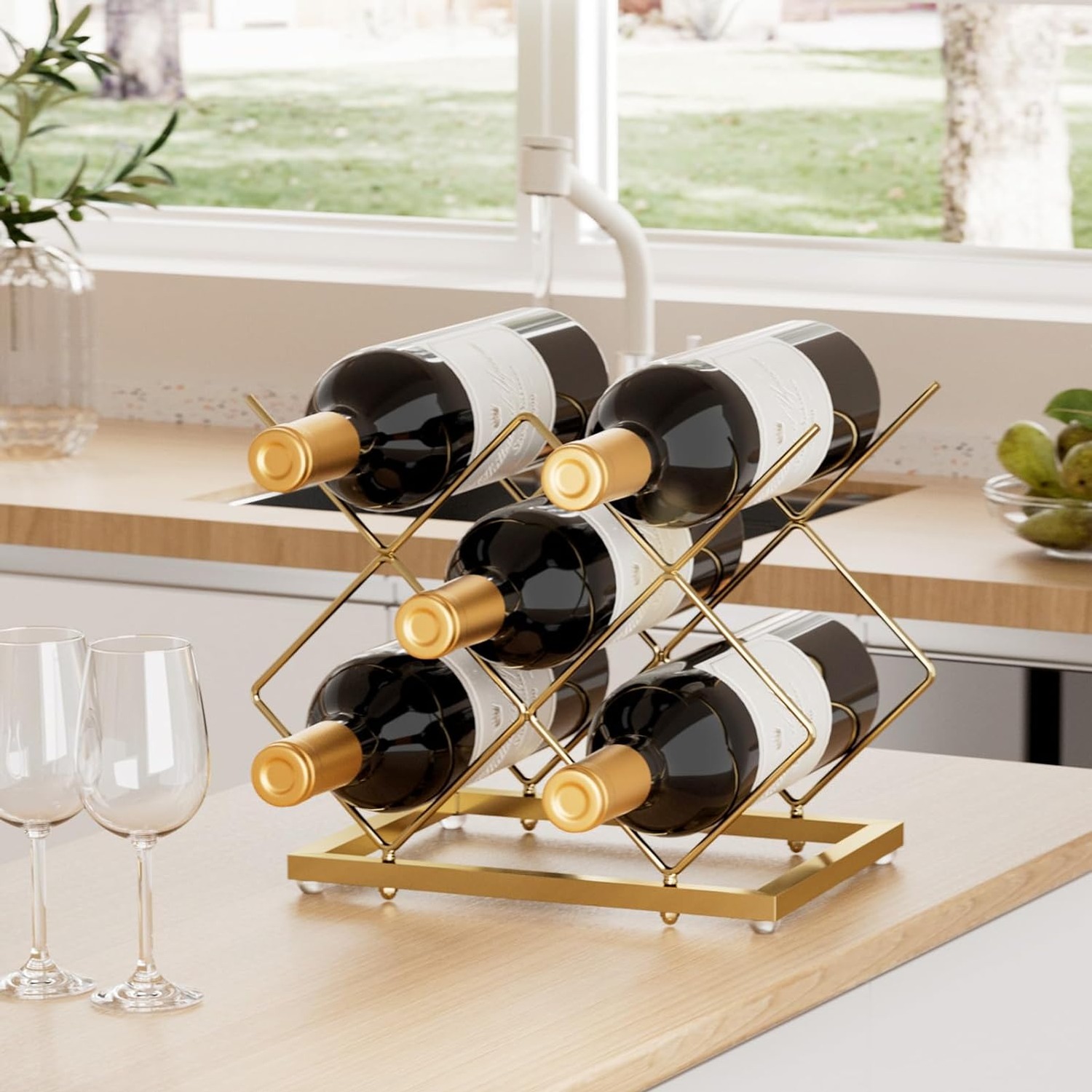
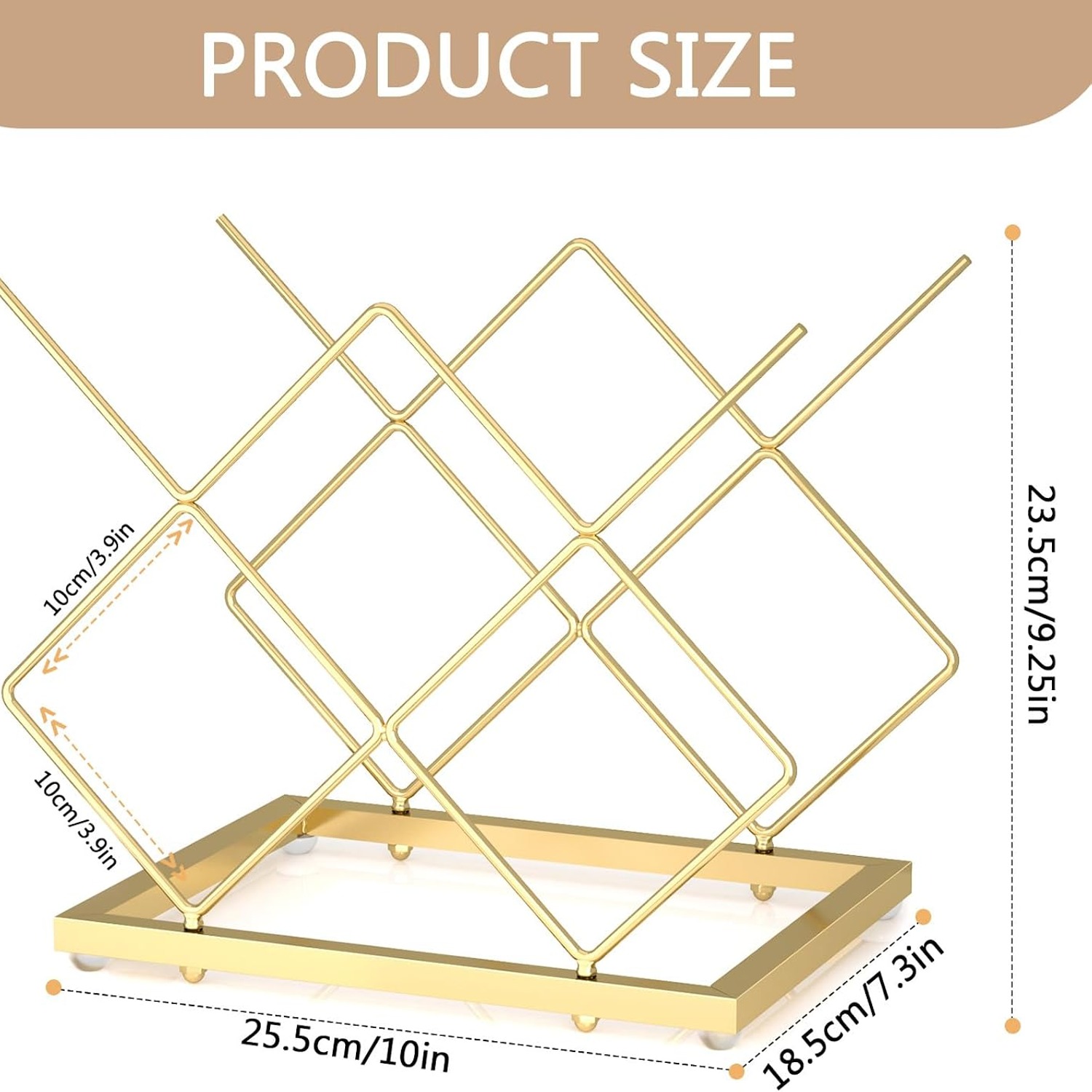
This particular rack holds five standard bottles in a hexagonal metal frame measuring 25.5 cm deep, 18.5 cm wide and 23.5 cm tall. It weighs 0.55 kg empty. Those numbers do a lot of work when you are deciding whether a rack suits your space, so we will come back to them.
How a countertop rack actually works
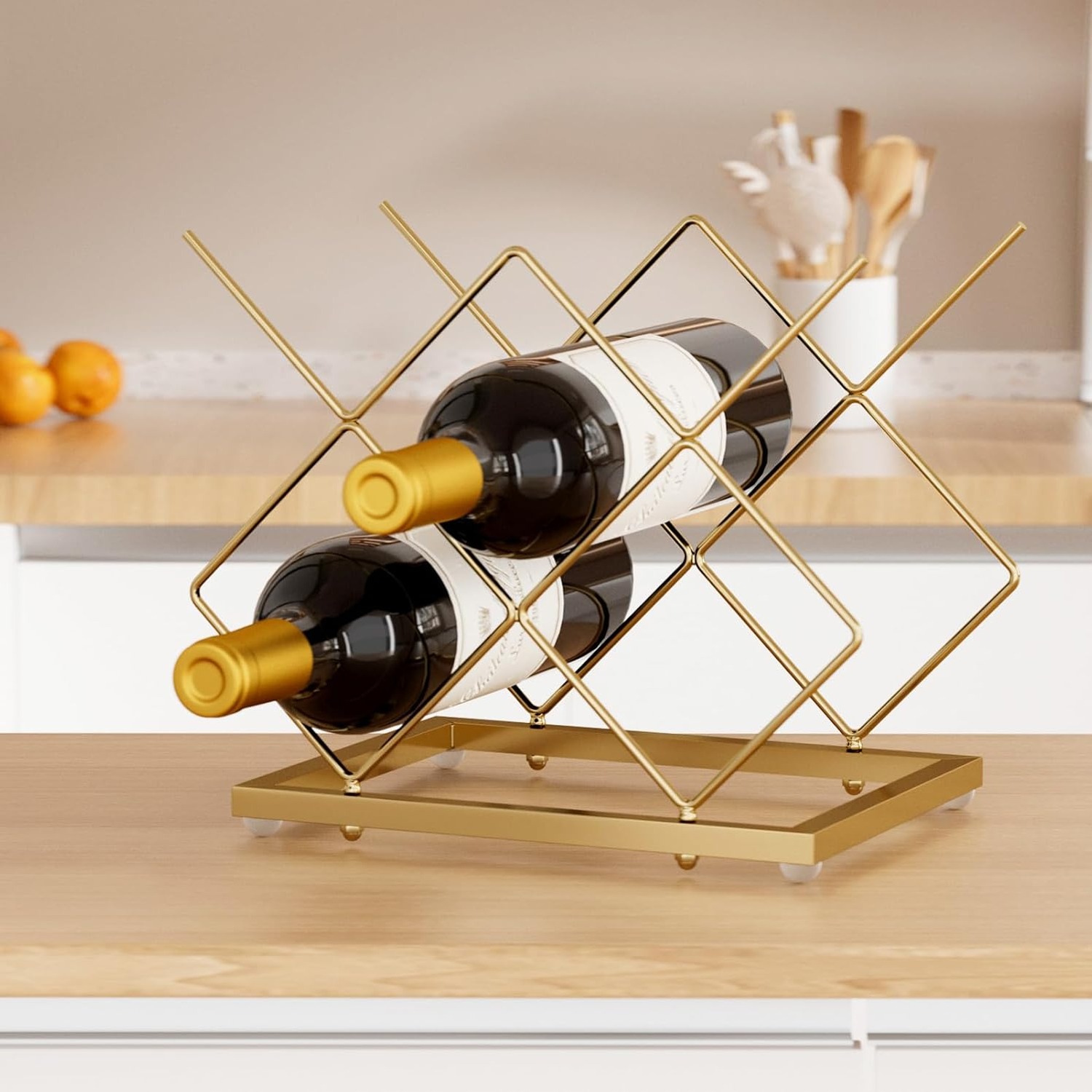
The mechanics are simple. Bottles lie on their sides in cradles formed by the frame, with the neck pointing out and the base resting towards the back. Gravity does the holding. The weight of the bottles pushes down into the frame, which is why a loaded rack is more stable than an empty one.
Lying the bottles down is not just about saving space, though it does that too. A horizontal bottle keeps wine in contact with the cork. A damp cork stays swollen and keeps its seal. A dry cork shrinks, lets air past, and the wine inside slowly turns dull and then vinegary. If you are drinking a bottle within a week, none of this matters much. If bottles sit for a few months, it matters a lot. Screw caps are immune to the problem, but horizontal storage does them no harm either.
The second benefit of lying bottles down is visibility. Labels face you. You can see your whole small collection at a glance instead of pulling bottles out one by one to read them. For anyone who keeps a mix of reds, whites and the occasional gift bottle, that alone changes how often you actually drink what you own.
Who this suits
A five-bottle rack suits people whose wine habit is real but not ambitious. If you buy a few bottles when you shop, keep a backup red for guests, and drink most things within a couple of months, five slots is about right. You rotate through it. It never sits empty for long and it rarely overflows.
It also suits renters and anyone in a small place. A compact rack like this needs about a quarter of a square meter of counter. You can put it on a sideboard, a bar cart, a shelf, or inside a cupboard if the shelf is deep and tall enough. When you move, it comes apart or travels as one light piece.
It is a decent choice for gifting too. A wine rack is one of the few gifts you can give someone without knowing their taste in wine. It is useful, it is small, and it does not take over a room.
Who it does not suit: serious collectors. If you are buying by the case and laying bottles down for five years, you need temperature control and real capacity. A metal rack on a warm kitchen counter is the wrong place for anything you are aging. Use it for your drinking stock and store the good stuff properly.
Measuring before you buy
This is where most countertop rack purchases go wrong. People eyeball the space, order, then discover the rack is 4 cm too deep for the counter or will not clear the underside of the overhead cabinets.
Take two minutes with a tape measure. You need at least 25.5 cm of depth from the front edge of your counter backwards, 18.5 cm of width, and 23.5 cm of clear height above the surface. The height one catches people out because kitchen counters often have a cabinet, splashback shelf or rangehood above them. Measure from the countertop up to whatever is overhead, not from the floor.
If you are putting it in a cupboard, measure the internal shelf, not the door opening. Many kitchen shelves are around 30 cm deep, which works, but some are much shallower. Also think about how you will slide a bottle in and out. You want a bit of clearance in front, not a rack wedged tight against a wall where you have to lift bottles vertically to free them.
One more thing worth checking is the counter material. Metal feet on stone or polished timber can mark over time if the rack gets dragged. A couple of small felt pads underneath solve that permanently and cost almost nothing.
Choosing between materials and finishes
Wine racks come in wood, metal and acrylic, and each behaves differently in a kitchen.
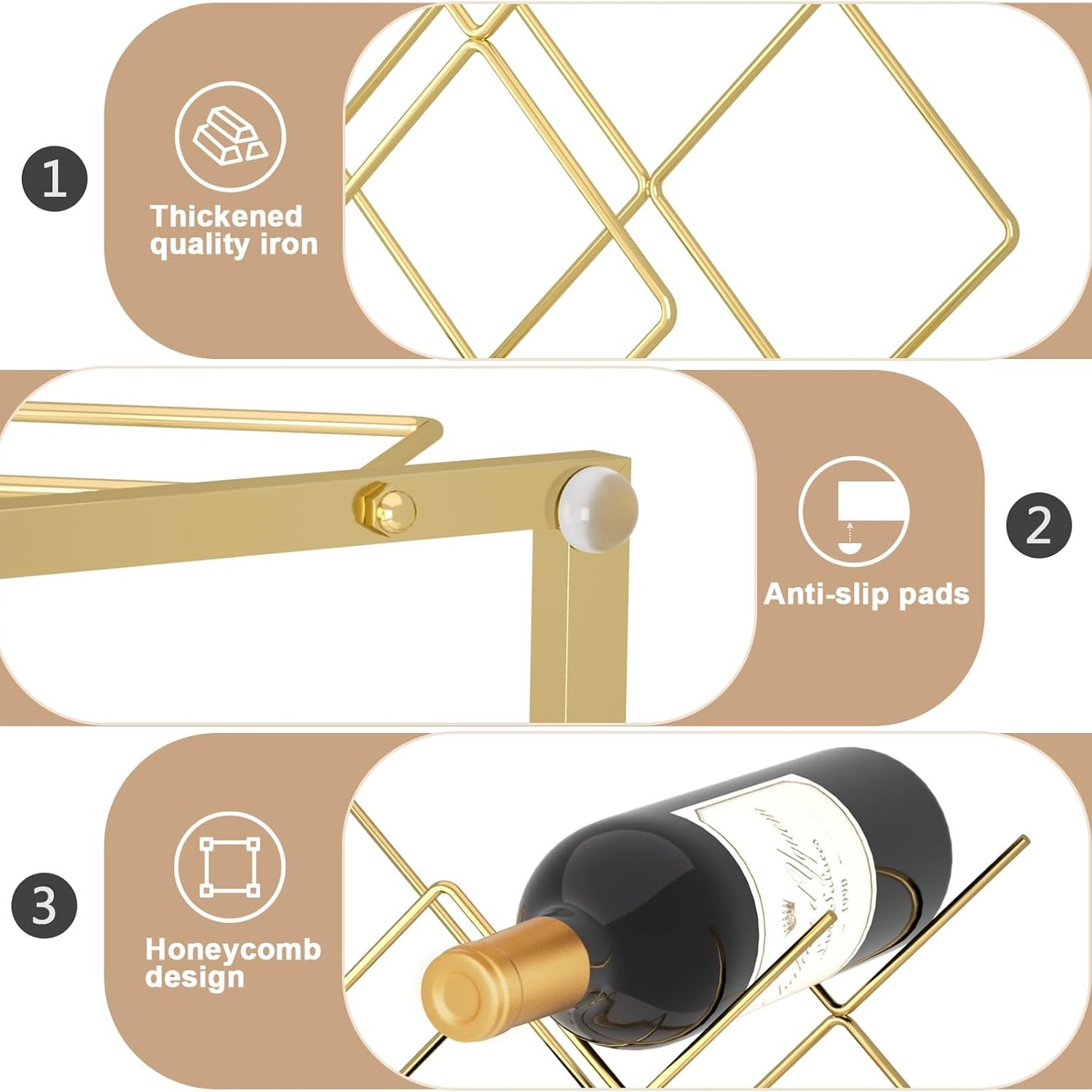
Wood looks warm and absorbs knocks, but it can swell in humid spots and it stains if something spills. Acrylic is clear and modern but scratches easily and can look tired fast. Metal, which is what this rack uses, is the practical middle ground. It is thin, so the frame takes up less visual space than the bottles it holds. It wipes clean. It does not swell or warp.
The finish matters for how the piece reads in a room. This one is brushed rather than high polish, and brushed surfaces are forgiving. They hide fingerprints better than mirror finishes and they do not throw harsh reflections under downlights. The gold tone is warm, so it sits well against timber, white cabinetry and darker stone countertop. If your kitchen hardware is already brass or warm metal, it ties in. If everything is cool chrome, it will read as a deliberate accent rather than a match, which some people want and some do not.
Shape is partly taste. The hexagonal geometry here gives the rack a bit of structure even when it is only half full, which matters because a rack with two bottles in it still has to look like something.
Looking after it
The care instruction for this rack is short: wipe with a dry cloth. That is genuinely all it needs most of the time. Dust settles on open wire frames quickly, especially in kitchens where cooking oils carry on the air, so a quick wipe every couple of weeks keeps it looking new.
Avoid a few things. Do not soak it or run it under a tap. Do not use scouring pads or gritty cream cleaners on the brushed surface, because once a brushed finish is scratched, it stays scratched. If a drip of wine dries on the frame, a cloth very slightly dampened with water and then dried off will usually lift it.
Position matters for the wine more than the rack. Heat and light age wine fast. Keep the rack away from direct sun, off the top of the fridge where warm air rises, and out of the path of oven heat. A shaded corner of the counter or an interior shelf is ideal.
Finally, check the assembly joints occasionally. Any flat-pack frame can loosen slightly after months of bottles going in and out. A quick tighten takes seconds and keeps everything firm.
The short version
Five bottles, a 25.5 x 18.5 x 23.5 cm footprint, brushed metal in a warm gold tone, bottles stored horizontally so the corks stay sealed and the labels face you. It needs assembly, it weighs very little, and it cleans with a dry cloth.
Measure your space first, especially the height above the counter. If the numbers work, this is a straightforward way to stop wine wandering around your kitchen and give it one tidy place to live.