
The complete guide
How to Choose a Timber Wine Rack That Actually Fits Your Home
The problem with keeping wine in random places
Most people do not set out to store wine badly. It just happens. You buy a case, the case goes in the laundry, three bottles migrate to the kitchen counter, two end up upright in the pantry, and one sits on top of the fridge where the motor keeps it warm. Six months later you cannot remember what you have, two bottles are dusty and standing upright with drying corks, and the nice one you were saving got opened on a Tuesday because it was the only thing you could find.
A rack fixes the organizational part and the storage part at the same time. Bottles go in one place, lying down, labels out. You can see your collection in one glance. You stop buying duplicates. You stop forgetting the good stuff.
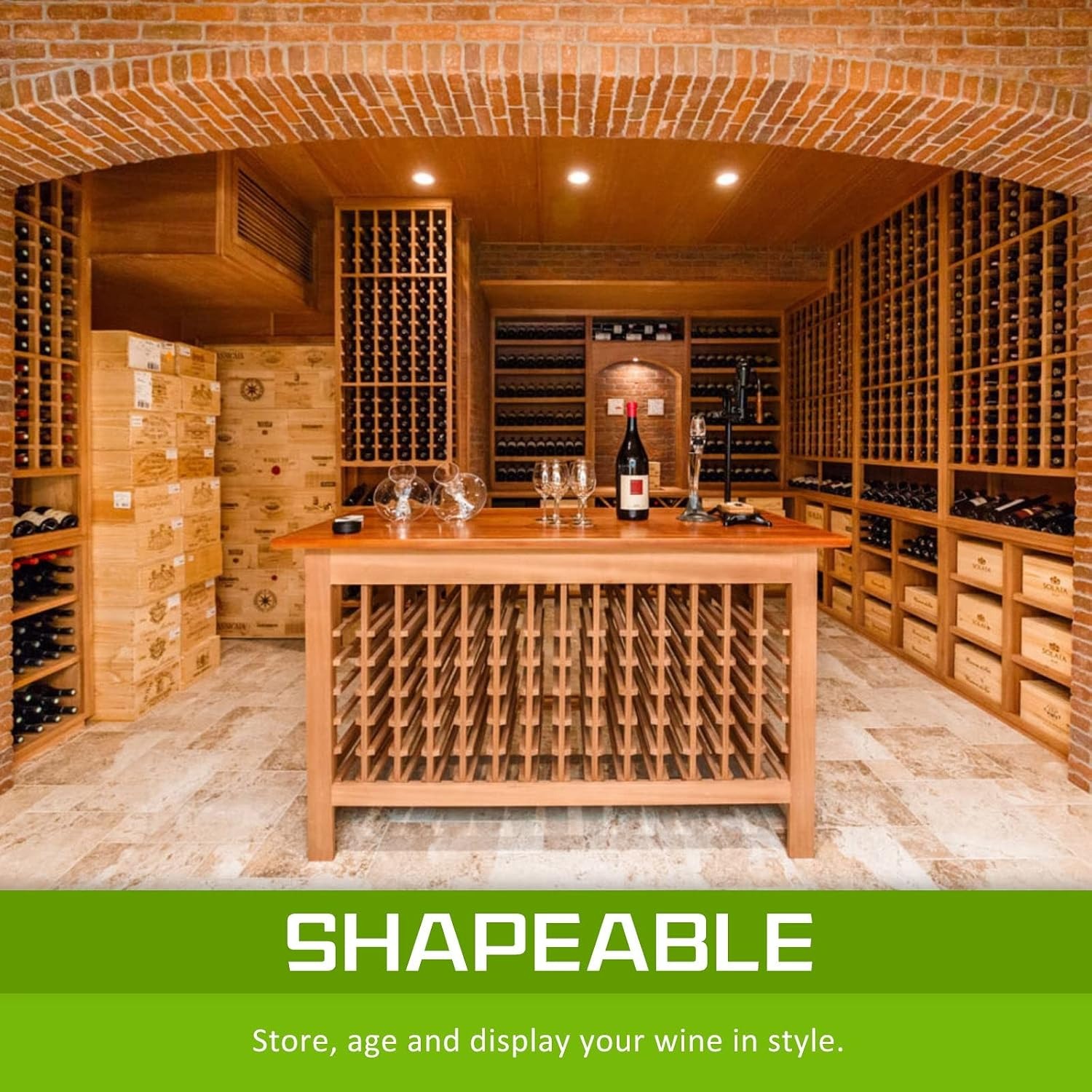
The catch is that most wine furniture is built for people with a cellar. Tall cabinets, 100-bottle towers, things that need a dedicated wall. If you live in a flat or a normal house with a normal kitchen, a huge unit is not realistic. That is where a 20 bottle rack sits in a useful spot: enough capacity to be worth having, small enough to fit somewhere real.
How this rack works
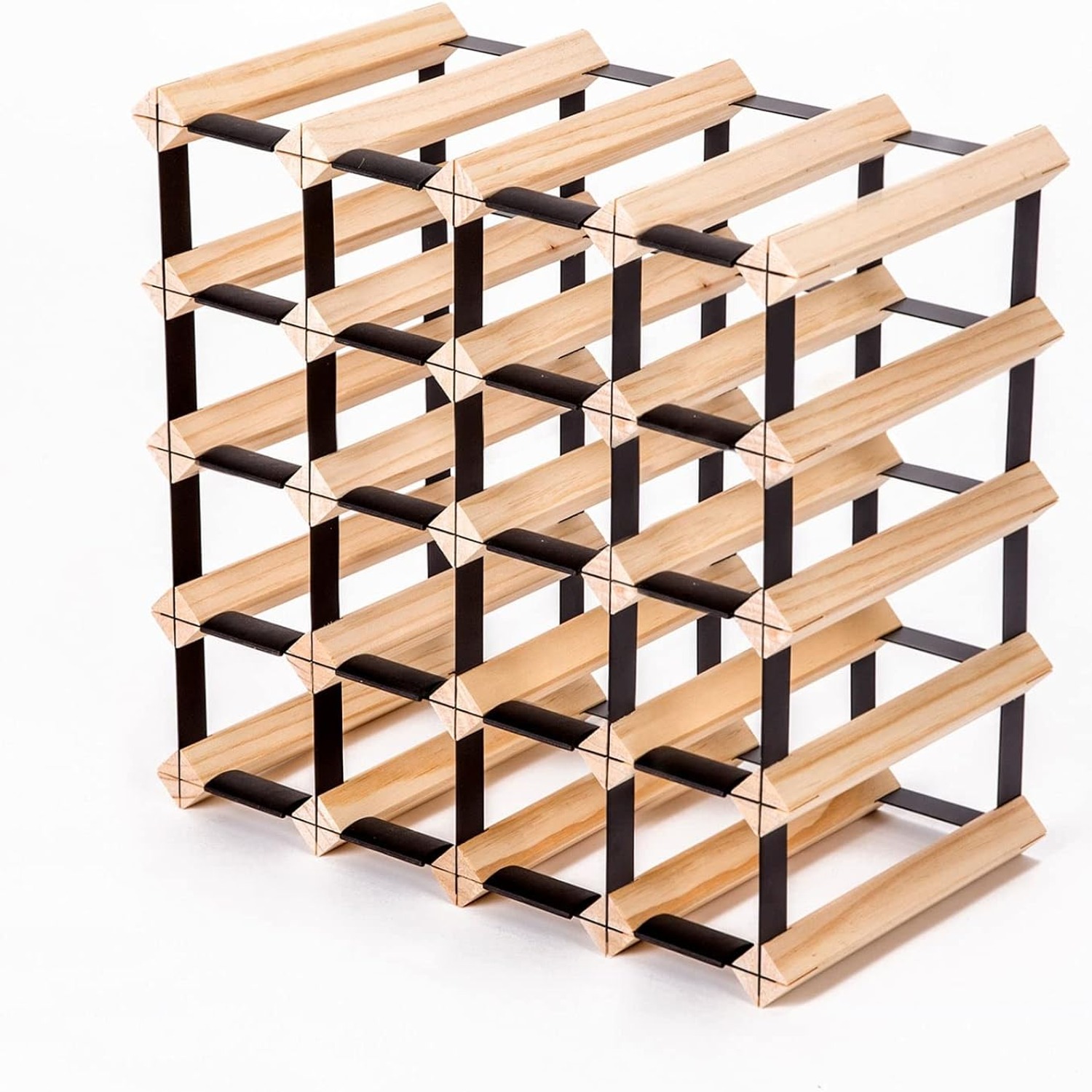
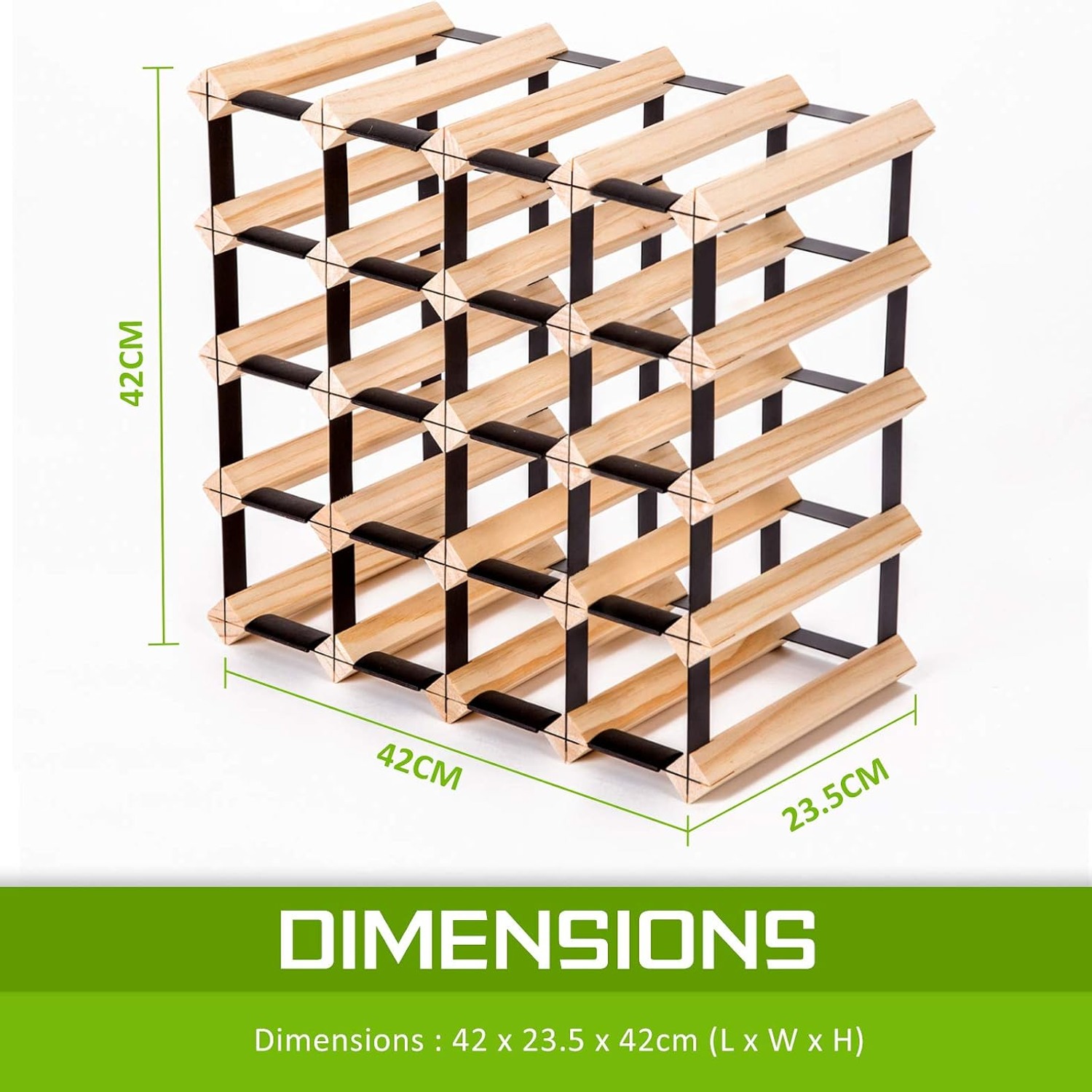
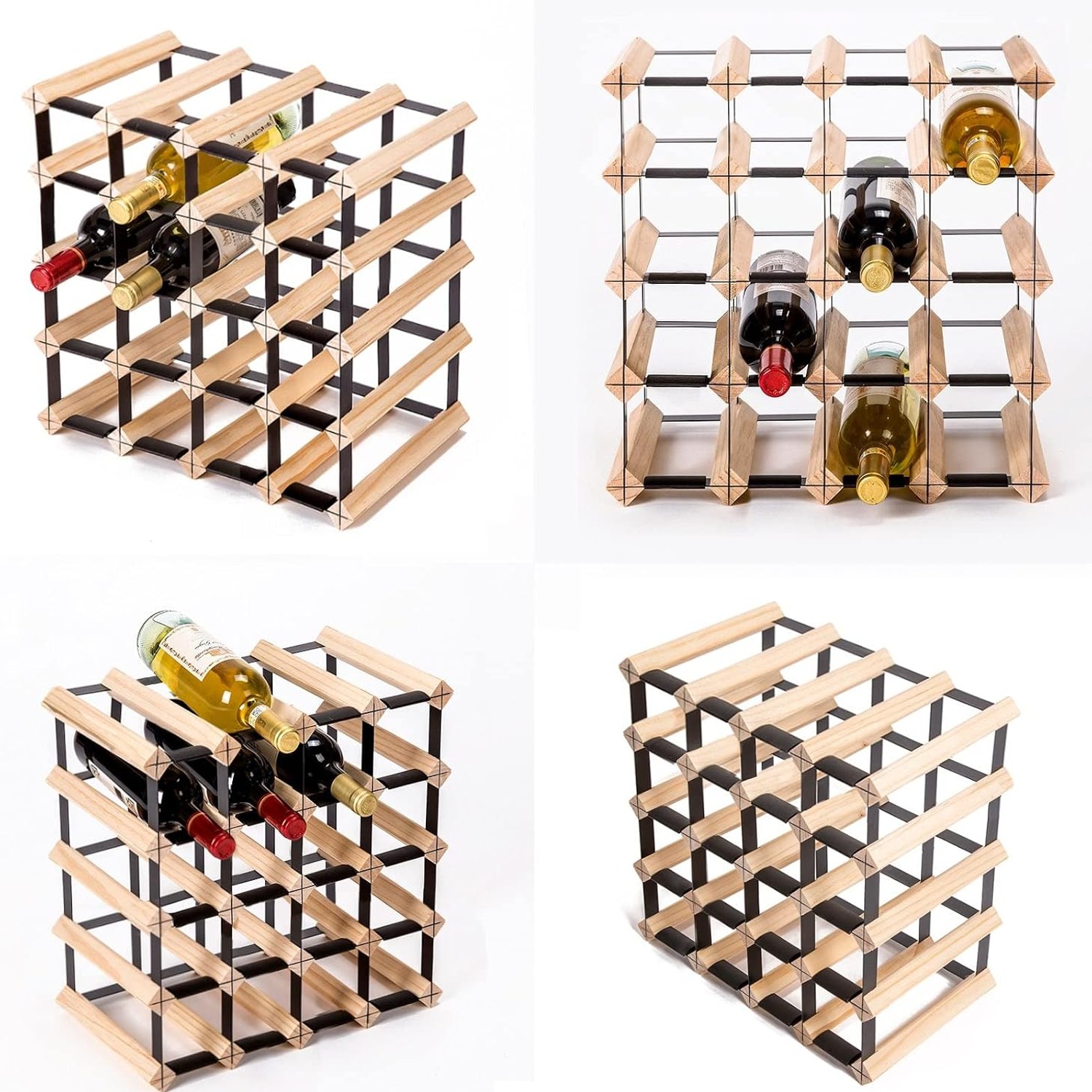
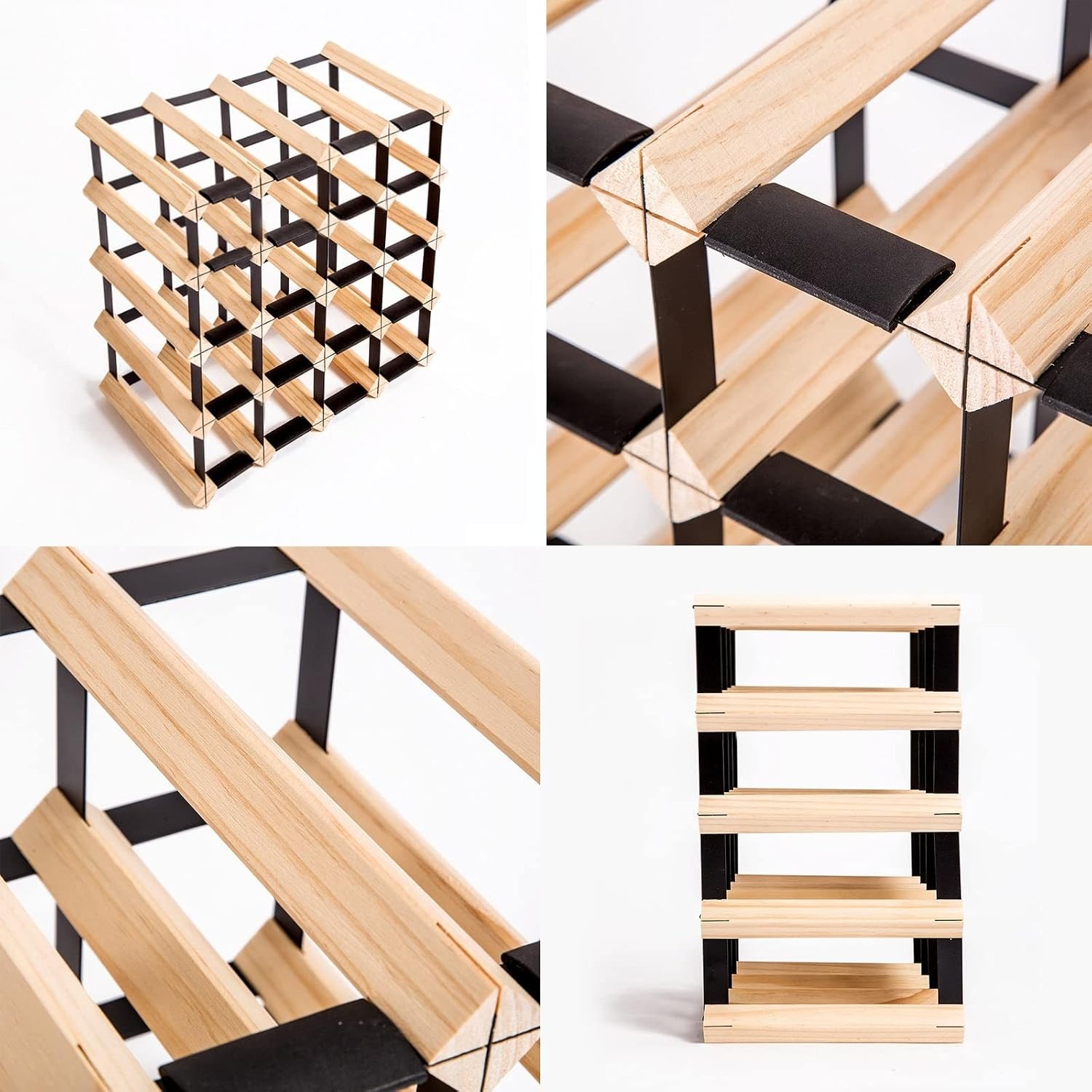
The design is about as simple as wine storage gets. A square pine frame, 42cm wide and 42cm high, with a depth of 23.5cm, divided into slots that hold twenty bottles lying flat. There is nothing to plug in, nothing to adjust, nothing to maintain beyond the occasional wipe.
Laying bottles on their side is the whole point. Wine corks are porous. When the bottle is upright, the cork has nothing but air against it, and over months it dries, shrinks, and loses its grip on the glass. Air creeps in, the wine oxidises, and you get a bottle that smells flat and tastes like wet cardboard. Store it horizontally and the wine keeps the cork swollen and sealed. That is why every proper cellar you have ever seen has bottles on their sides.
If your collection is mostly screw caps, that specific risk goes away. Horizontal storage is still worth it for the practical reasons. Bottles do not roll, they do not get knocked, and twenty of them take up about a third of the space they would standing in a row.
The finish is natural pine. Pine is a light-colored softwood that is easy to work and easy to live with. The listed style is industrial, but in practice a plain timber rack is one of the most adaptable pieces of storage you can buy. It looks at home in a rustic kitchen, a concrete-and-steel apartment, or a plain white rental. There is no strong color to clash with your cabinetry.
Who this suits
This is a good fit if you keep somewhere between a handful and about two dozen bottles at a time. That describes most people who enjoy wine without being collectors. You buy a case now and then, you keep a few nicer bottles for occasions, and you want them somewhere sensible.
It also works well as a second rack. If you already have storage and it has filled up, a small freestanding wine rack lets you expand without committing to another big piece of furniture.
Home bars are another natural home for it. So are pantries, butler's pantries, the bottom of a bookshelf, and the space under a console table in a hallway. At 23.5cm deep it does not stick out much.
Where it is less ideal is a serious ageing collection. If you are putting bottles away for ten years, you need temperature control and a genuinely dark, still spot. A rack is only one part of that equation. Twenty bottles is also not many if you are buying by the case every month.
How to choose the right size and spot
Start with the tape measure, not the product page. Measure the width, height, and depth of the space you have in mind and compare it with 42 x 42 x 23.5cm. Leave a little clearance so you can slide bottles in and out without scraping knuckles on a wall.
Next, think about weight. The rack is 3.6kg empty. Twenty full bottles add somewhere in the region of 25 to 30kg depending on the glass, which is heavy enough to matter. If you are putting it on a shelf, make sure the shelf is rated for it. If you are wall mounting, which is the listed mounting type for this model, use fixings suited to your wall and fix into studs where you can. Drywall with no backing and a couple of small screws will not hold a loaded rack, and a rack coming off a wall is a mess of broken glass and red wine you really do not want.
Then think about conditions. Heat, light, and vibration are the three things that age wine badly. The best spot is cool, dark, and still. In practice that means not above the oven, not in a sunny window, not on top of the fridge, and not against the wall shared with the laundry. A pantry or a shaded corner of a room is usually the best option in a normal house.
Finally, consider what you actually drink. If half your collection is sparkling, remember those bottles are wider and heavier than standard still-wine bottles, so twenty will not necessarily fit as twenty. Odd-shaped bottles from the Rhone or Burgundy are also a bit broader than Bordeaux shapes.
Assembly and setup
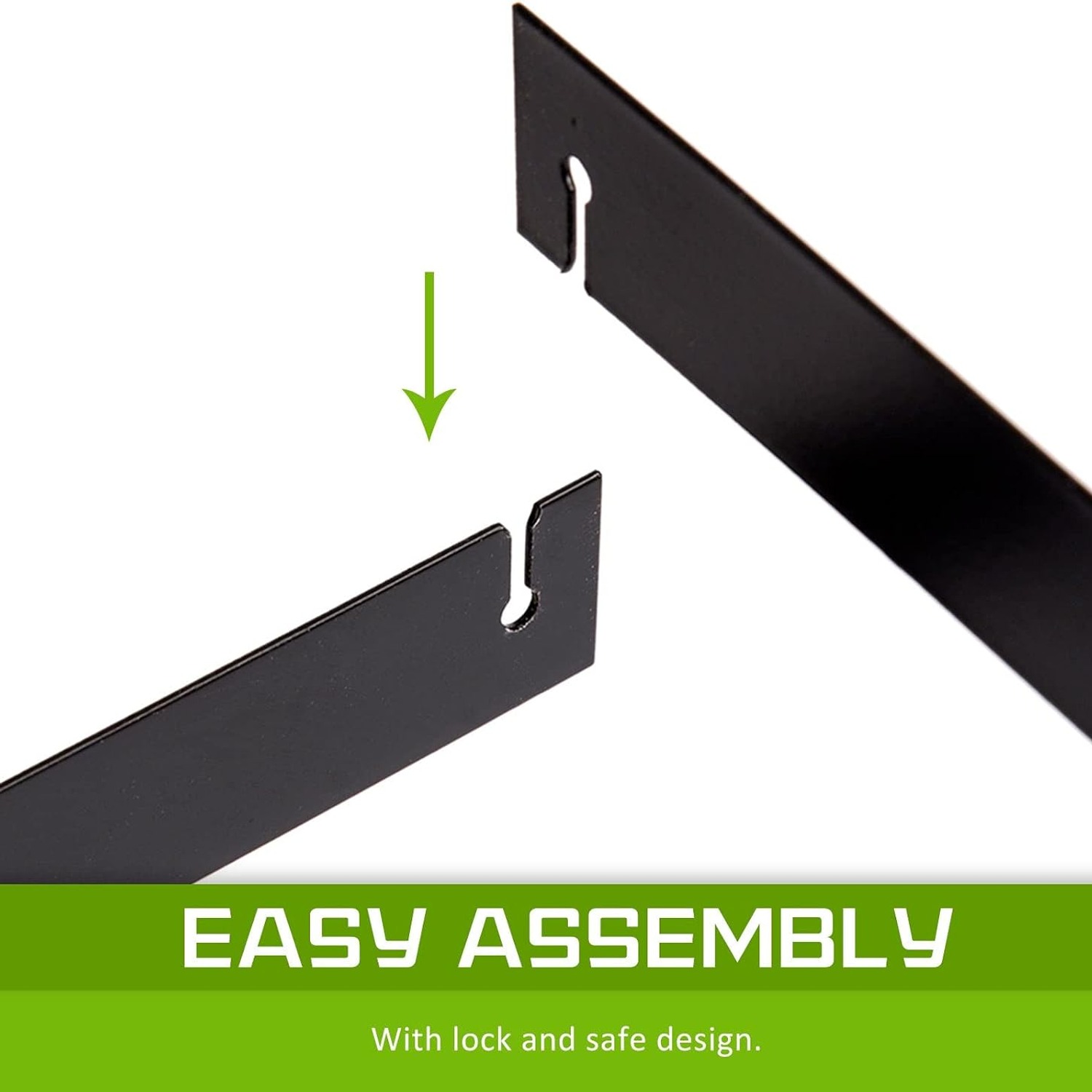
This rack needs assembly and ships with a user manual. That is a good thing, not an inconvenience. Flat packing means a smaller parcel, less chance of damage in transit, and the ability to carry it to where it will live before it becomes a bulky object.
Build it on a flat surface with something soft underneath, like a towel or the flattened box, so you do not scratch the timber or your floor. Start every fixing loosely and only tighten everything once the frame is square. If you tighten as you go, you can lock in a twist that makes the finished rack rock.
Once it is built, load it from the bottom up. That keeps the center of gravity low while you are getting bottles in and out. Do not load it fully and then try to shuffle it across the room. Move it empty.
Looking after natural timber
Care is straightforward: wipe it with a dry cloth. Dust settles on a rack more than you expect, especially in a kitchen where there is cooking grease in the air, so a quick wipe every few weeks keeps it looking fresh.
If you spill something, blot it quickly with a barely damp cloth and dry the area straight away. Untreated timber will absorb standing liquid and can stain or swell. Avoid soaking it, and skip harsh cleaners and solvents.
Pine is a softwood, so it will pick up small dents and scuffs over time. Most people find that adds character rather than looking shabby. Direct sunlight will gradually shift the color of the wood, which is another good reason to keep it out of a window.
Every few months, check the fixings. Timber moves slightly with changes in humidity, and a screw that was snug in winter can be a little loose by summer. A quick tighten keeps the frame rigid.
The short version
If you want twenty bottles stored properly, in a small space, without spending a fortune or redecorating a room, this does the job. Pine, natural finish, 42cm square face, 23.5cm deep, 3.6kg, twenty bottles stored flat so corks stay sealed. Assembly required, manual included.
Measure your spot, decide whether you are mounting it or standing it, pick somewhere cool and out of the sun, and load it from the bottom. After that it is just a nice-looking piece of furniture that quietly solves the problem of wine ending up everywhere.