
The complete guide
How to Choose and Fit an Under Cabinet Wine Glass Rack
The problem with storing wine glasses
Wine glasses are the worst shaped things in a kitchen cupboard. A stack of plates is efficient. A row of mugs is efficient. A wine glass is a wide bowl on a thin stick, and once you stand six of them on a shelf you have lost that whole shelf, with a band of unused air above the rims that nothing else fits into.
Then there is the breakage. Glasses tip when a cupboard door swings. Rims chip when one glass is pushed against another. Stems snap when someone reaches past them for the salt. If you have ever done a mental tally of how many glasses from a set of six you still own, you already know the maths.
An under cabinet wine glass rack fixes both problems at once. It moves the glasses out of the cupboard and into space that was doing nothing, and it holds each one apart from its neighbors so nothing touches.
How a hanging stemware holder works
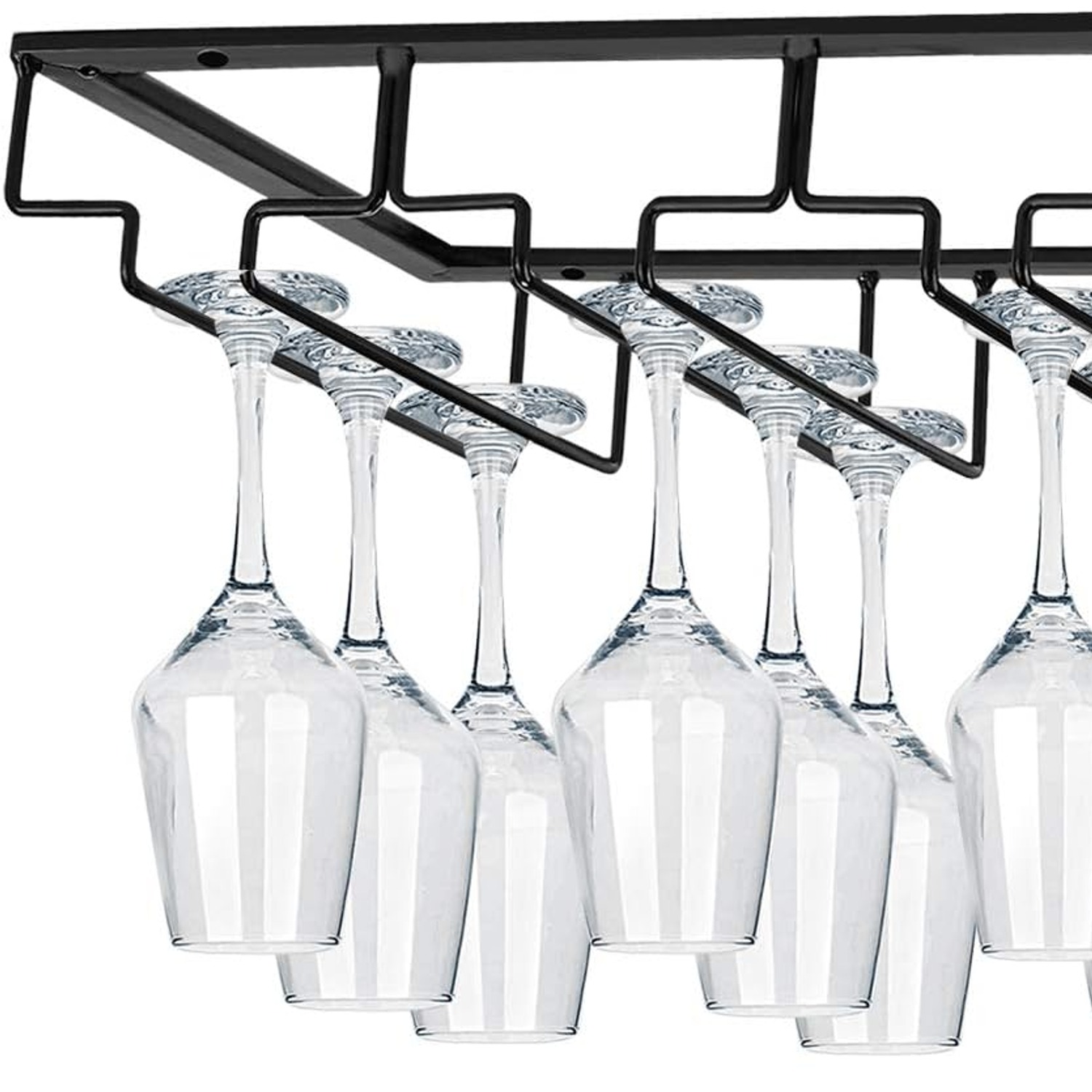
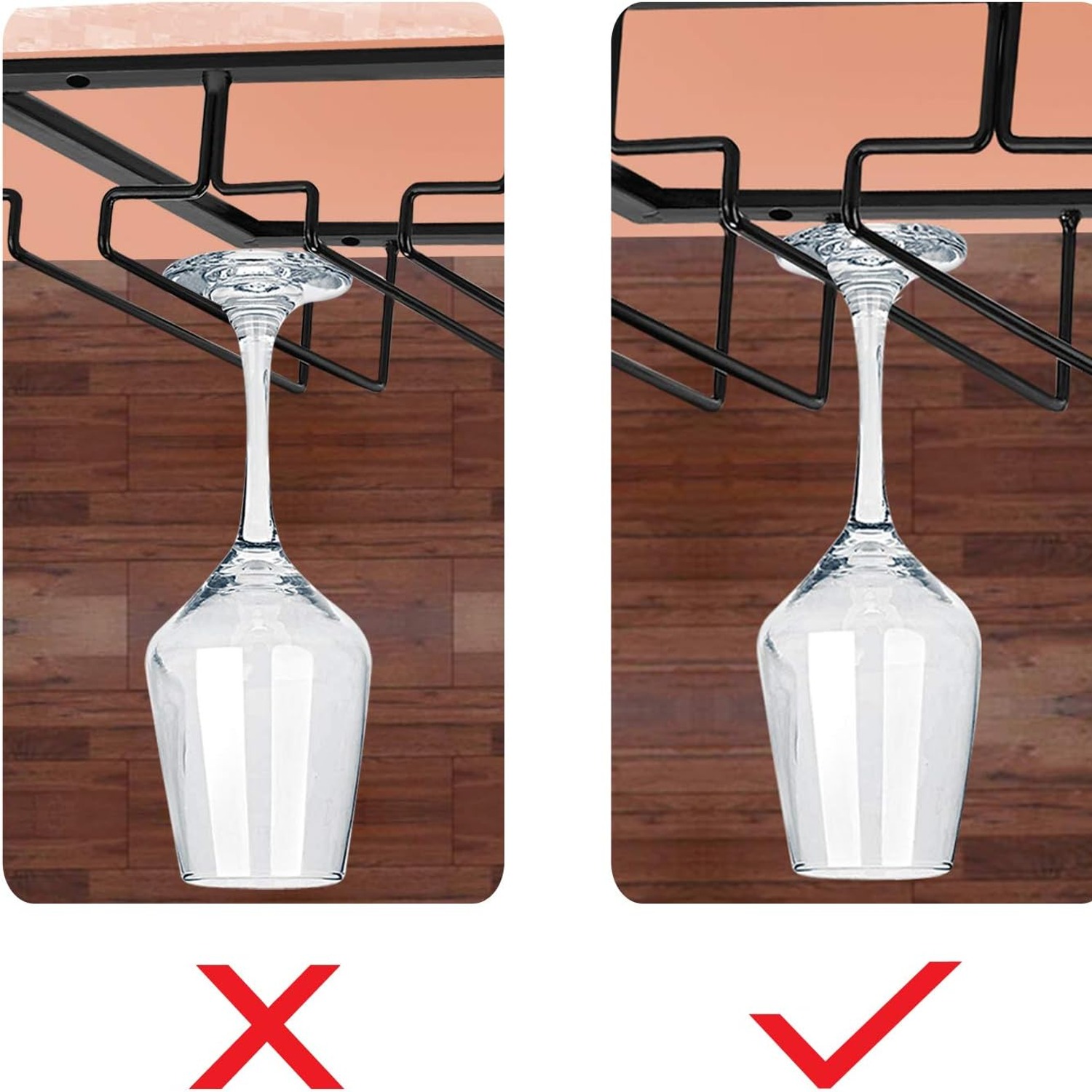
The idea is simple. Four metal rails run parallel to each other with gaps between them. You turn a glass upside down, slide the foot in from the open end, and let the base rest on top of the rails while the stem hangs down through the gap. The bowl and rim sit in open air, touching nothing at all.
That is the real benefit. Nearly every chip on a wine glass starts at the rim, which is the thinnest and most exposed part. Remove rim contact and you remove most of the risk. The glass is also easier to grab, because you take hold of the stem, which is exactly where you want your fingers anyway.
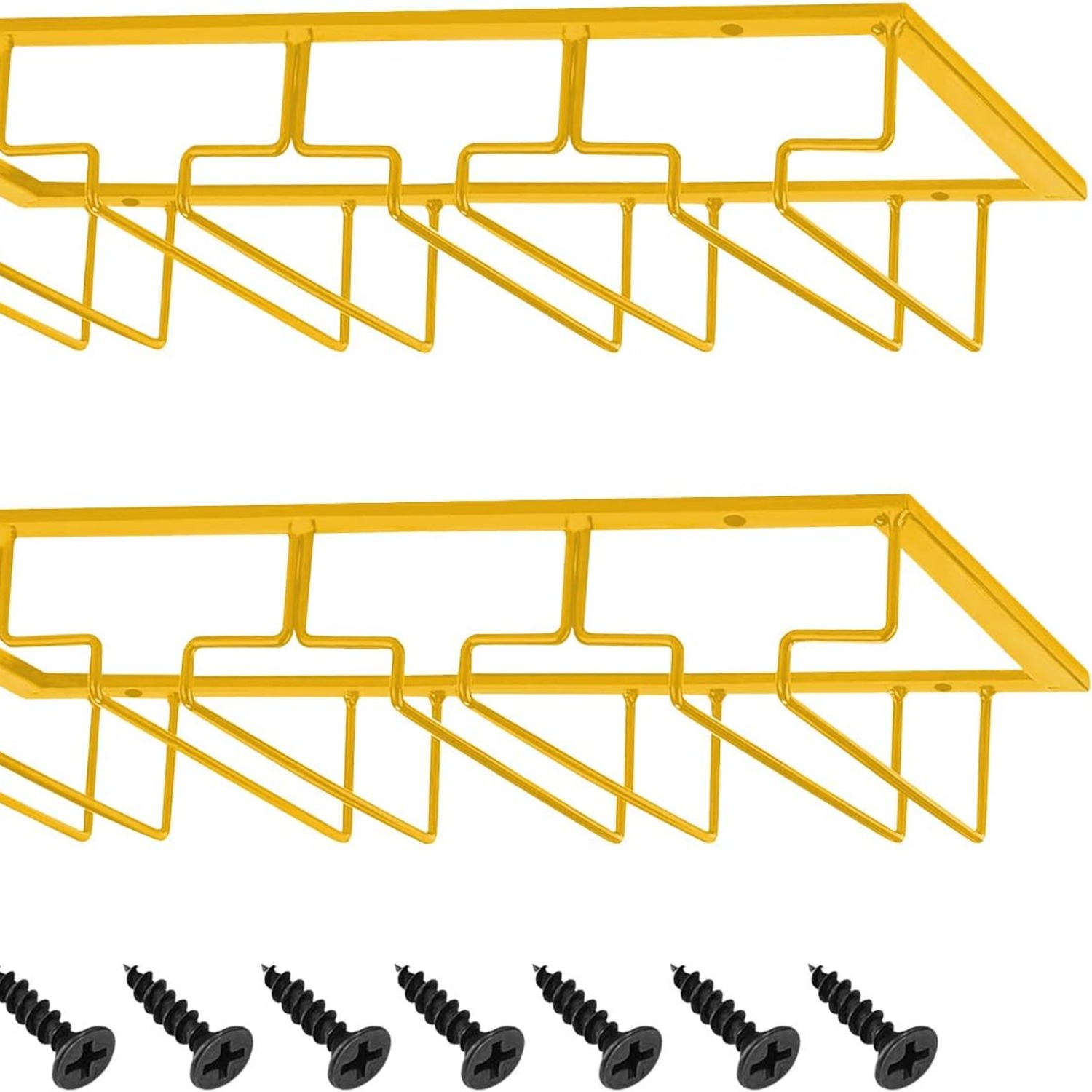
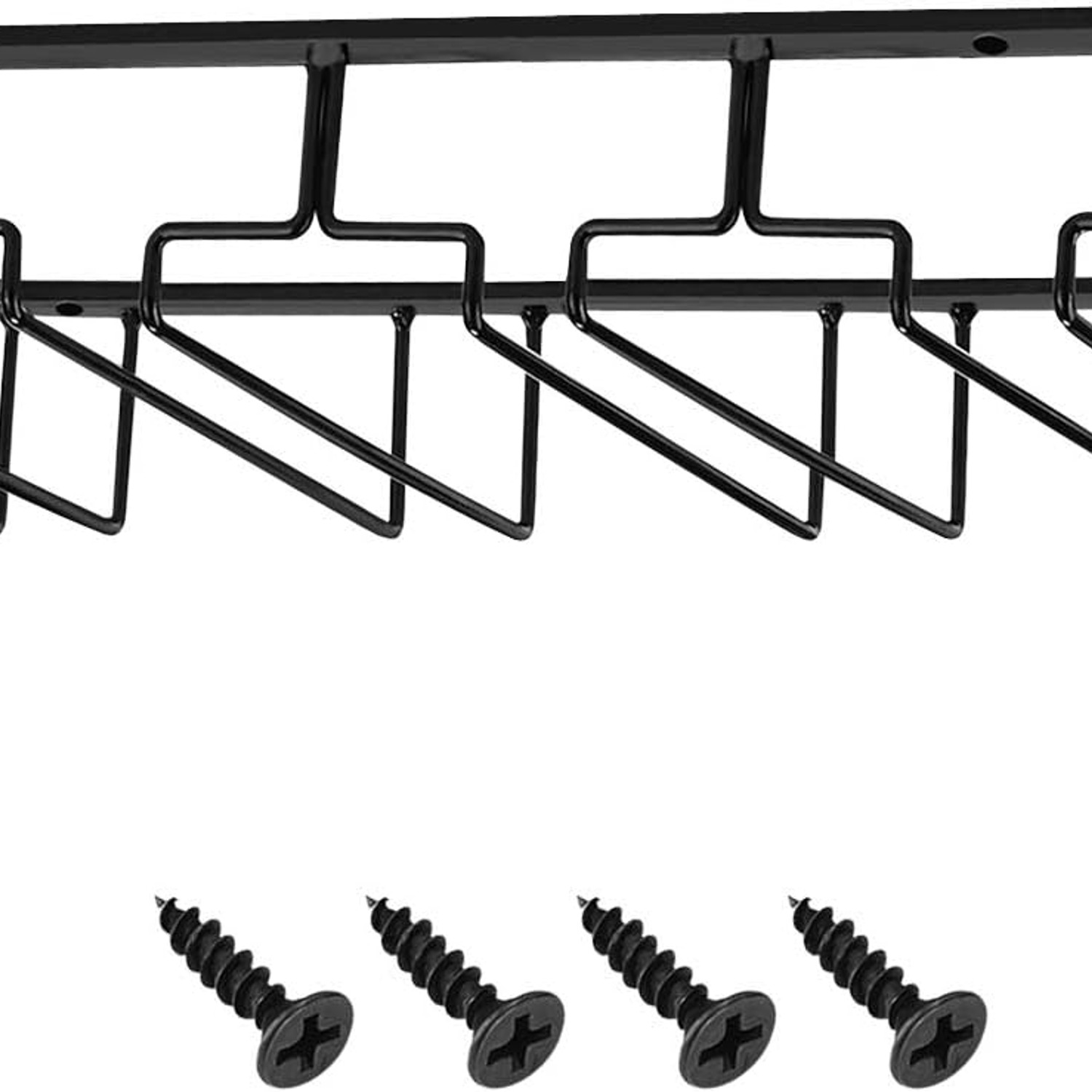
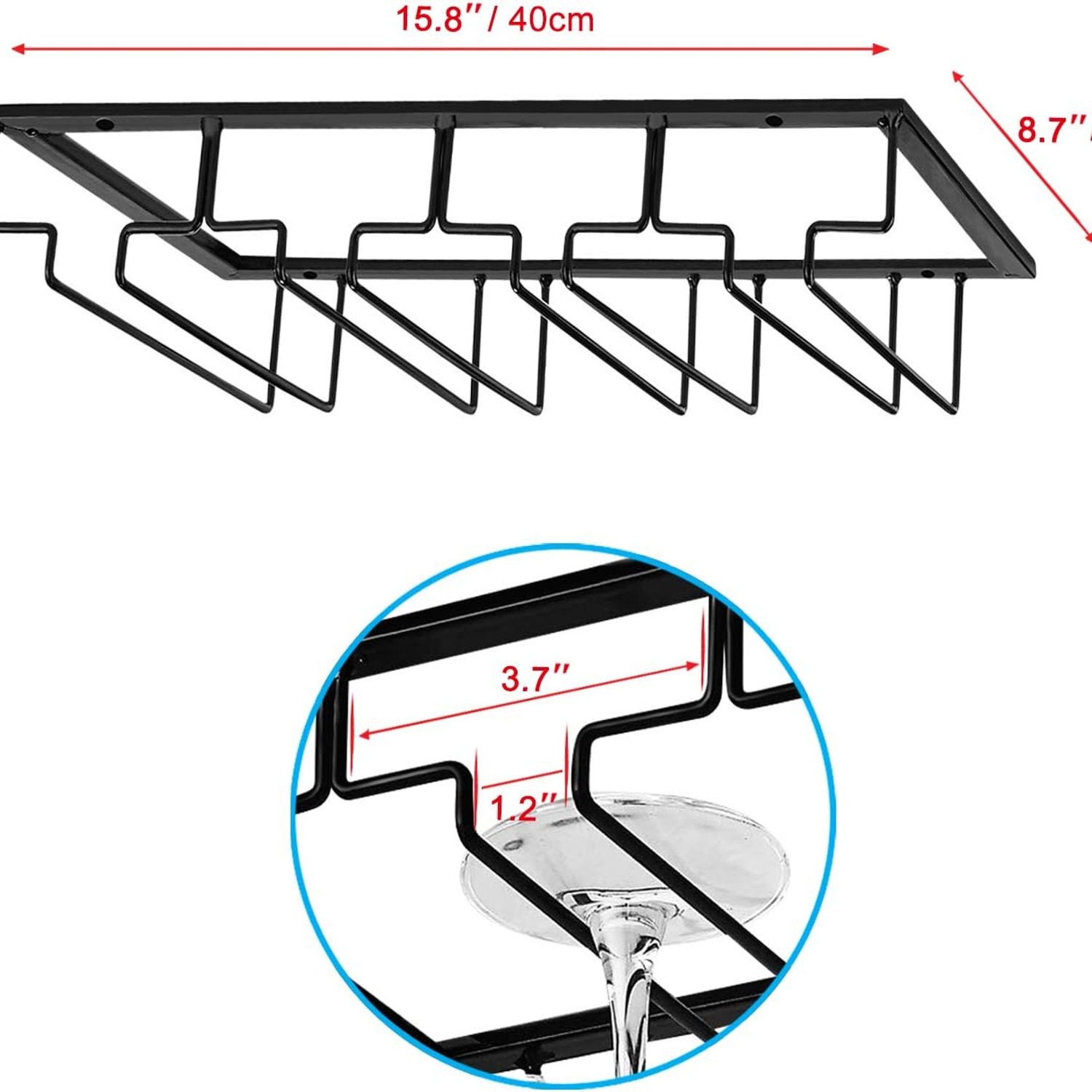
This particular rack has four rows and measures 6 cm deep, 22.1 cm wide and 6 cm high. It weighs 454 g. It arrives assembled with screws in the box, so the whole job is marking, drilling if needed, and driving four screws.
Who it suits
Small kitchens benefit most. If your cupboards are full and your counter is the only workspace you have, pulling six or eight glasses out of circulation changes how the room feels. The rack takes up almost no visual room, especially in white against a pale cabinet.
Home bars are the other obvious fit. A row of hanging stems above a bar shelf reads as deliberate rather than cluttered, and it keeps glasses within arm's reach when you are actually pouring. The same thinking applies to a dining room dresser with an overhang, or a butler's pantry.
People in rentals like this format too, because the only mark left behind is four small holes under a cabinet where nobody will look. It is a reversible change.
It is not for everyone. If you only own stemless glasses, this rack has nothing to grip. If your cabinets are high and you are short, hanging glasses will be a stretch. And if your cupboard carcasses are thin particle board with a veneer face, you need to think carefully about what the screws are biting into.
Measuring before you buy
Two measurements matter. The first is clearance. Stand under your cabinet and measure from the underside down to whatever is below, whether that is a counter, a shelf or a bar top. Then measure your tallest glass from foot to rim. Add the 6 cm height of the rack to the glass height. If that total is close to your clearance, the glasses will hang awkwardly low and you will knock them with a kettle or a bottle. Leave yourself a comfortable margin.
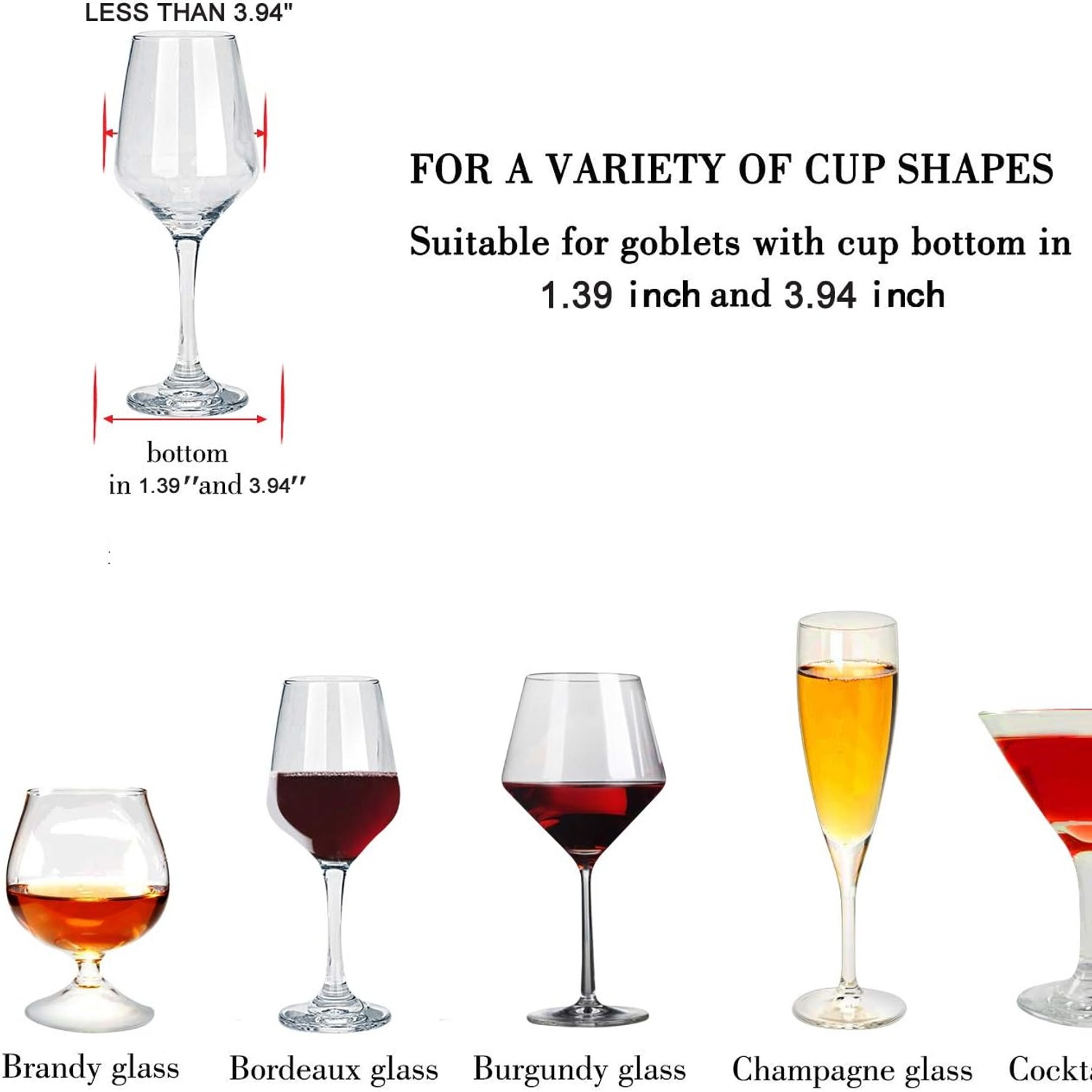
The second is the foot of your glass. A hanging wine glass holder works on the width of the base, not the bowl. Measure the diameter of the foot on the glasses you actually own, then look at the 22.1 cm width of the rack and work out how many of those feet you can line up without them touching. Wide footed burgundy glasses take noticeably more room than slim champagne flutes.
While you are measuring, check what the cabinet underside is made of. Solid timber or thick ply takes a screw happily. Thin board needs either a longer screw that reaches the frame, or a different mounting spot. Tap along the surface and you will hear where the solid rails are.
Fitting it properly
Hold the rack up where you want it and mark the screw positions with a pencil. Pull the rack away and check your marks are level, because a crooked rack will have glasses leaning and sliding toward one end.
Drill small pilot holes if the material is dense. In soft timber you can often drive straight in with a hand screwdriver. Do not overtighten. The moment the rack sits flush and does not move, stop turning, because going further strips the hole and leaves you with a loose fitting.
Set it back from the cabinet edge by a centimeter or two rather than flush with the front. Glasses hanging right at the edge get knocked by passing shoulders and bags. A small setback makes a surprising difference day to day.
Load the first glass gently and watch how the rack sits. If there is any flex or creak, come back out and find a more solid fixing point. It is far better to move the rack now than to discover the problem with a full set of glasses in it.
Living with it
Day to day, the rack is close to maintenance free. Wipe the rails with a damp cloth now and then and dry them straight after. Skip the scouring pads and the strong solvents, since a powder coated surface is tough but not indestructible. Dust between the rails lifts out with a dry paintbrush in about ten seconds.
Dry your glasses before you hang them. A wet foot leaves water sitting on the metal and running down the stem, which can leave marks on the glass and on the rail. A quick pass with a tea towel sorts it.
Every few months, put a hand on the rack and give it a small push. If there is any movement, tighten the screws. Hardware loosens slowly over time, and catching it early costs nothing.
One habit worth building, slide the glass in and out rather than lifting it straight up. Lifting bangs the foot against the rail. Sliding is quieter and kinder to both the glass and the finish.
Comparing the options
You will see three common formats when you shop for glass storage. Freestanding racks sit on a counter and hold glasses upright, which is simple but uses the space you probably wanted back. Wall mounted racks need a clear stretch of wall and a backplate. Under cabinet racks like this one use space that was already there, which is why they tend to win in small rooms.
Within the under cabinet category, the variables are width, number of rows and finish. More rows means more capacity but more depth, which matters if your cabinet is shallow. This one is 6 cm deep with four rows, which is a compact middle ground. White powder coat suits light kitchens, where a dark rack would stand out against the cabinet underside.
The short version
If your cupboards are crowded and your glasses keep chipping, a four row hanging rack under the cabinet is a cheap and quick fix. It uses space you already have, keeps every rim away from every other rim, and puts the glasses where you actually use them.
Measure your clearance, measure the foot of your glasses, check that the cabinet underside will take a screw, and fit it a little back from the front edge. Ten minutes of work for storage you will use every week.