
The complete guide
How to Choose and Fit an Under-Cabinet Wine Glass Rack
The storage problem nobody plans for
Wine glasses are the worst-shaped thing in most kitchens. They are tall, narrow at the bottom, and top-heavy at the top. Stand a row of them on a cupboard shelf and you lose almost all the vertical space above them, because nothing can be stacked on a bowl. Lay them down and you get chips. Push them to the back and you forget they exist until someone brings a bottle round.
Meanwhile, there is a strip of completely unused air between the bottom of your wall cabinets and the counter. It is usually somewhere between 40 and 60 centimeters tall, it runs the whole length of the kitchen, and it does nothing. An under-cabinet rack puts that space to work. Glasses hang bowl-down from the stem, clear of the counter, visible, and easy to grab with one hand while the other one holds the bottle.
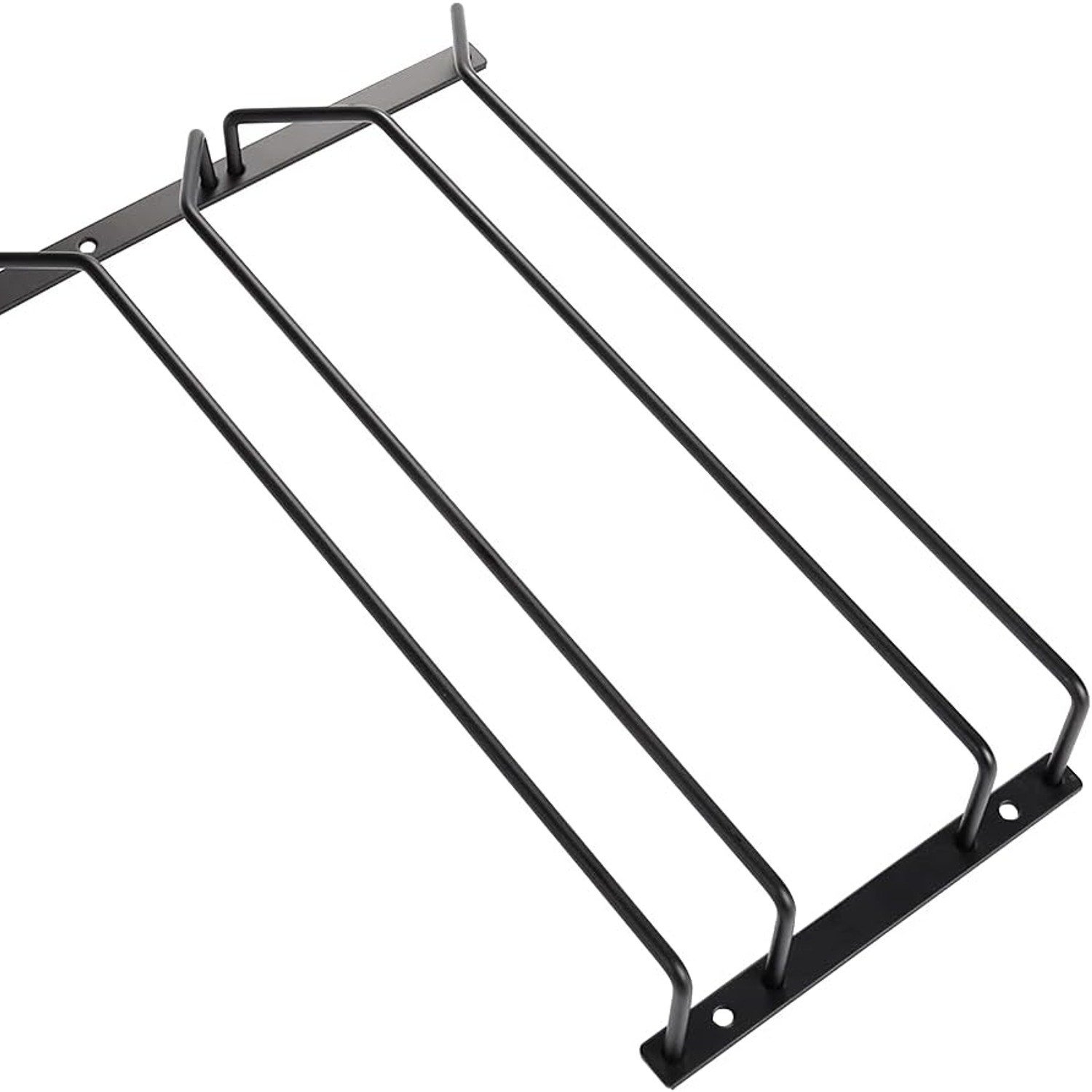
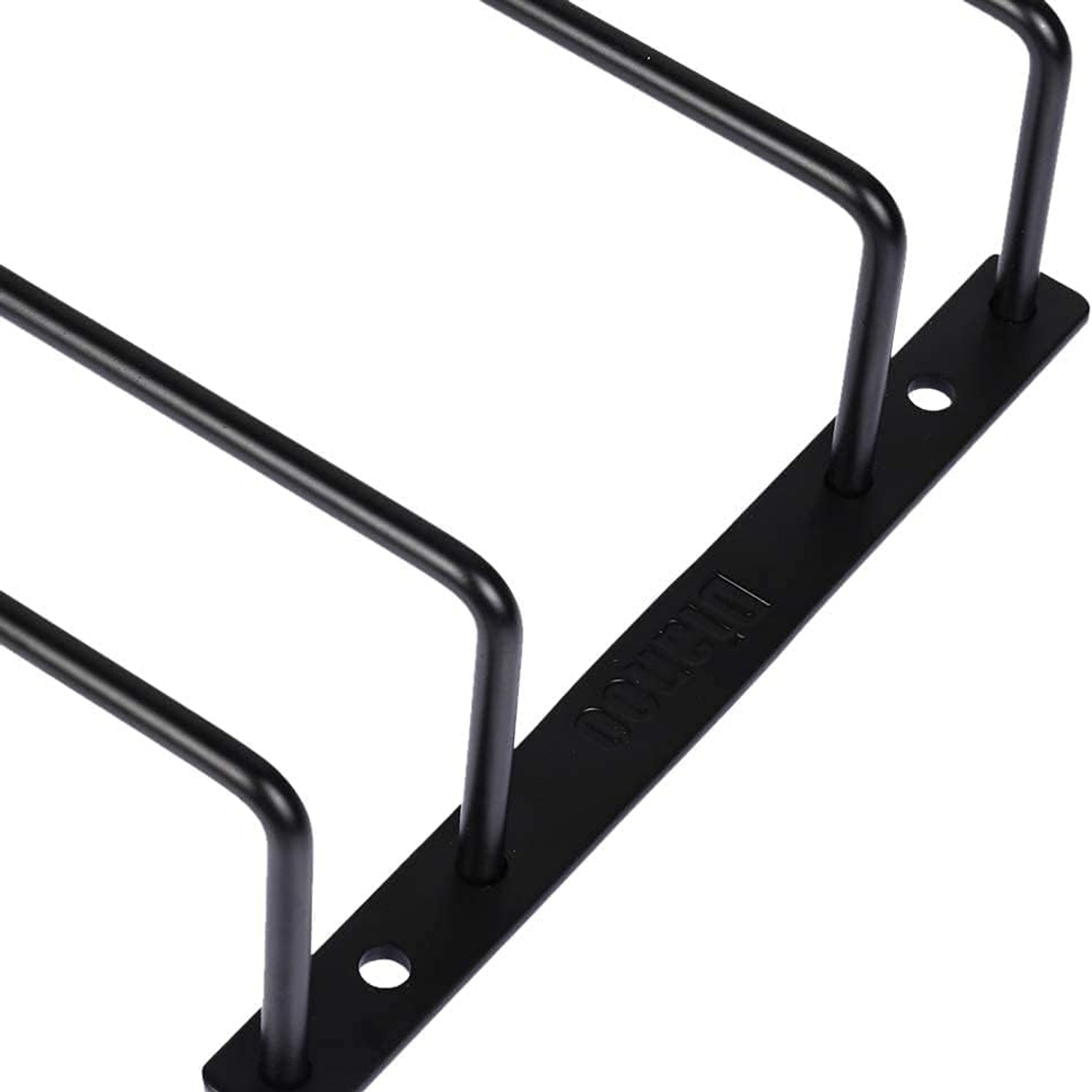
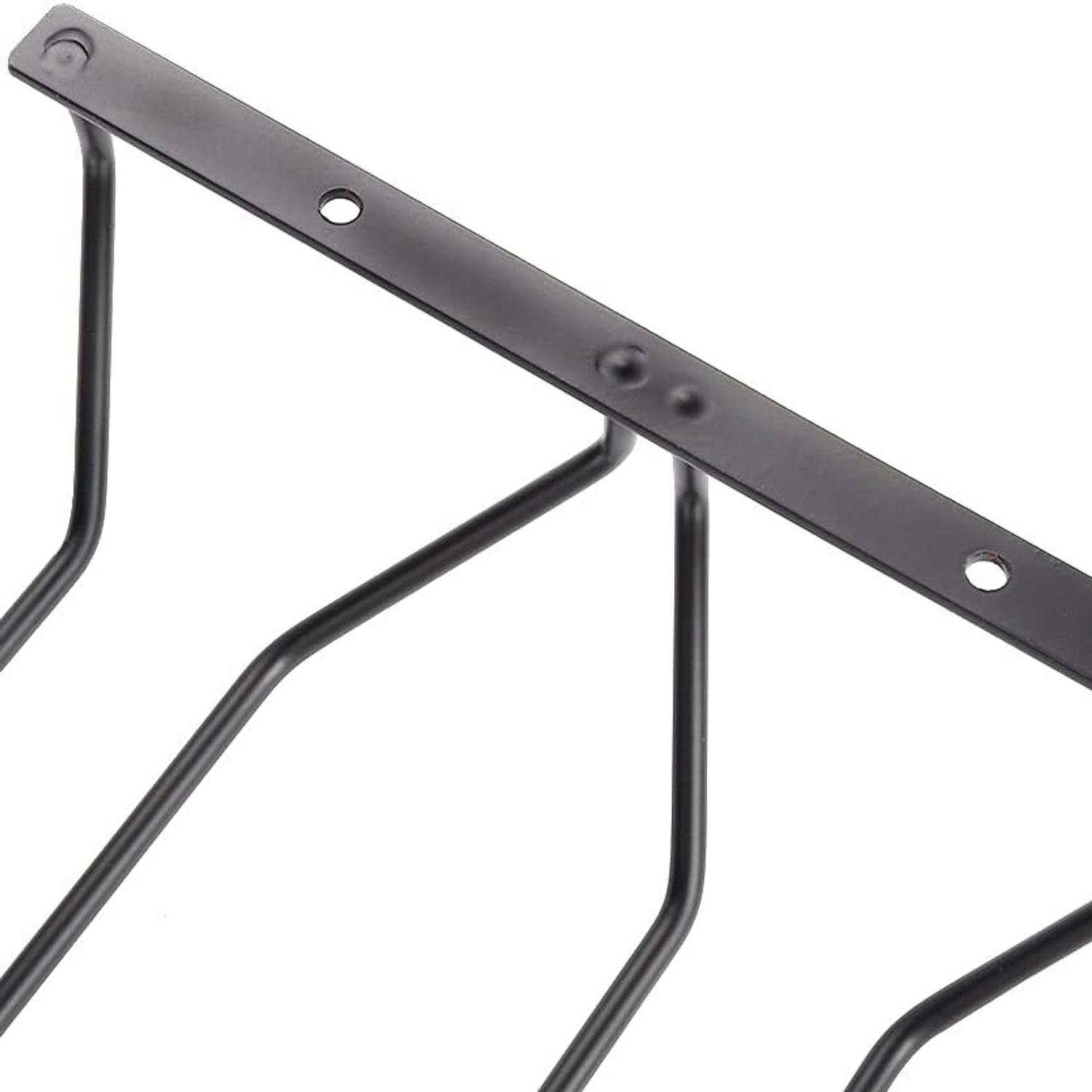
That is the whole idea behind this 35cm black wine glass rack. Two rows of metal rail, screwed to the underside of a cabinet, holding roughly six to eight stems. It is a small piece of hardware that quietly fixes a daily annoyance.
How a hanging stemware rack actually works
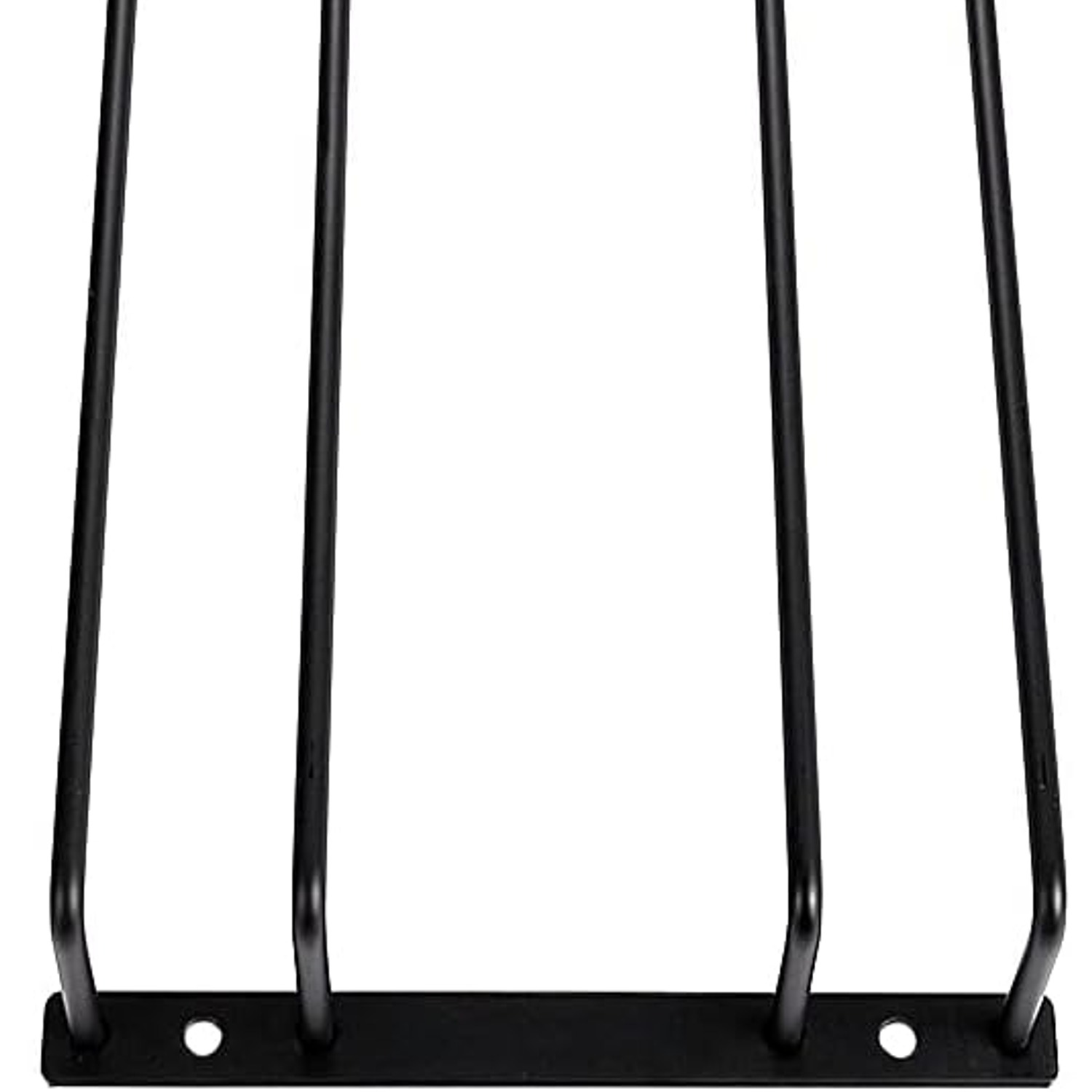
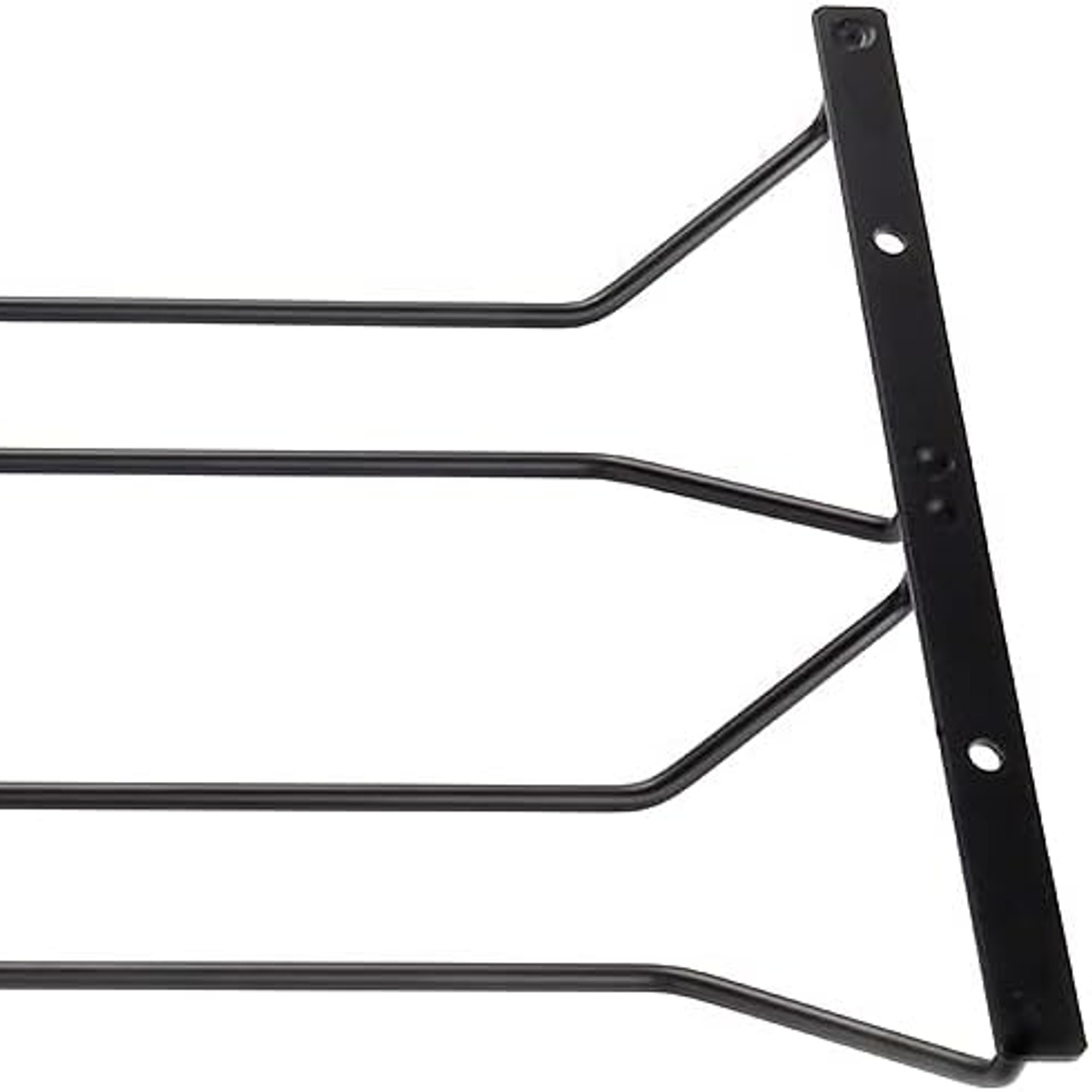
The mechanics are simple. Each row is a slot. The base of the glass sits above the rail, the stem drops through the gap, and the bowl hangs below. Gravity does the rest. There are no clips, no springs and nothing to adjust.
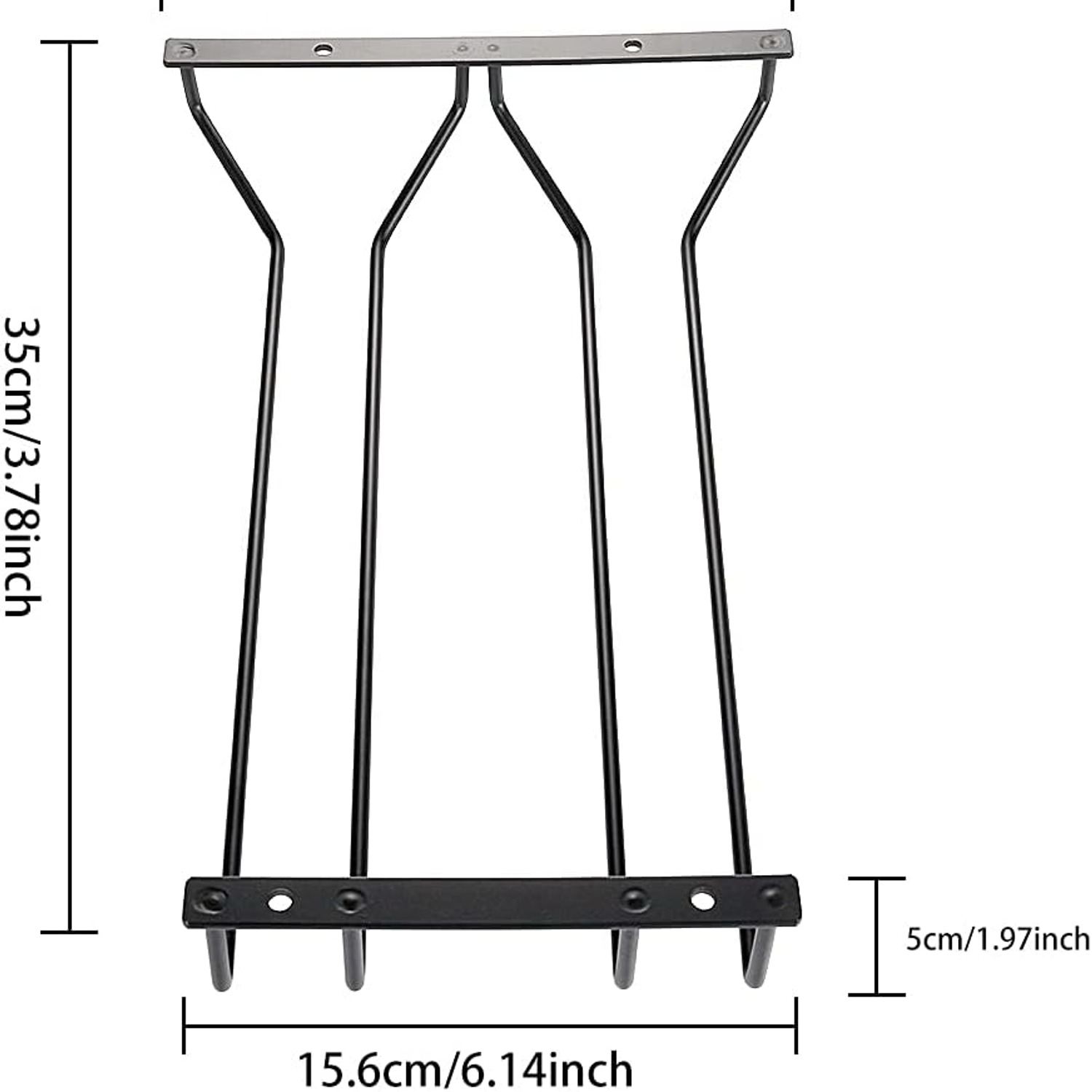
Because the glass is supported by its base rather than clamped, the only thing that limits capacity is width. This rack is 21.6cm across with two rows. If your glasses have a 7cm base, you fit three per row, so six in total. If they have a 5cm base, you can get four per row, so eight. That is exactly why the maker quotes a range instead of a fixed number. It is not a hedge, it is just how the geometry works.
The 35cm figure is the depth, front to back, once the rack is mounted. That matters more than people expect. A standard kitchen wall cabinet is usually around 30 to 35cm deep, so this rack is sized to sit under one without hanging out over the counter. Measure your cabinet depth before you buy. If yours is shallower, the rack will protrude slightly, which is fine functionally but worth knowing in advance.
Who this suits
A rack like this earns its keep in a few specific situations.
If you have a small kitchen, the maths is in your favour. Pulling eight glasses out of a cupboard usually frees a whole shelf, and a shelf is worth far more than the strip of air you just filled.
If you drink wine regularly, the convenience adds up. Glasses live where you pour, not two rooms away behind a door.
If you are building a home bar, the rack is half decoration. A row of hanging stems above a bottle shelf reads as intentional, and the black finish stops it looking like catering equipment.
If you entertain often, having glasses out and countable makes setting up quicker. You can see at a glance whether you have enough.
Who it suits less: households with only stemless glasses or tumblers, since neither will hang. Also anyone whose only cabinet sits directly over a cooktop, where airborne grease will coat the rims faster than you want to polish them.
Choosing the right rack for your space
Start with three measurements and you will not go wrong.
First, the base diameter of your most-used glass. Turn one upside down and measure across the foot. This tells you capacity, as described above.
Second, the vertical gap from the underside of your cabinet to the counter. Then measure the full height of your tallest glass. Subtract one from the other. You want at least a few centimeters of clearance so a glass does not catch the counter when you slide it sideways into the rail. Burgundy bowls and long flutes are the usual culprits here.
Third, the depth of your cabinet, so the rack sits flush rather than jutting forward.
After that, think about whether one rack is enough. Each pack contains a single unit. If you own twelve glasses and want them all hanging, buy two and mount them in a line with a small gap between. A continuous run looks deliberate and avoids glasses knocking each other as you pull one out.
Finally, check what your cabinet base is made of. Solid timber or thick ply takes the supplied screws without complaint. Thin panel or a hollow-core base needs more thought, and possibly a backing batten. The rack itself weighs only 0.38 kg, but eight loaded glasses add real weight, and you want that load going into something solid.
Fitting it without drama
Set aside half an hour and work slowly.
Clear the counter underneath, because you will be working overhead and dropping a screwdriver onto a stone countertop is a bad day. Hold the rack up where you want it and mark the screw positions with a pencil. Check it is square to the front edge of the cabinet, not to the wall, since cabinet fronts are what your eye reads as level.
Drill small pilot holes. Pilot holes stop the timber splitting and make it far easier to drive the screws straight. Then fit the rack with the supplied screws, snug but not over-tightened. The screw covers go on last and tidy up the finish.
Before you load it, slide one glass in and out a few times. You are checking two things: that the glass clears the counter, and that the rack does not flex. If everything feels solid, load the rest.
Living with it day to day
Hanging glasses upside down keeps dust out of the bowl, which is the surface that actually touches wine. The outside of the bowl will collect a bit of dust over weeks, so a quick polish with a lint-free cloth before serving is a sensible habit, especially if the rack sits in a busy kitchen.
Cleaning the rack itself takes seconds. A soft damp cloth along the rails, dried off straight away so you do not leave water marks. Skip scouring pads and strong solvents, since both can dull a painted metal finish. In a kitchen, a wipe every few weeks stops cooking grease from building up into something stickier.
Every few months, give the mounting screws a check. Doors slam, racks get knocked, and screws work loose over time. Ten seconds with a screwdriver prevents a much worse outcome.
Treat the glasses with a bit of care on the way in and out. Metal rails are harder than crystal rims. A gentle slide costs nothing and saves your good stemware.
The rack is listed for indoor use, so keep it out of outdoor kitchens and covered patios where damp and salt air will shorten the life of the finish.
The short version
This is a 35cm, two-row, black metal rack that screws under a cabinet and holds roughly six to eight wine glasses, depending on how wide their bases are. It weighs almost nothing, comes with the screws and covers you need, and takes about half an hour to fit properly.
Measure three things before you order: the base of your glasses, the height of the gap under your cabinet, and the depth of the cabinet itself. Get those right and you will reclaim a cupboard shelf, keep your stemware where you actually pour, and end up with a kitchen that looks a little more considered than it did yesterday.