
The complete guide
How to Choose and Fit an Under Cabinet Wine Glass Rack
The problem with storing wine glasses
Wine glasses are badly behaved. They do not stack, they take up far more shelf space than their actual volume suggests, and the one part you need to keep clean (the bowl) is a dust trap when the glass sits upright in a cupboard. Push a few together to save room and you get that small sharp noise of rim touching rim, which is usually the sound of a chip about to happen.
Most people deal with this by dedicating a whole shelf to glassware, or by shoving the good glasses to the back of a high cupboard where they only come out twice a year. Neither is great. The first costs you storage you cannot spare. The second means your nicest glasses need a rinse before anyone can drink from them.
A large stemware rack fixes the problem by changing the direction glasses are stored in. Instead of standing on a shelf, they hang under it, upside down, each one in its own slot.
How an under cabinet glass holder works
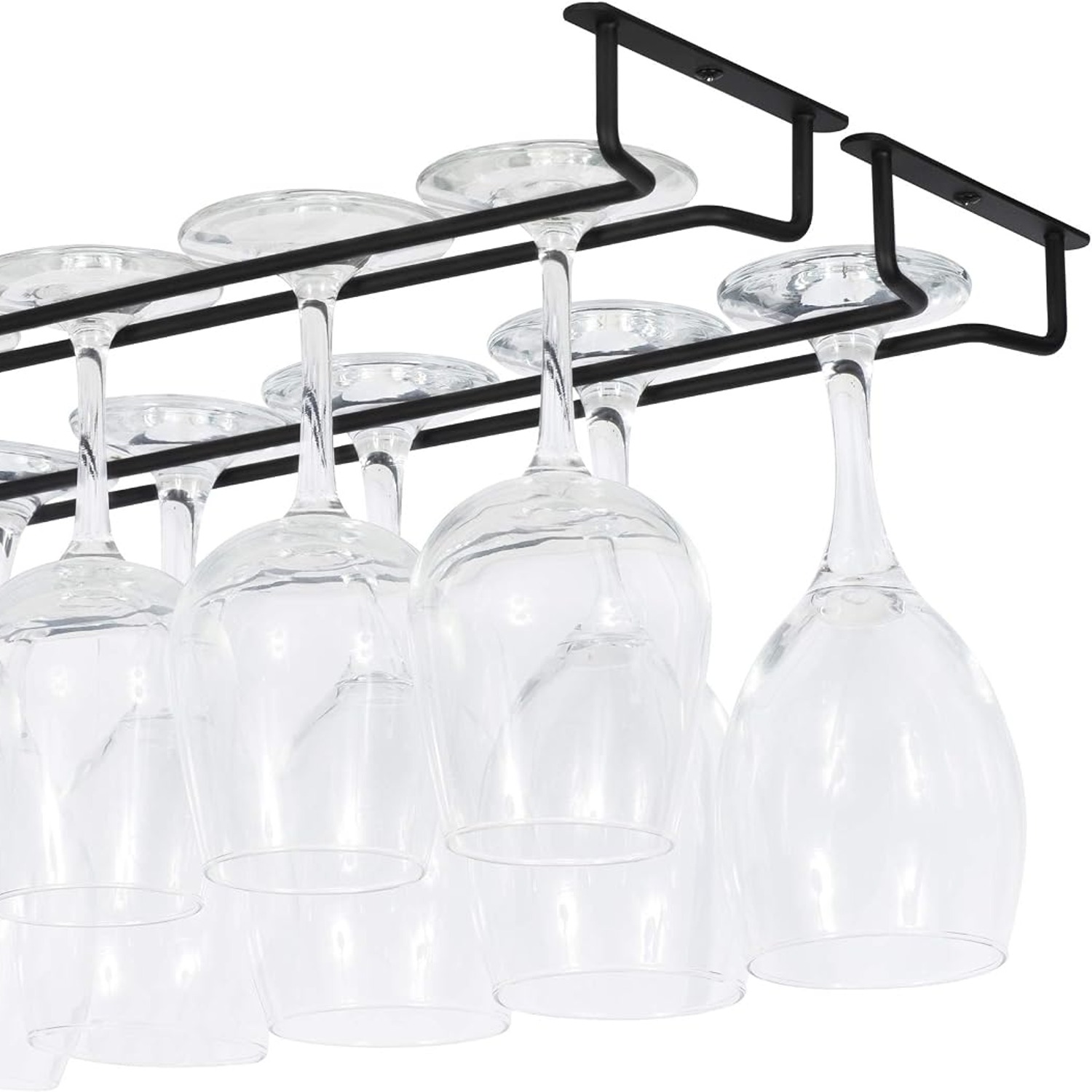
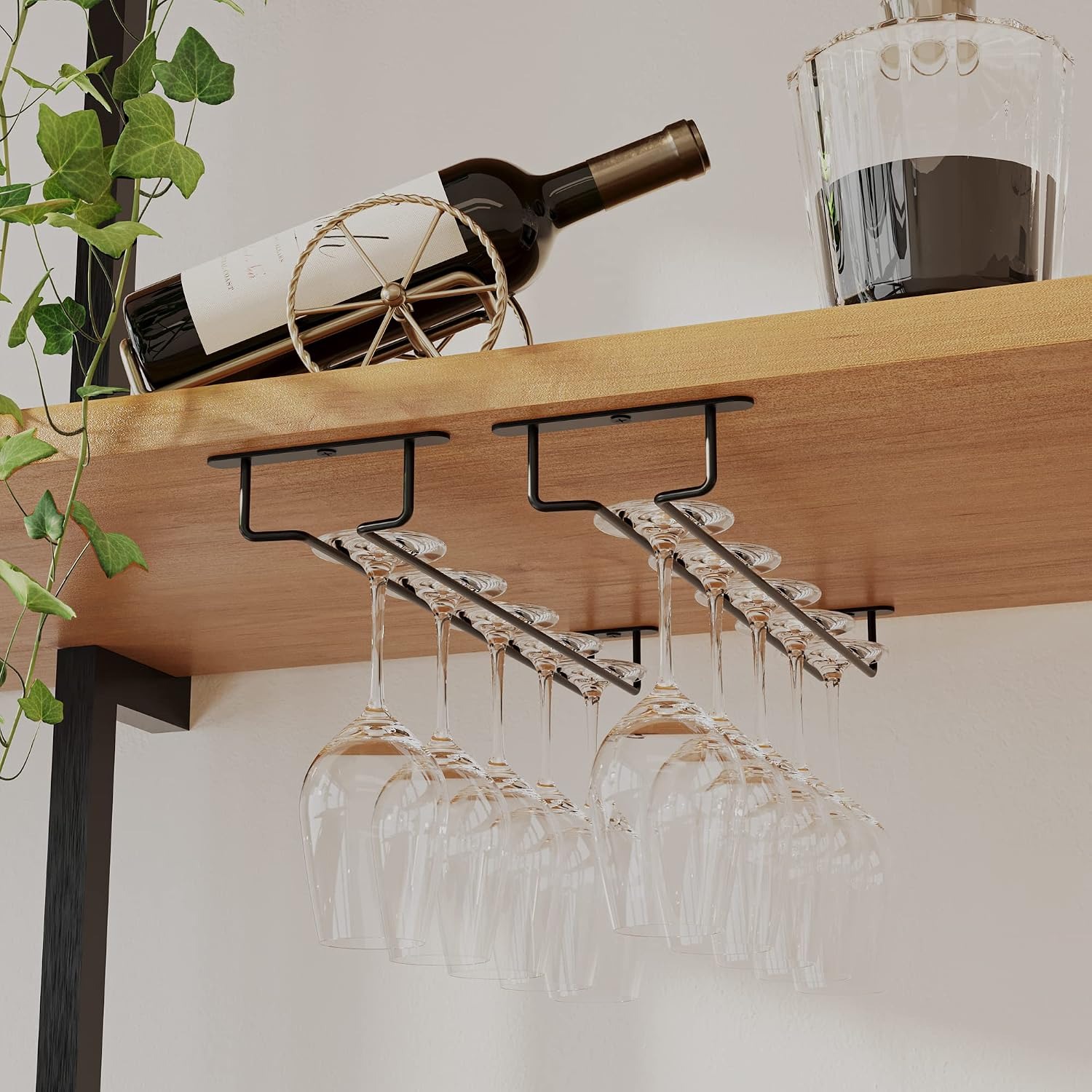
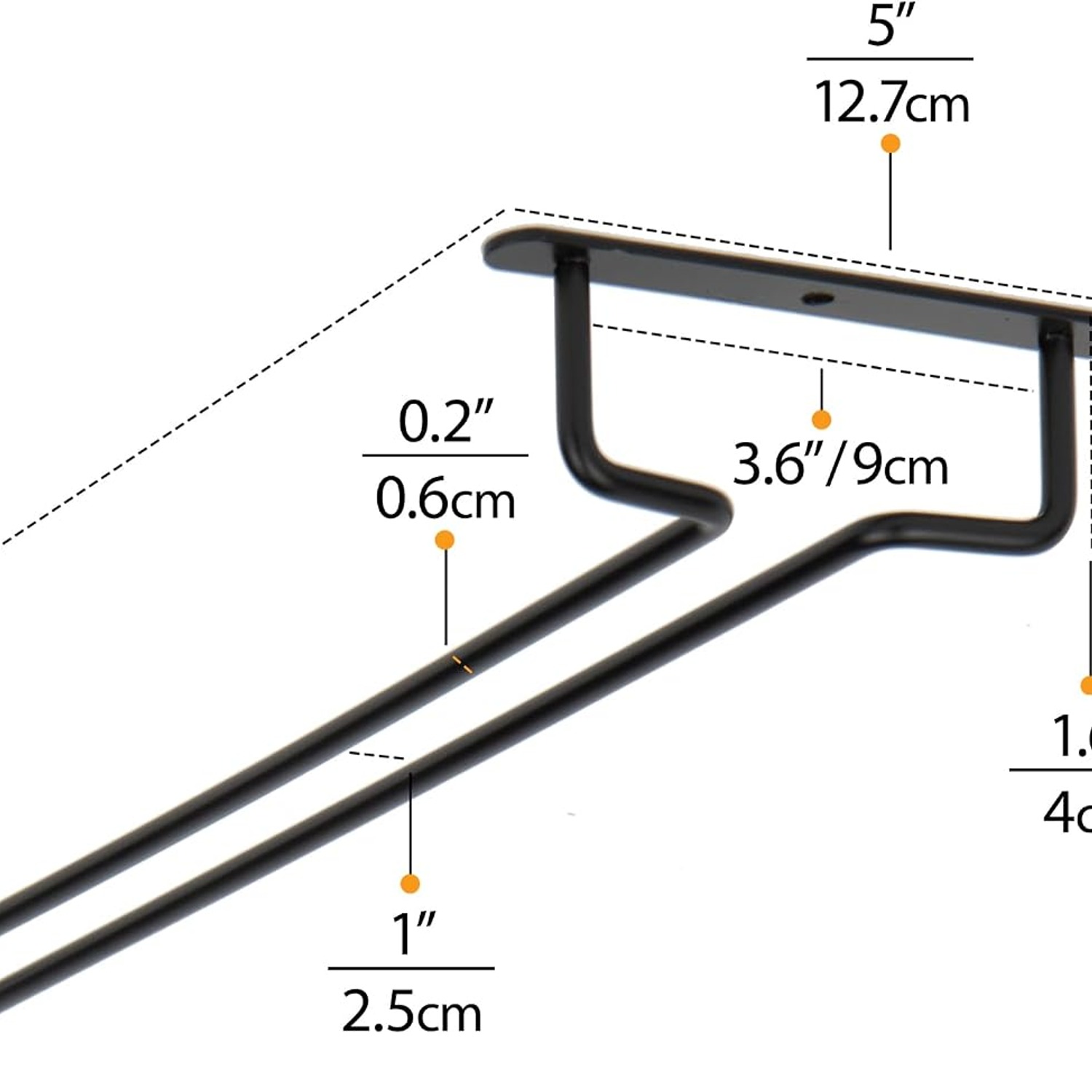
The design is simple, which is why it works. Each rack is a flat plate that screws to the underside of a cabinet, with rails running out from it. Between the rails is a gap just wide enough for the stem of a glass and too narrow for the foot. You slide the foot in from the open end, the stem drops through the gap, and the glass hangs by its base.
Each rack in this set has two rows. That doubles the capacity compared with a single-row rail of the same width, and it gives you a tidier look, because the glasses sit in two straight lines rather than one long straggly one.
Hanging the glass nose down does three useful things. Dust stays out of the bowl. The rim never touches another rim. And after washing, water runs off instead of pooling in the base, which is why a lot of people treat the rack as a wine glass drying rack as well as storage.
Who this suits
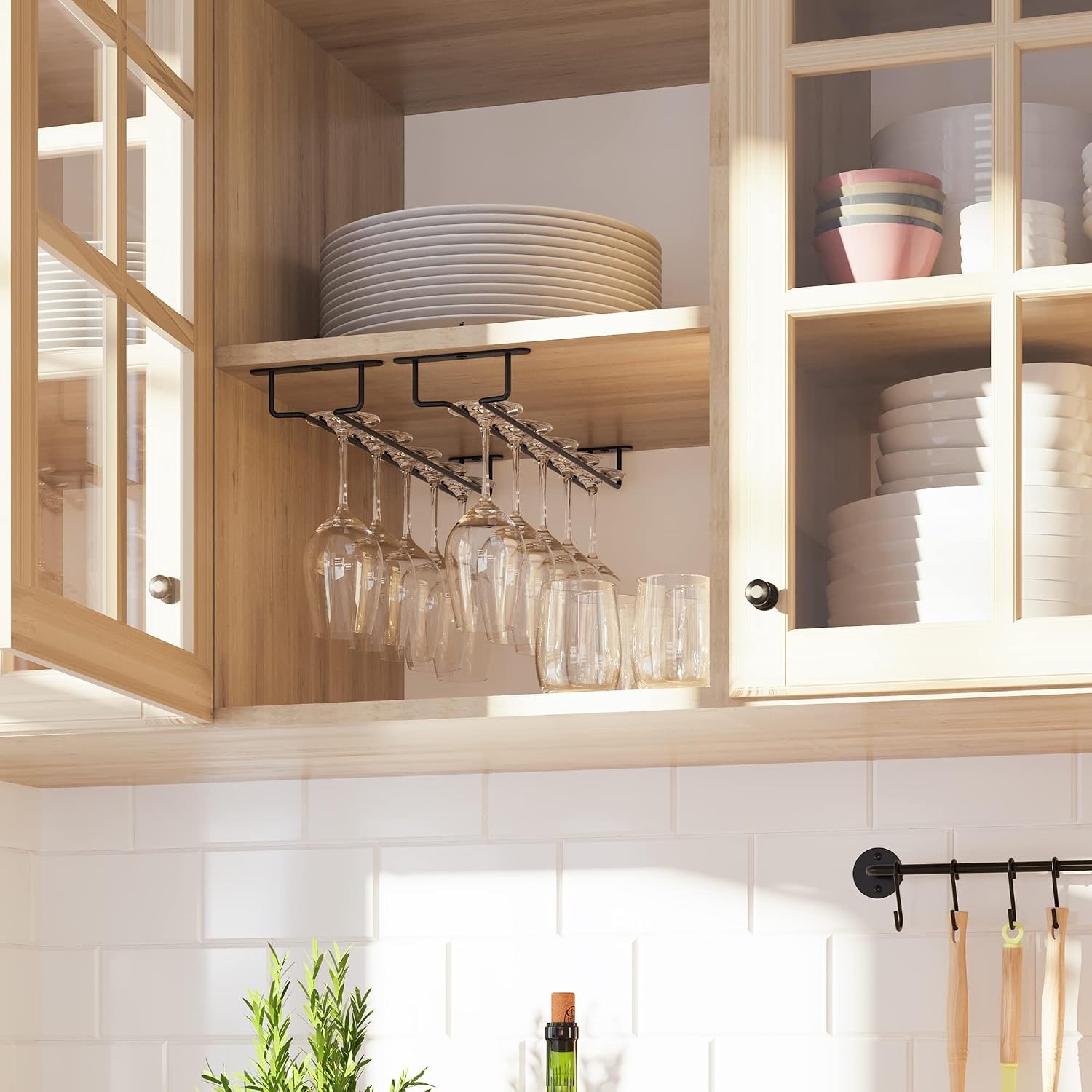
This is a good fit if you have more stemware than cupboard space, which covers a lot of households. It is especially useful in small kitchens and apartments, where every shelf is already spoken for and a counter full of glasses is the only alternative.
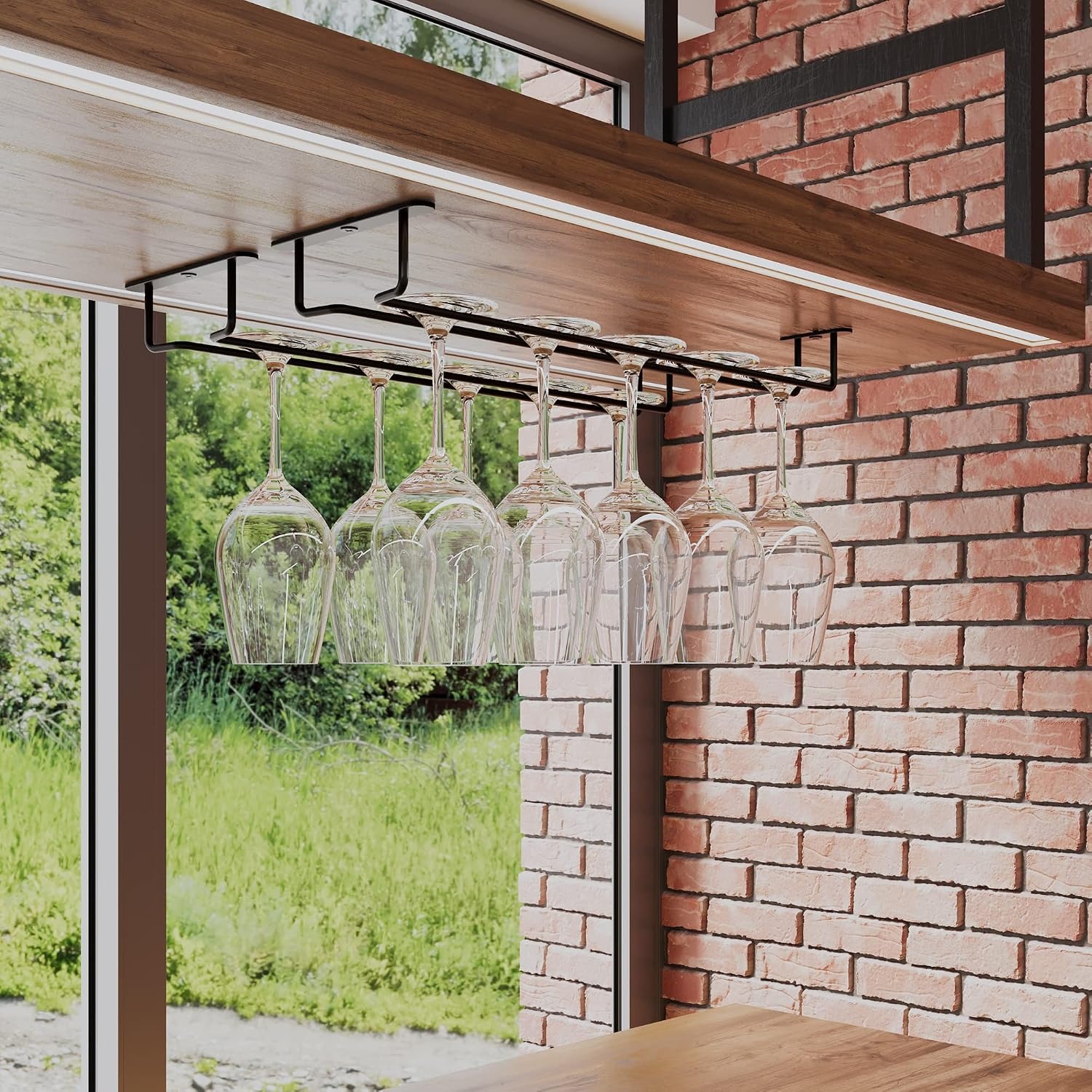
It also suits anyone building a home bar area. Mount a rack under a bar cart shelf, a buffet or a hutch and the glasses become part of the setup rather than something you fetch from the kitchen. Because you get two racks in the set, you can keep one in each location and still have spare capacity.
The people it does not suit are renters who cannot drill, and anyone who mostly uses stemless tumblers. The rack holds glasses by the stem, so a stemless glass has nothing to hang from.
Choosing the right rack for your space
Three measurements decide whether this will work for you.
The first is cabinet depth. The rack is 12.7 cm deep. If your cabinet underside is deeper than that, the rack tucks neatly inside the shadow line and barely shows. If it is shallower, part of the rack will sit proud of the front edge, which some people do not mind and others do. Measure before you commit.
The second is the width of your glass feet. This is what really sets capacity. A slim champagne flute has a small base and several will fit along a row. A big burgundy balloon with a wide base eats up far more rail. If your collection is mostly large glasses, plan for fewer per rack and consider mounting both units side by side.
The third is clearance below. Work out the height of your tallest glass, add the 4.1 cm height of the rack itself, and check that total against the space between the cabinet and whatever is below it. Kettles, toasters, splashback shelves and tall taps all have a habit of being exactly where the glass wants to hang.
Weight is the easy one. The stated shelf capacity is 5 pounds per rack, which comfortably covers a row of empty glasses. It is not a place to store full bottles or heavy jugs.
Fitting it without drama
Installation takes a few minutes per rack and needs a drill, a screwdriver and a pencil. Hold the rack against the underside of the cabinet where you want it, and mark the screw points. Masking tape across the cabinet underside gives you a surface to mark on and stops the drill bit wandering.
Drill pilot holes before you drive the screws. Cabinet bases are often thin or made of engineered board, and going straight in with a screw can split the material or strip the hole. Check the screw length against the thickness of the cabinet base too. If the base is thin, use a drill stop or swap to a shorter screw so nothing appears inside the cupboard above.
Think about placement before you drill, not after. Pull out the drawers and open the cupboard doors below to make sure nothing swings into the hanging glasses. Avoid mounting over a cooktop, where grease and steam will coat everything. And if you plan to use both racks in one run, lay them out on the counter first so you can set the spacing by eye.
Living with it day to day
Load the racks with the glasses you actually use, not just the showy ones. The whole point is quick access, and a rack full of glasses you never touch is just a dust shelf in a different orientation.
Slide glasses in and out gently. The rails are smooth, but a glass dragged sideways under force will complain. Teach anyone else in the house the same habit and the glasses will outlast the rack.
Cleaning is a quick wipe with a damp cloth, then dry the rails. The top edge of each rail collects dust, so that is the part worth paying attention to. Stay away from abrasive pads and bleach, because painted finishes do not forgive them. The rust resistant coating handles normal kitchen humidity, but it is not built for outdoor conditions.
Every few months, give the screws a check. Glasses going in and out create tiny repeated movement, and over a year that can loosen a fixing. Thirty seconds with a screwdriver keeps everything solid.
Getting more capacity later
One nice thing about a modular rack is that your storage can grow. If you start with the two racks in this set and later find yourself short, you can add more units along the same cabinet run and keep the look consistent. Because they share the same finish and profile, extra racks blend in rather than looking bolted on.
If you are planning a larger bank from the start, sketch the run on paper with your glass feet widths factored in. It is easier to get the spacing right on paper than it is to redrill a cabinet.
The short version
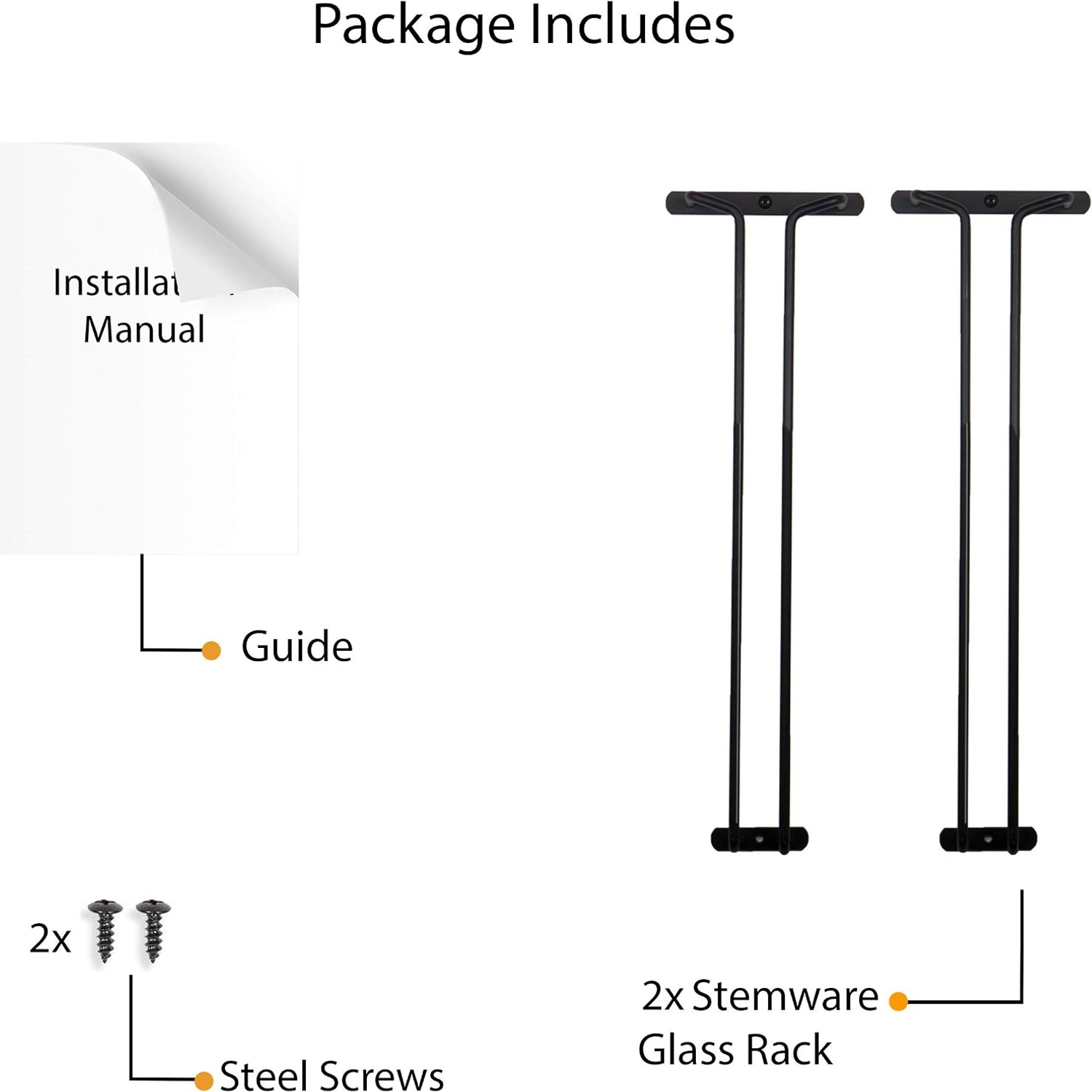
If your wine glasses are eating shelf space, hanging them under the cabinet gets that space back and keeps the glasses cleaner at the same time. This set gives you two racks with two rows each, in a painted black rust resistant finish, with mounting hardware in the box and a stated capacity of 5 pounds per rack.
Measure three things before you order: cabinet depth against the 12.7 cm rack depth, the width of your widest glass foot, and the clearance below. Get those right, drill pilot holes, and you will have a tidier kitchen and easier-to-reach glassware in under half an hour.