
The complete guide
How to Choose and Mount a Wall Wine Rack That Actually Works
The problem with storing wine in a normal house
Almost nobody has a cellar. What most people have is a cupboard with one shelf that has slowly turned into a bottle graveyard, where the good red is behind the cooking wine and you have to move four things to reach anything. Bottles get laid flat, then stacked, then one rolls out when you open the door.
Floor racks solve some of that, but they take up floor. In a kitchen or a small dining room, floor space is the most expensive space you own. A rack that sits in a corner is a rack you will eventually bump with your hip or trip over with a laundry basket.
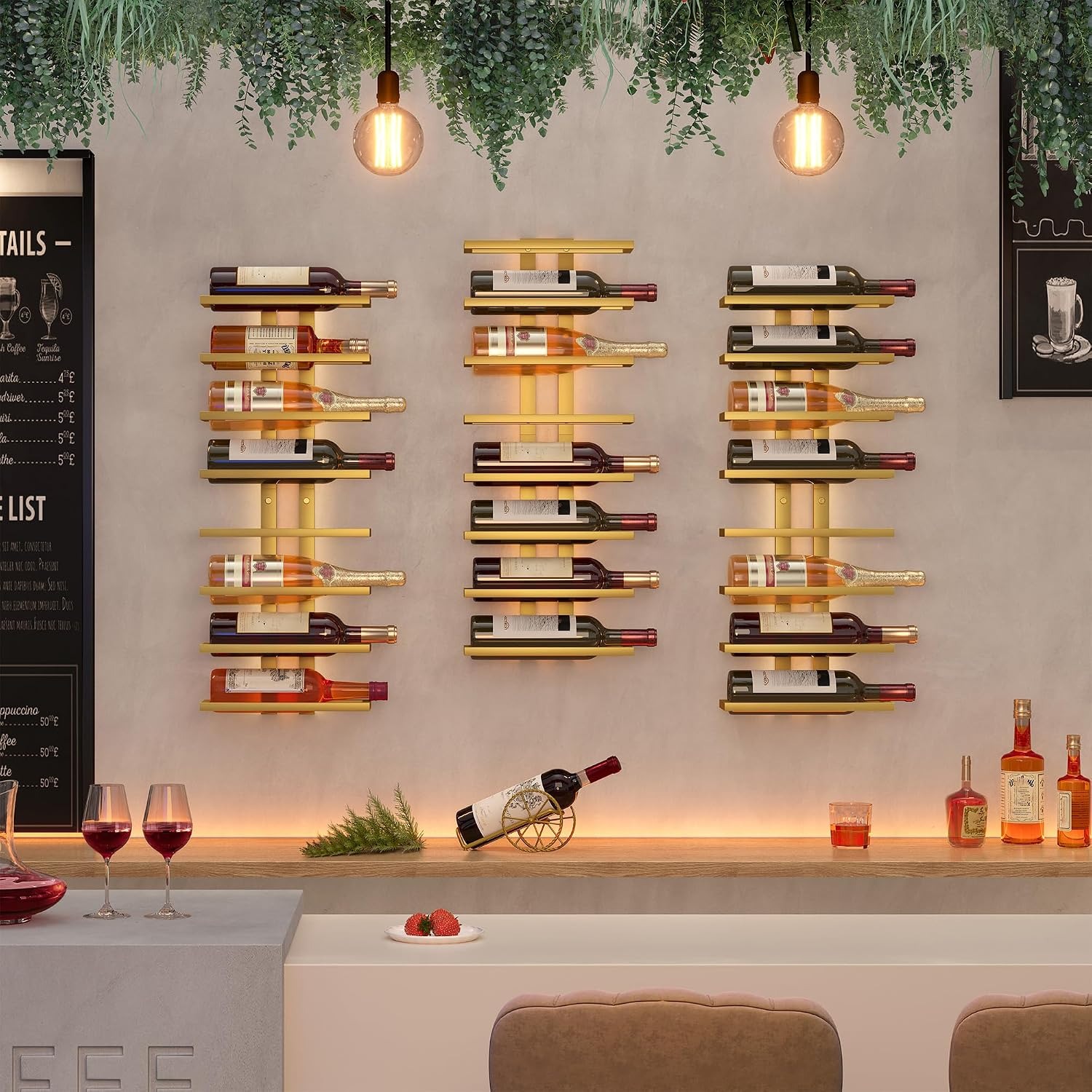
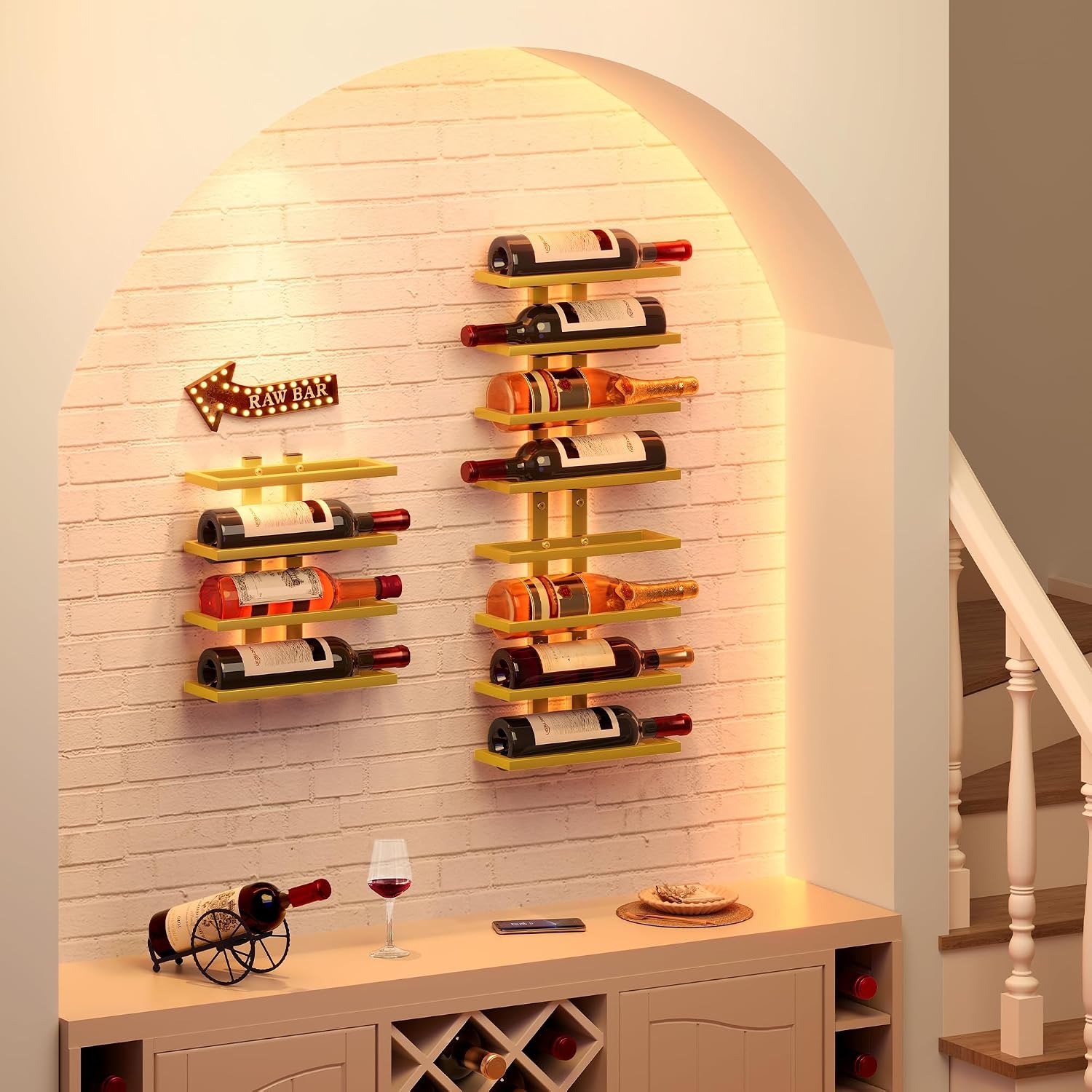
Wall storage sidesteps the whole issue. Walls are the one surface in a house that is almost always underused. A rack that is 10.3 cm deep takes up roughly as much room as a picture frame, and it holds eight bottles. Two of them hold sixteen. That is a case and a bit, up off the floor, visible, and reachable with one hand.
How a wall mounted wine rack works
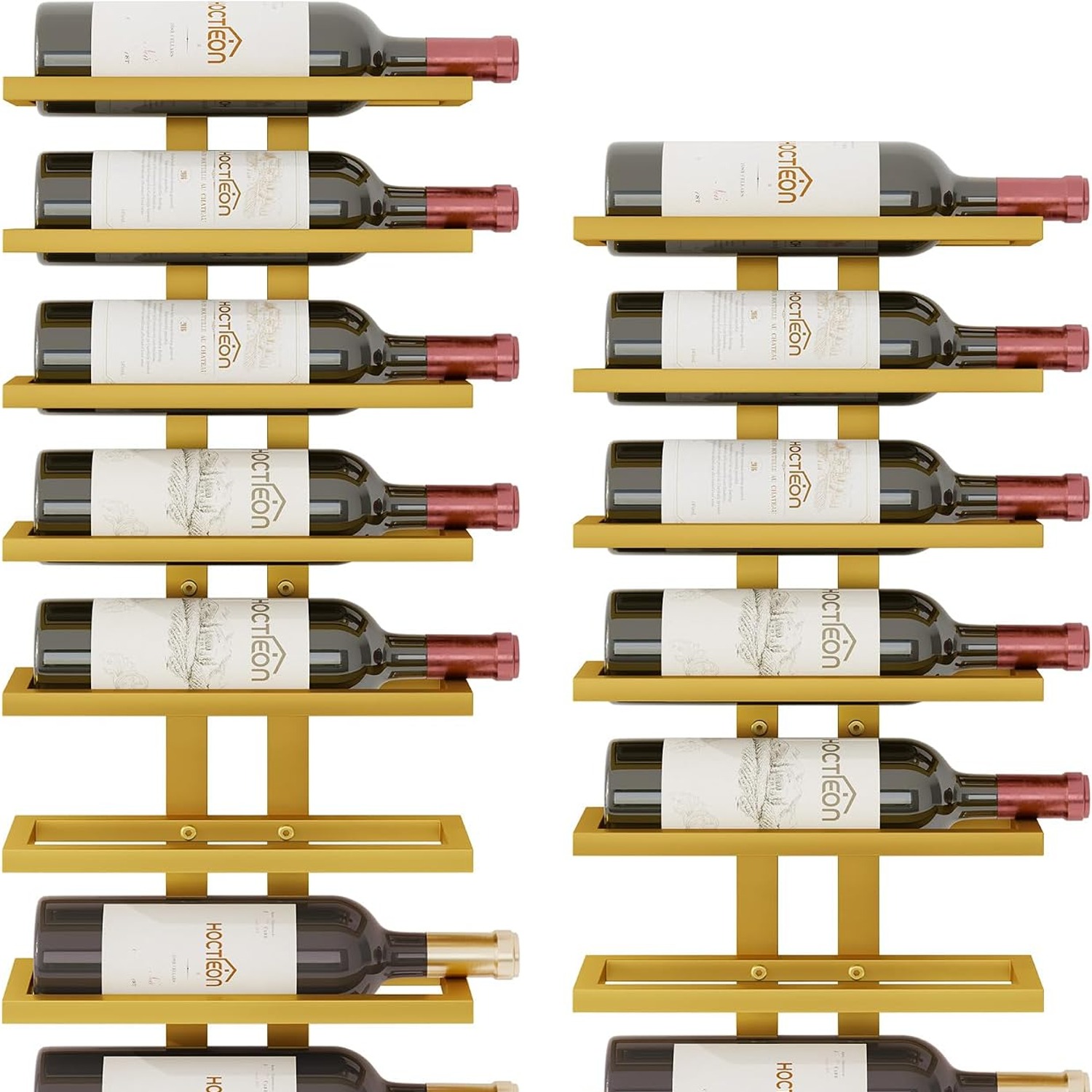
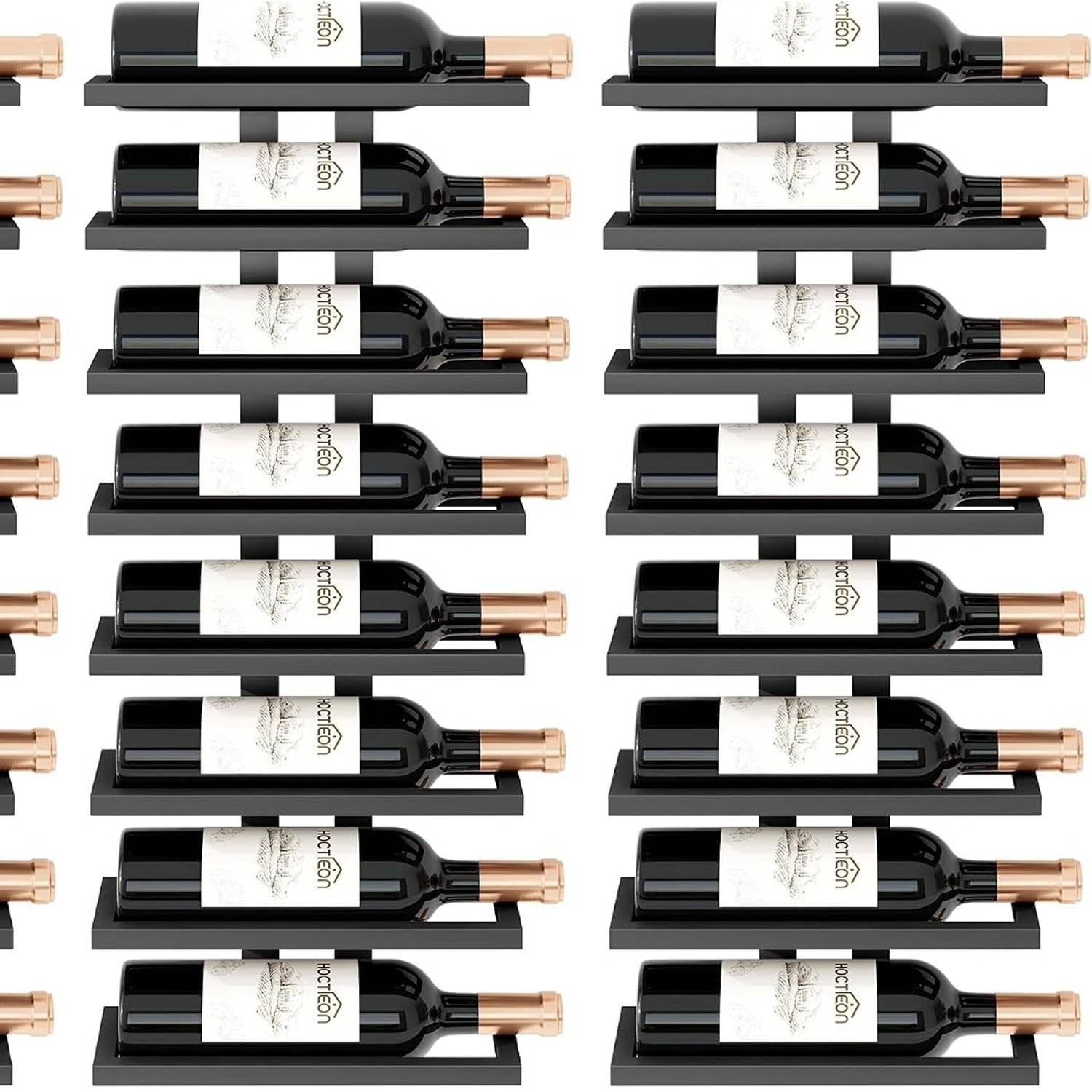
The design is simple. A vertical metal spine carries a series of cradles, one above the other, and each cradle holds a bottle lying on its side. The neck rests in a notch and the body sits in the arms, so the bottle is supported at two points and cannot roll out.
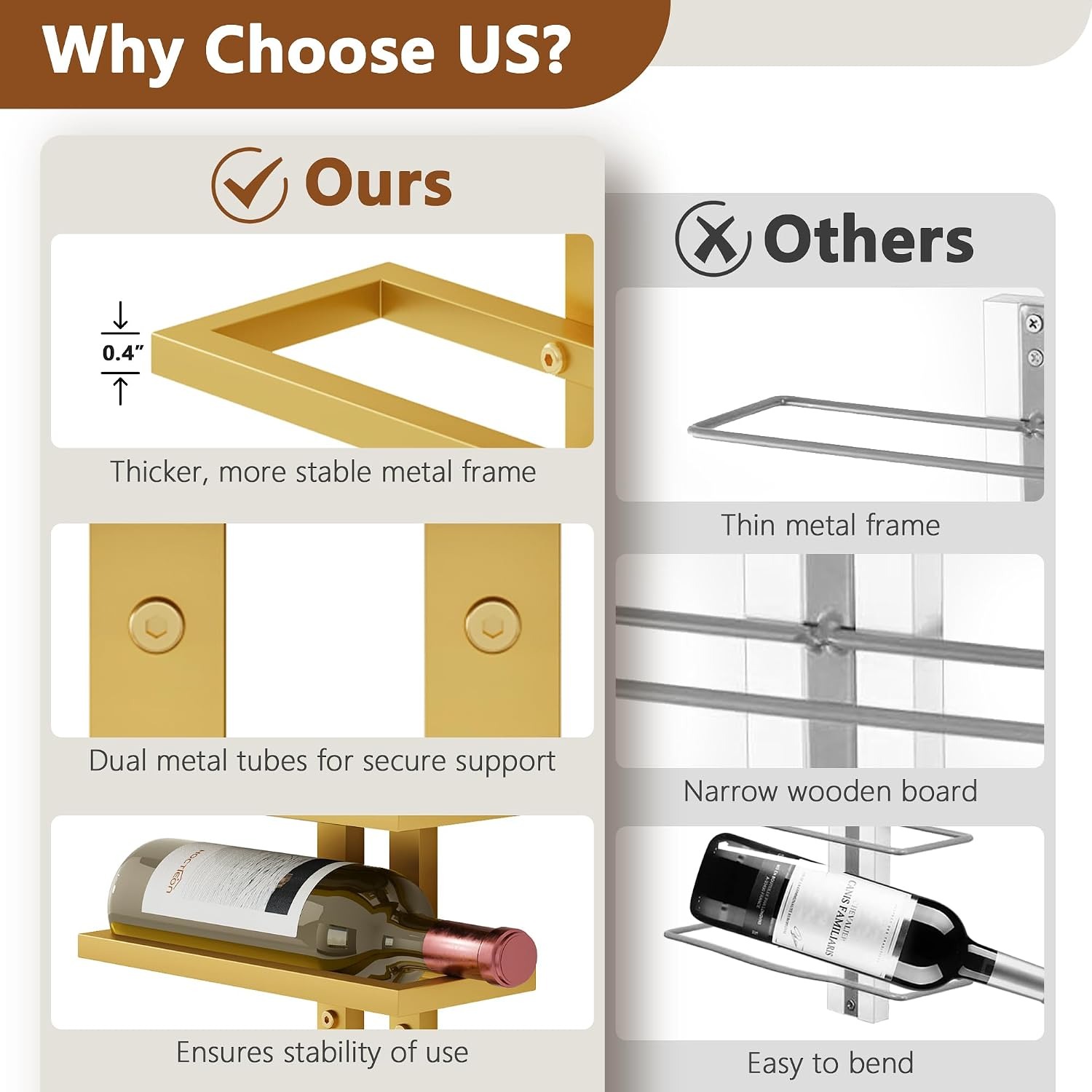
This particular set uses welded metal frames rather than bolt-together joints at every connection. Welding matters more than people expect. Joints that rely only on small screws can work loose as a rack is loaded and unloaded over the years, and a loose joint turns into a wobble. Welded sections stay put.
The other half of the equation is the wall fixing. The rack attaches with multiple screws, not a single hook, which spreads the load across more than one point. This is the part people rush and later regret. Eight full bottles is a meaningful weight hanging off your drywall, so the quality of your anchors matters more than the quality of the rack.
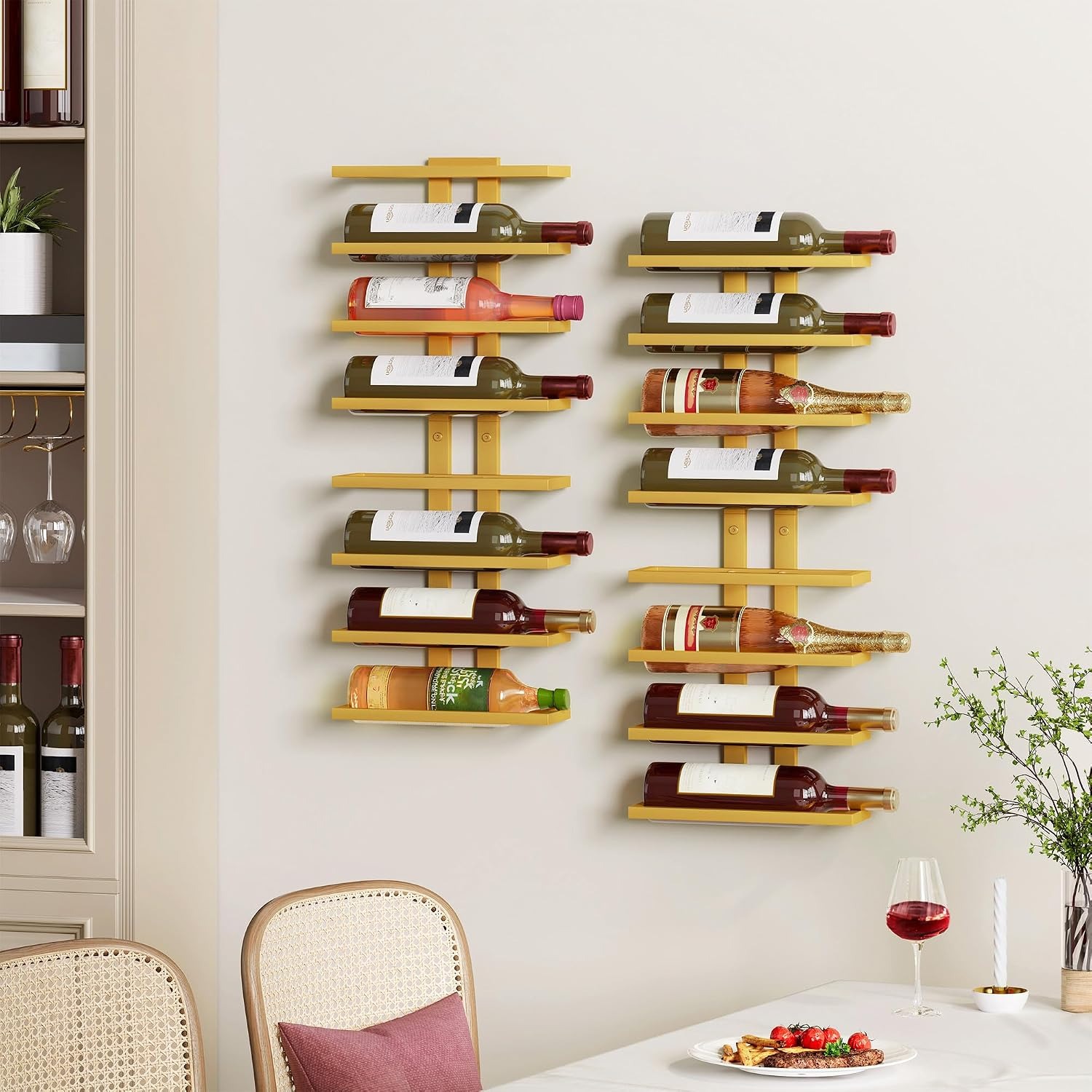
Each rack here is 71.7 cm tall and 27.5 cm wide, holding eight bottles. Because you get two in the pack, you can place them as a pair or treat them as separate pieces in different rooms.
Who this suits
Apartment dwellers get the most out of it. If your kitchen is a galley and your dining area is a table pushed against a wall, vertical storage is the only direction left. The shallow depth means you can walk past a loaded rack in a narrow passage without clipping it.
It also suits people who want their bottles on show. There is a difference between storage and display, and a wall rack does both. Labels face outward, so you can see what you have without pulling anything out. For anyone building a small home bar, this is often the cleanest solution going.
Renters can use it, though with a caveat. You will be drilling holes, so check your lease and be ready to patch and paint when you move. The holes are small and easy to fill, but it is a conversation worth having with a landlord first.
It is less suited to serious collectors who are ageing bottles for a decade. A wall in a living space sees temperature swings and light, neither of which helps long storage. For drinking stock and bottles you will open within a year or two, it is ideal. For a 2015 Barolo you plan to open in 2035, you want a cool dark cupboard.
Choosing the right spot
Start with the wall itself. Brick, concrete and timber studs all give a solid fixing. Plain drywall between studs is the weakest option, and if that is all you have, you need proper heavy duty anchors, not the small plastic plugs that come with flat-pack furniture.
Next, think about heat and light. Avoid the wall directly beside an oven, above a radiator, or in the path of afternoon sun through a window. Heat ages wine faster and sunlight damages it through the glass. A shaded interior wall is better than an exterior one.
Then consider height. The top bottle on a 71.7 cm rack sits a long way up if you mount the base at shoulder level, so plan around the people who will actually use it. A good starting point is to have the lowest cradle at about hip height, which puts the whole run within comfortable reach.
Finally, check the swing of nearby doors and cupboards. A rack that projects 10.3 cm will stop a cupboard door that opens flat against the wall. Open everything nearby and check clearances before you mark a single hole.
Mounting it properly
Build the frames first, on the floor, with the numbered parts laid out in order. Doing this before you touch the wall means you know exactly what you are lifting and where the fixing holes land.
Mark your fixing points with a level, not by eye. A rack that is a degree off looks fine empty and looks obviously crooked once bottles go in, because the bottle necks exaggerate the angle. If you are mounting both racks side by side, use a single long level or a chalk line across both so the tops match.
Drill with the right bit for your wall. Masonry bit for brick and concrete, standard bit for timber, and a careful hand on drywall so you do not blow out the hole. Fit your anchors, hold the frame up, start all the screws before tightening any of them fully, then tighten in sequence.
Load from the bottom up. This lets you check the fixings hold as weight increases, rather than discovering a problem with sixteen bottles already in place. Give the rack a gentle pull once it is half full. It should not move at all.
Living with it
Day to day, there is not much to do. Wipe the frame with a damp cloth when dust builds up, then go over it with a dry cloth so moisture does not linger on the metal. Skip the scouring pads and the strong cleaners, since both can scratch or dull the finish.
Every few months, give the wall screws a quick check. Vibration from a nearby door, or the constant small load changes from taking bottles in and out, can work a fixing slightly loose over a long period. Ten seconds with a screwdriver prevents a bigger problem.
Lift bottles out rather than sliding them along the arms. It is gentler on the finish and on the labels, which scuff easily if dragged.
If you want more capacity later, the format makes it easy. Add another rack at the same height on the same wall and the run just gets longer. Because the racks are a fixed size and not extendable, expanding means adding units rather than stretching what you have, which is actually simpler to plan.
Using it for things that are not wine
The open cradle shape happens to be a good size for rolled towels. Plenty of people put one of these in a bathroom or beside a laundry sink for exactly that reason. It also handles oil bottles, cordials and large sparkling water bottles in a pantry, though check the diameter first since wider bottles are a tighter fit.
Having two racks in the pack makes this easy to try. Put one up for wine, use the second somewhere else, and see which room benefits more.
The short version
This is a 2-pack metal wall mounted wine rack holding sixteen bottles in total, eight per unit. Each rack is 71.7 cm tall, 27.5 cm wide and only 10.3 cm deep, with welded construction and multiple screw fixings. The set weighs 3.06 kg and arrives with numbered parts, installation tools and a guide.
It is a strong fit if you are short on floor space, want your bottles visible, and are happy to drill into a wall. It is less suited to long term cellaring or to oversized bottle formats. Pick a cool shaded wall, use anchors that match your wall type, mount it level, and load from the bottom up. Do that and it will hold your wine neatly for years.