

The complete guide
How To Choose A Countertop Wine Rack That Actually Fits
The problem with loose bottles
Wine has a way of piling up. You bring one home for dinner, someone gives you two at a birthday, and before long there are six bottles standing in a huddle beside the toaster. They get knocked over. You forget what you have. The good one hides behind the cheap one until it is six months past its best.
A countertop wine rack solves a small, specific problem. It gives bottles one spot, keeps them lying flat, and puts the labels where you can read them. That last part matters more than people expect. When you can see what you own, you drink the right bottle on the right night instead of grabbing whatever is closest.
How a three-tier countertop rack works
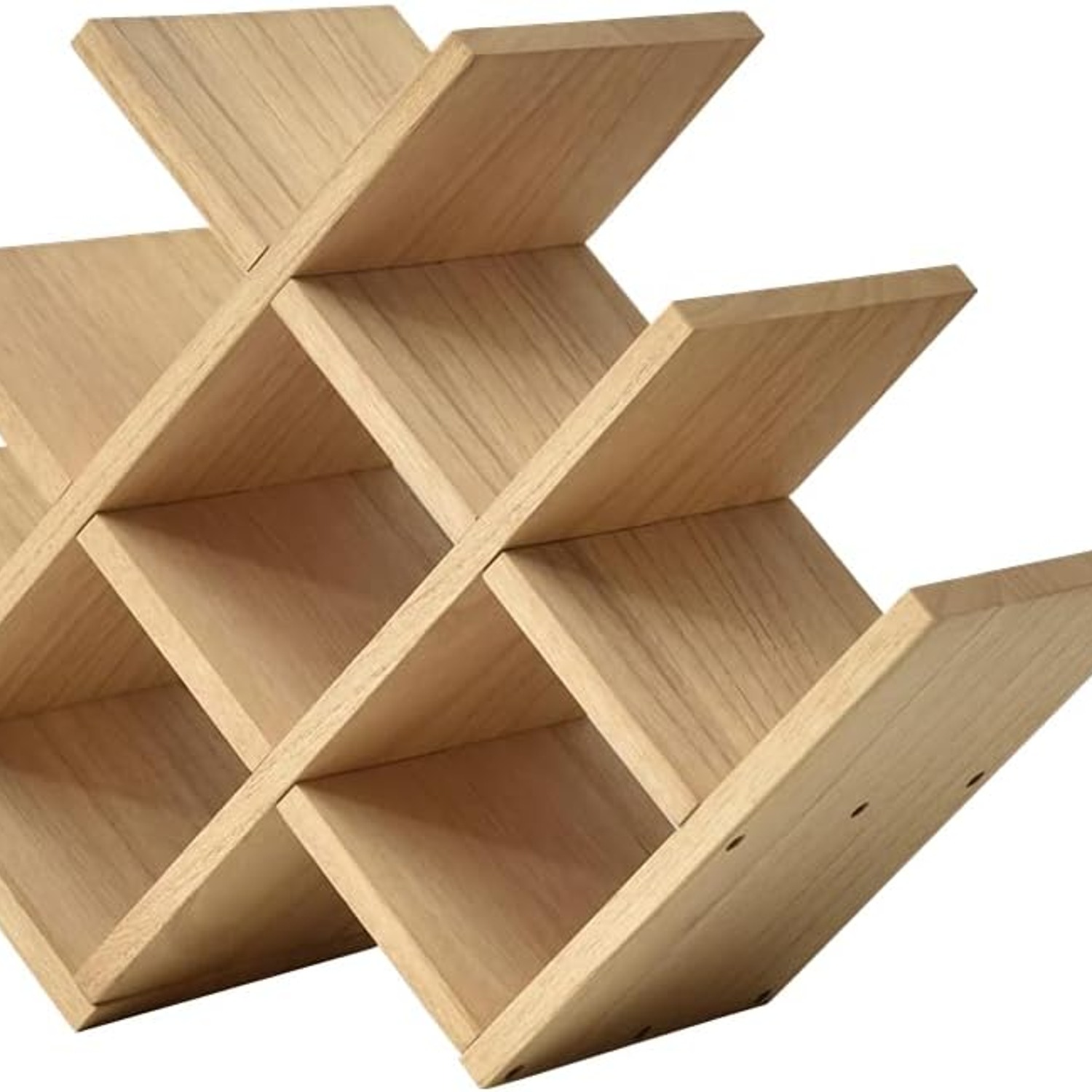
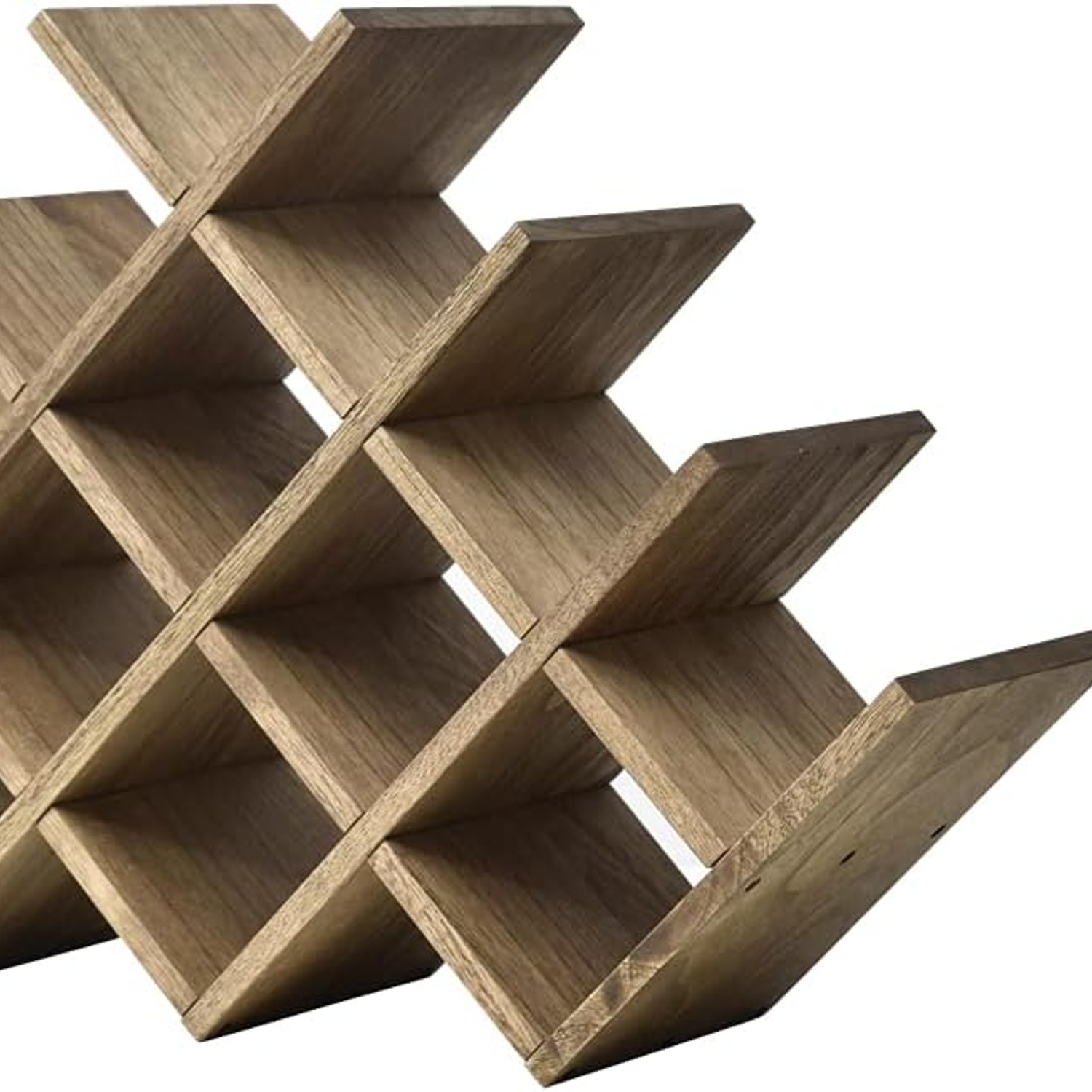
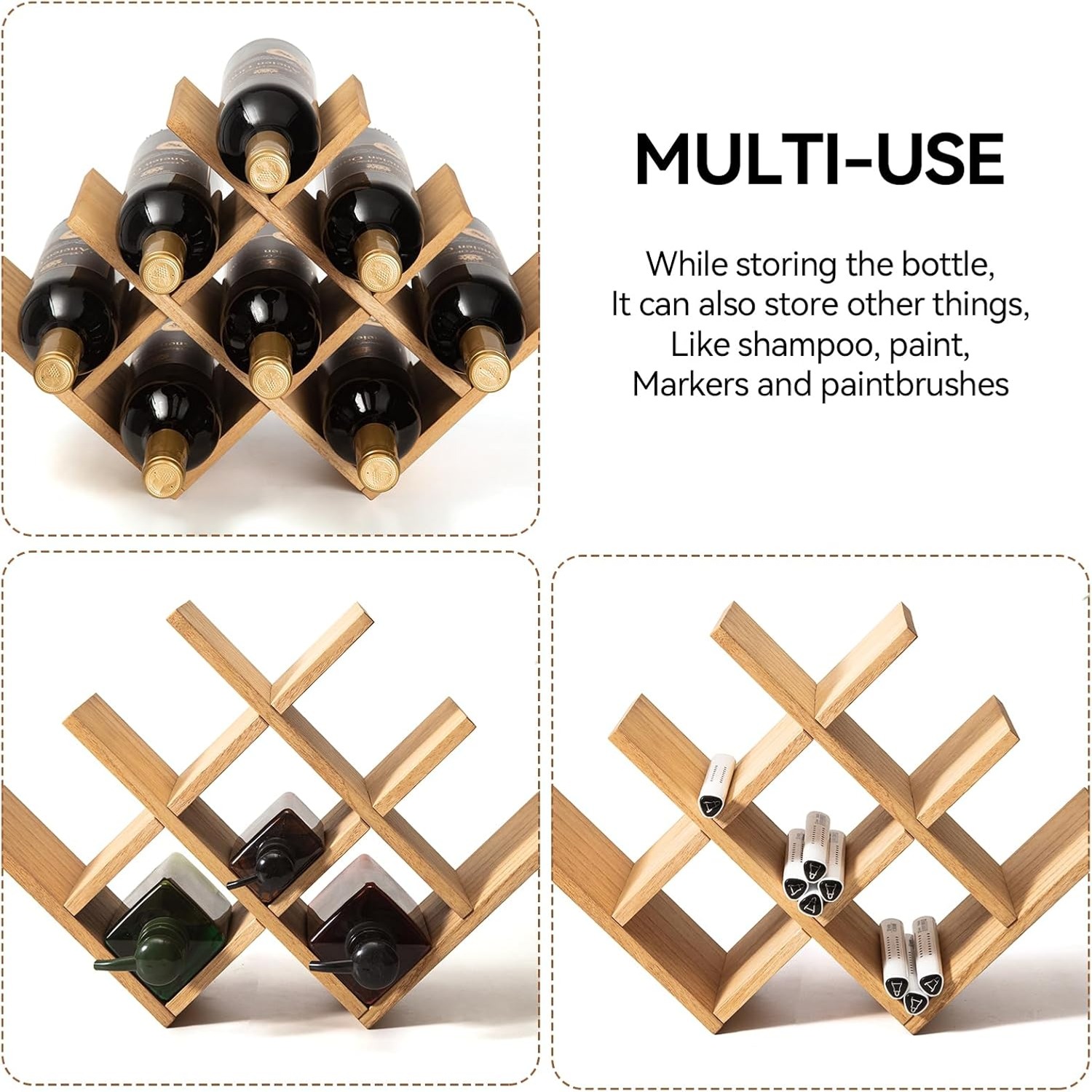
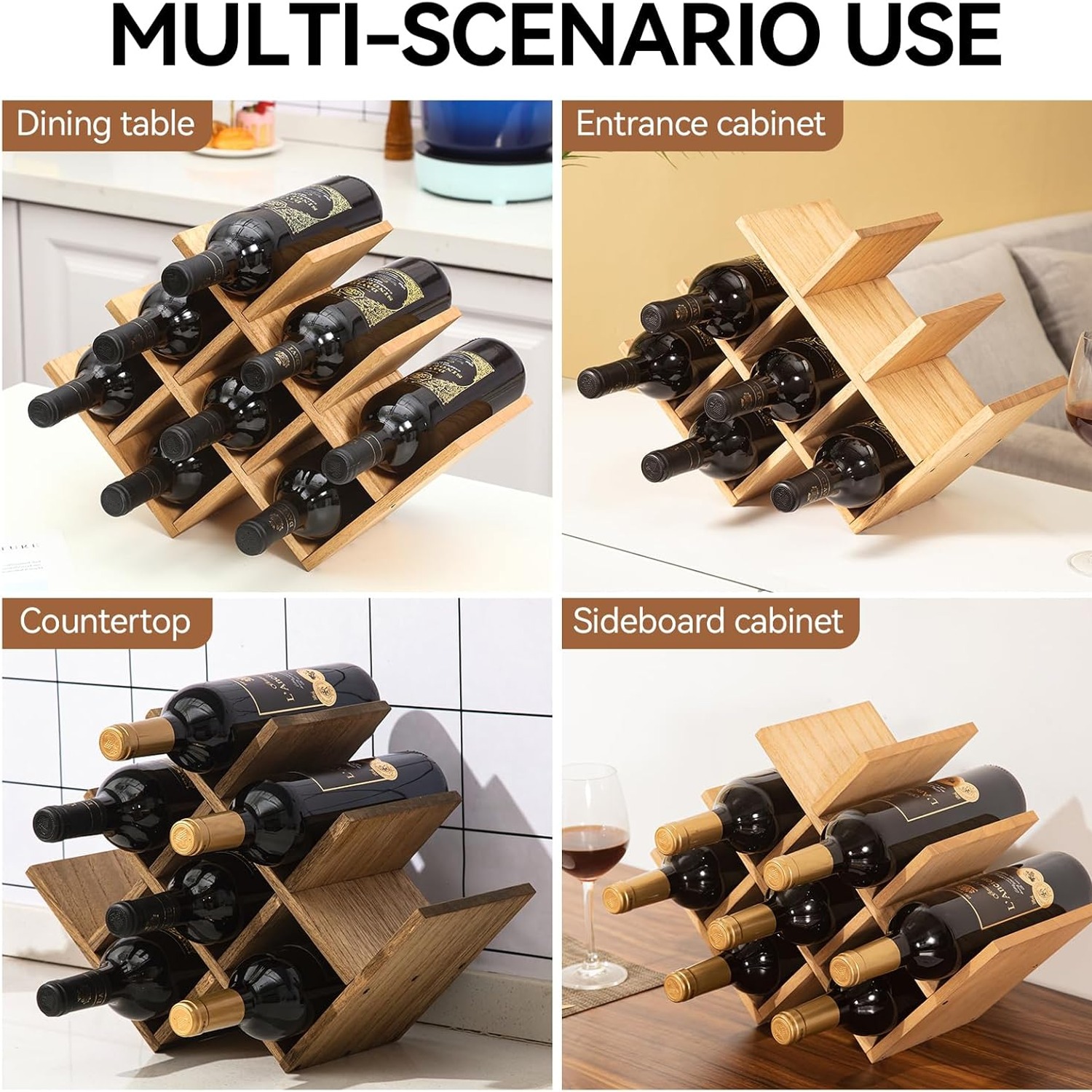
This style of rack is about as simple as storage gets. Wood boards form a lattice of open squares. Each square cradles one bottle, resting on its side. Three tiers stacked up gives you eight bottle spots inside a frame that is 42.5 cm wide, 15 cm deep, and 28.3 cm high.
The horizontal layout is not just for looks. Under a natural cork, wine needs to stay in contact with that cork. A dry cork shrinks, lets air in, and the wine goes off. Lying flat keeps it wet. Screw caps do not care either way, but storing everything the same way is easier than sorting bottles by closure.
The other benefit of flat storage is access. You slide a bottle out with one hand without disturbing the rest. Standing bottles on a shelf means shuffling the front row every time you want something from the back.
Measuring before you buy
Most wine rack disappointments come down to measuring, or not measuring. Two numbers matter.
The first is your available space. Pull out a tape measure and check the clear run of counter, shelf, or cabinet interior where the rack will live. You need at least 42.5 cm of width and 15 cm of depth. If it is going under an overhead cabinet or on a pantry shelf, check the vertical gap too. The rack is 28.3 cm tall and needs a little clearance above to get bottles in and out comfortably.
The second number is your bottles. The inner lattice openings on this rack are listed at roughly 3.5 x 3.5 inches. A standard 750 ml Bordeaux or Burgundy bottle slides in without drama. Champagne, sparkling wine, magnums, and some heavy-shouldered Italian bottles run wider. Stand one of your typical bottles on the counter and measure across its widest point before you order. If most of your collection is sparkling, a rack with larger openings is a better call.
People searching for the best small wine rack for counter use often skip this step and end up with a rack that holds six of their eight bottles. Five minutes with a tape measure avoids it.
Who this suits
A rack like this makes most sense if you keep a handful of bottles on hand rather than a cellar. Apartment dwellers, renters who cannot drill into walls, and anyone with a kitchen that is already short on cupboard space tend to get the most out of it. It sits on the counter, it needs no fixings, and it moves with you.
It also works well tucked inside a display cabinet or on a pantry shelf. The shallow 15 cm depth means it does not stick out past the shelf edge. For people after the best pantry wine rack option, that depth is the deciding factor.
Bar carts are another good home for it. The low profile keeps the cart looking open rather than crowded, and the natural timber tone sits comfortably next to glassware and a decanter.
Where it is less suited is long-term ageing. A kitchen counter gets warm, bright, and busy. If you are laying down bottles for five years, you want a cool, dark, stable spot and probably a different kind of storage. For wine you plan to open within the next few months, a counter rack is perfect.
Wood versus metal
Wood and metal racks both do the job, but they feel different in a room. Metal reads as industrial or modern and tends to disappear visually. Wood adds warmth and texture, which is why a lot of people shopping for the best wooden wine rack are really after something that looks like furniture rather than hardware.
The natural wood stain finish on this rack is a mid-tone that sits well against white, gray, or pale timber cabinetry. It does not try to match your kitchen exactly, which is actually an advantage. Near-matches look like mistakes. A clear contrast looks deliberate.
Wood also has a practical edge. It will not scratch a stone countertop the way a bare metal base sometimes can, and it does not get cold and sweat if your kitchen swings in temperature.
Putting it together
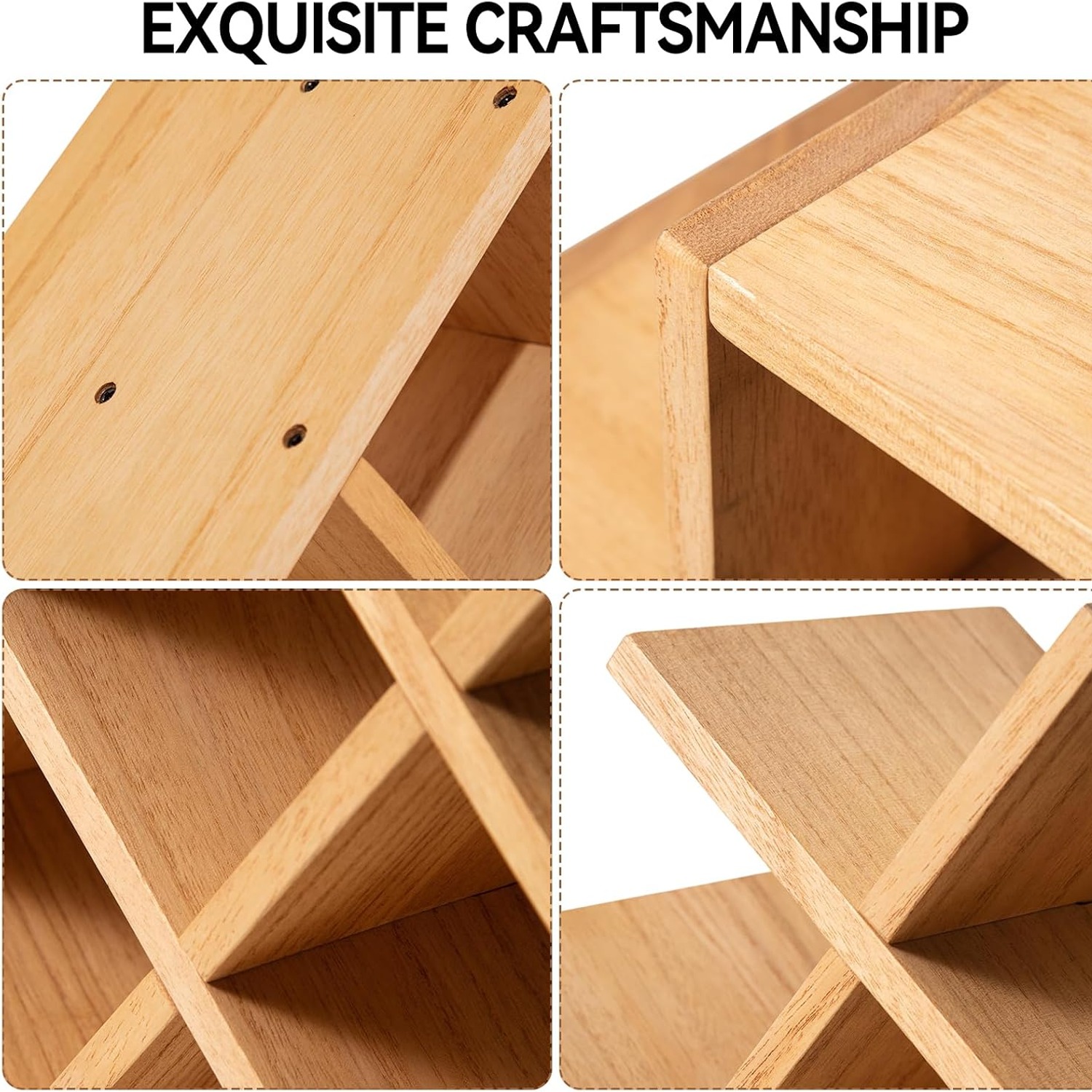
Assembly is part of the deal with flat-packed timber racks, and it keeps the shipping cost and box size down. The pack is listed as six wood boards, twelve screws with two spares, and an instruction manual.
A few tips make it easier. Clear a flat surface and lay the boards out so you can see which is which. Start every screw by hand before you tighten any of them fully, so the frame can shift slightly into alignment. Then go back and tighten everything properly. A rack that is snug all over is far more stable than one where a few screws are cranked hard and the rest are loose.
Build it where it will live, or at least carry it empty to its final spot. Then load the bottles.
Keeping it looking good
Care is undemanding. Wipe the wood with a dry cloth when it gets dusty. If something sticky lands on it, a barely damp cloth will lift it, then dry the spot straight away so moisture does not sit in the grain.
Keep it away from the sink splash zone, off the top of a dishwasher that vents steam, and out of direct sunlight. Heat and UV are hard on both wood finishes and wine.
Every few months, give the screws a quick check with a screwdriver. Timber moves a little with humidity and screws can loosen over time. Thirty seconds of tightening keeps everything solid. Do this any time you move the rack, too.
If you decide to use the open squares for something other than bottles, candles, tea towels, slim jars, keep the weight sensible. The frame was sized around wine bottles, not stacks of tinned food.
The short version
An eight-bottle wooden rack is a small piece of kit that fixes a daily annoyance. Bottles stay flat, corks stay wet, labels stay visible, and your counter stops looking like a bottle shop loading dock.
Before you buy, measure the space (you need 42.5 cm wide and 15 cm deep) and measure a typical bottle against the roughly 3.5 inch openings. Set aside twenty minutes for assembly, put it somewhere cool and out of the sun, and tighten the screws occasionally.
Do that, and you have a tidy, warm-looking spot for eight bottles that costs you nothing in cupboard space.