
The complete guide
How to Choose a Countertop Wine Rack That Actually Fits Your Kitchen
The problem with most wine racks
Wine storage has a habit of becoming furniture. You buy a rack, you find a spot for it, and then that spot is gone forever. In a big house with a dedicated bar nook, fine. In a flat with one meter of free counter, or a rental where you cannot drill into anything, a permanent rack is a bad trade.
The other half of the problem is that bottles without a rack end up everywhere. Standing in the pantry. Lying in a cardboard box under the stairs. Rolling around in the bottom of a cupboard until one of them chips. None of that is terrible for wine you will drink this week, but it is messy, and it means you never quite know what you have.
A foldable wooden wine rack sits between those two extremes. It gives you proper horizontal storage for ten bottles when you need it, and it disappears into a cupboard when you do not. That is the whole pitch, and for a lot of households it is the right one.
How this rack works
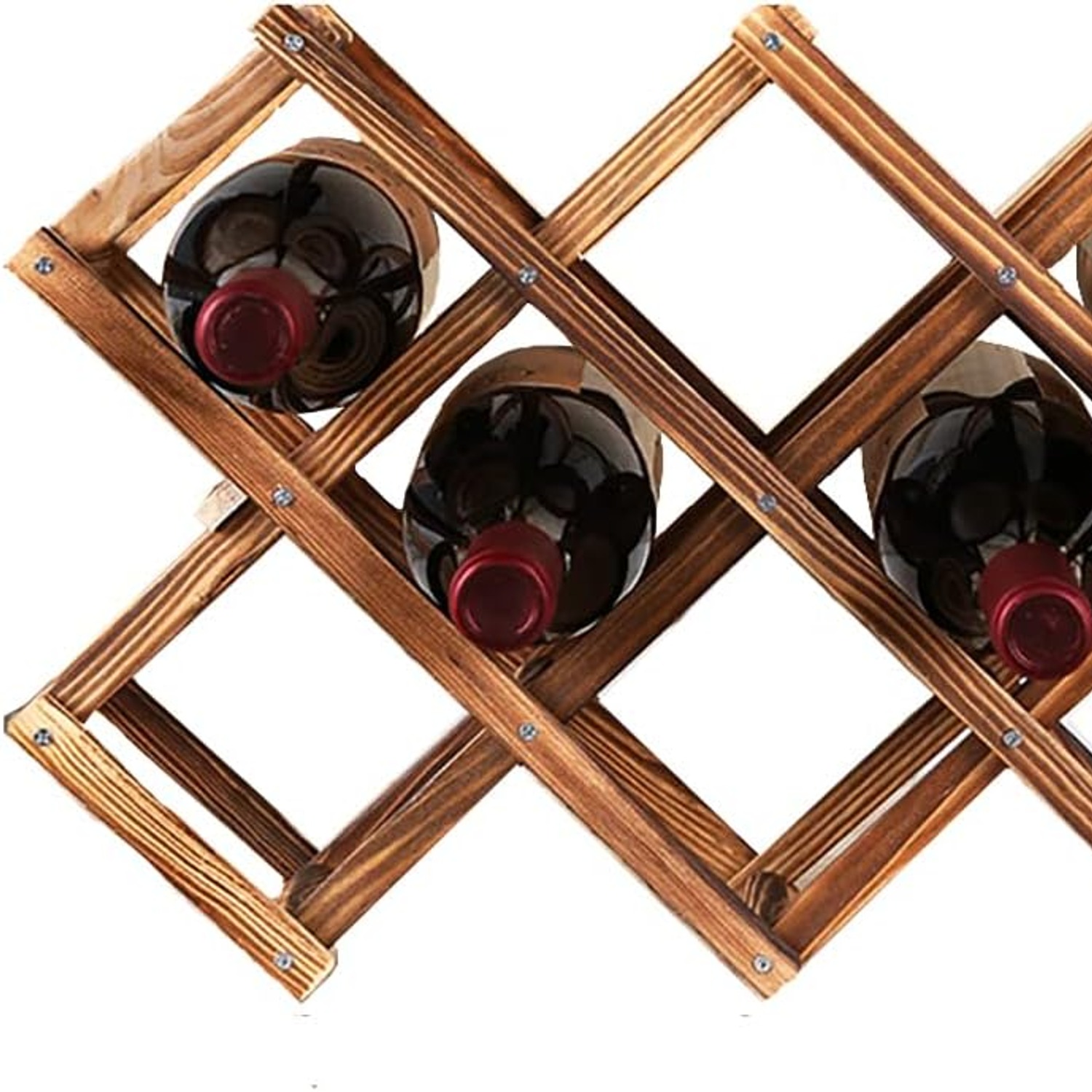
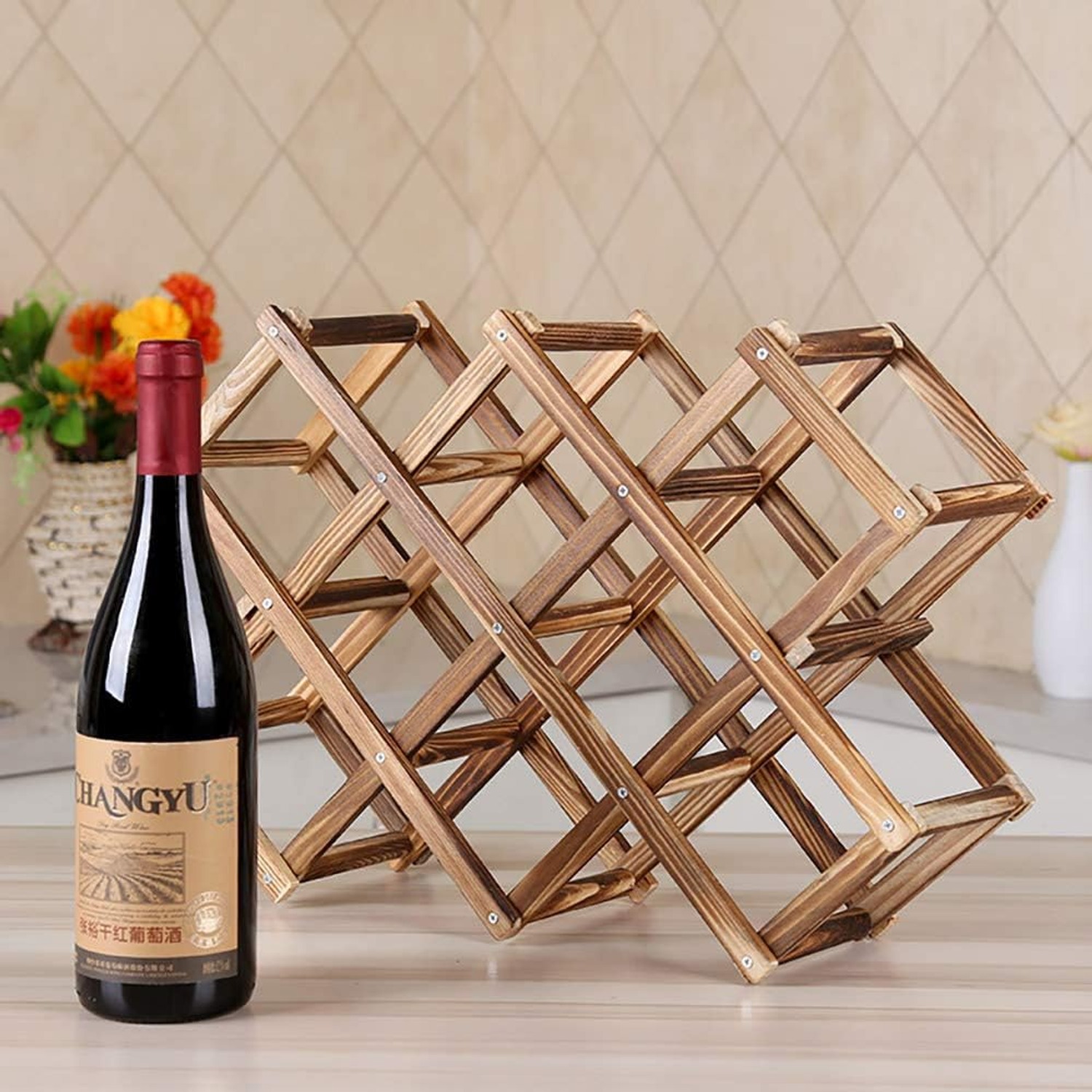
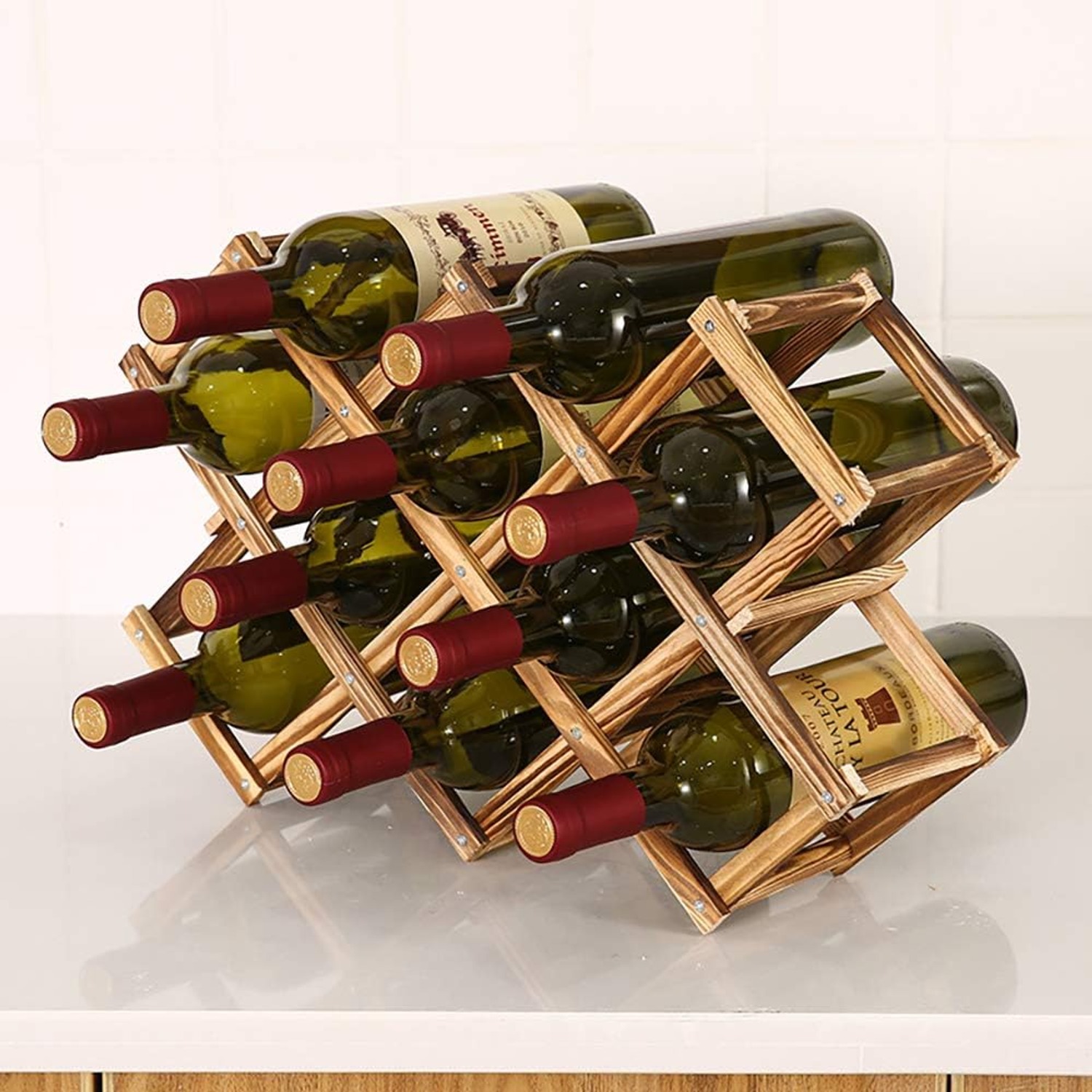
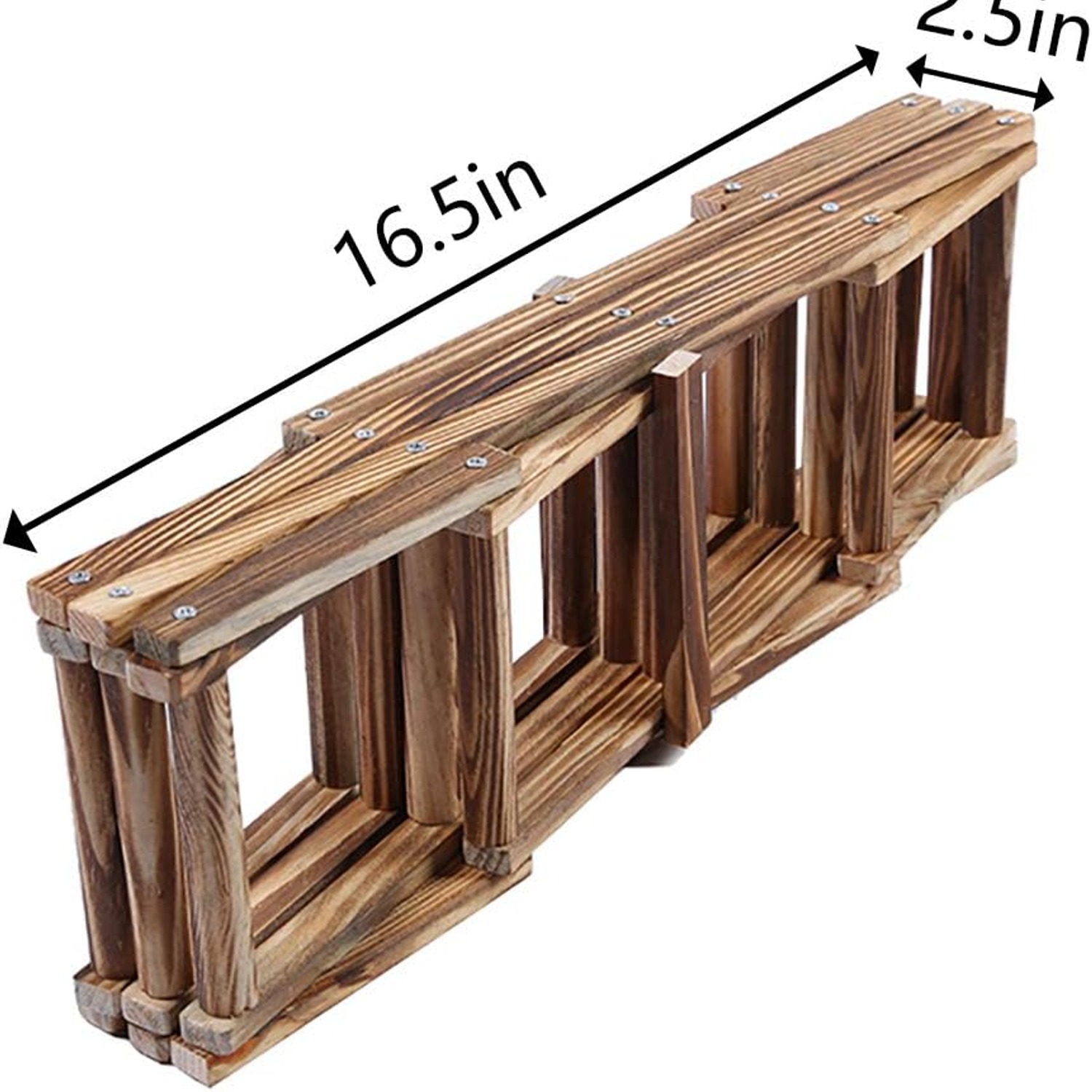
The design is straightforward. A wooden frame opens out into a lattice with eight slots. Bottles lie on their sides across the slots, and because the necks of the lower row leave gaps, the top layer can nest in and bring the total to ten standard bottles.
Lying bottles down is not just for looks. A cork is a bit of tree bark, and it holds its seal by staying slightly swollen with moisture. Stand a bottle upright for a year or two and the cork dries, shrinks and starts letting air past. Air is what turns good wine into something you tip down the sink. Horizontal storage keeps the wine against the cork and the cork doing its job. If everything in your rack is a screw cap, or everything gets drunk within a month, this matters less. It still does no harm.
The frame folds flat. That is the part that changes how you use it. A fixed rack has to earn its counter space permanently. A foldable one only has to earn it on the days it is open.
Size, weight and what that means in practice
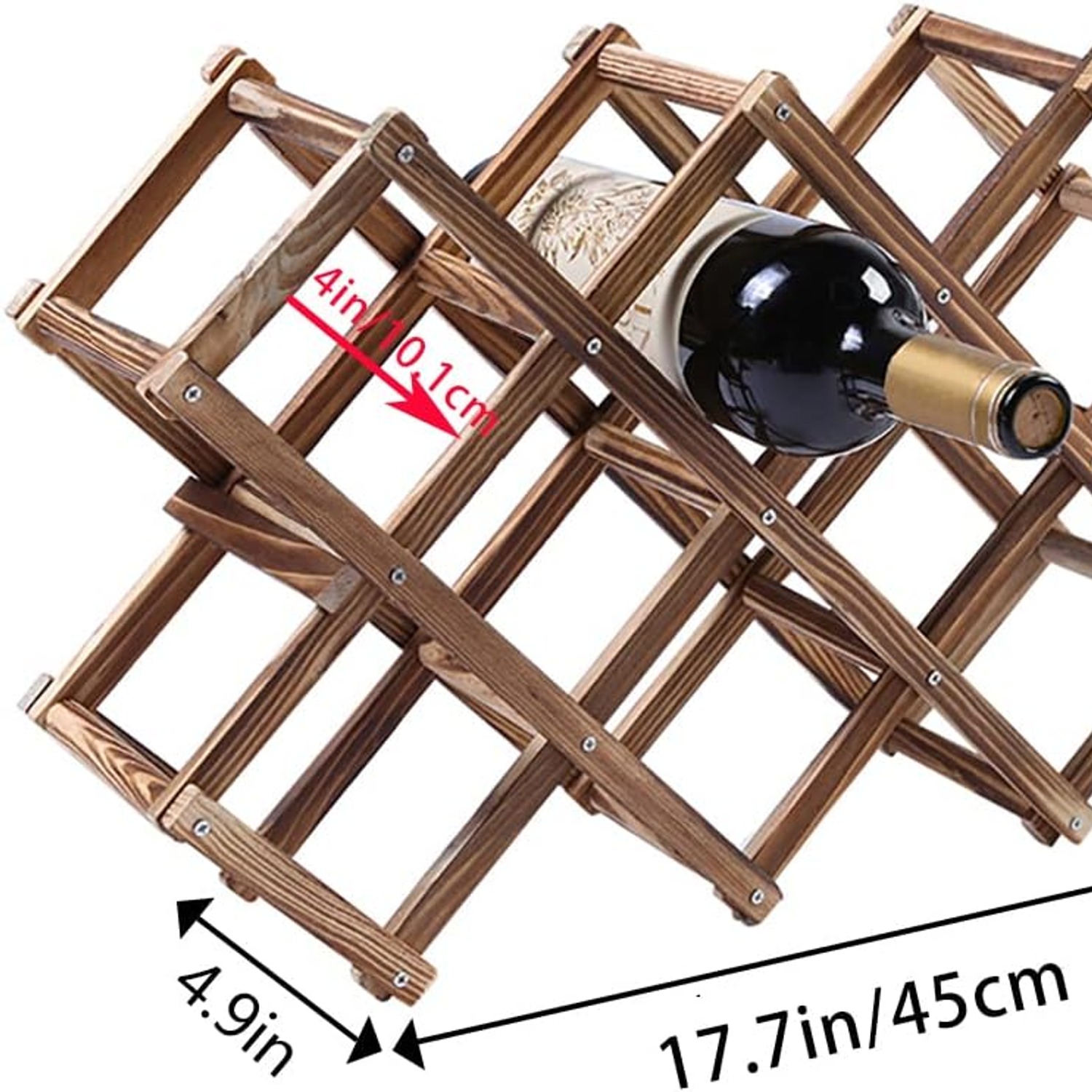
The listed product dimensions are 12.7 cm deep, 30.5 cm wide and 44.5 cm high. The listing also quotes a size of 12.2 x 17.7 x 4.9 inches, which is the same object measured in a different orientation. Before you order, get a tape measure out and check both the width and the depth of the surface you have in mind, plus the clearance above it if you are putting it under a wall cabinet.
The rack weighs 540 grams empty. Loaded with ten bottles, you are carrying somewhere around 13 kilos, so it is not something to shift fully stocked. Unload it, move it, reload it. That takes a minute.
The material is wood with a brushed brown finish, and the style is described as modern. In plain terms, it is clean and simple rather than decorative, which means it does not fight with whatever else is on your counter.
Who it suits
This rack makes sense for a few sorts of people.
The apartment dweller with limited counter space, who wants bottles off the floor but cannot give up a permanent corner. The occasional entertainer, who needs wine on display at Christmas and for birthdays and nowhere else. The renter who cannot mount anything to a wall. The small cafe or bar that resets its counter layout regularly. And the gift buyer looking for something practical for a friend who has started collecting.
It suits a different crowd less well. If you are storing fifty bottles, you want a proper cellar rack, not ten slots. If your collection is mostly magnums or heavy sparkling bottles, the slots are sized around standard 750 ml bottles and you will fit fewer. And if you want a rack that becomes part of the room, something fixed and solid will give you more presence.
Choosing between a foldable rack and a fixed one
Think about frequency first. How often do you actually have bottles waiting to be drunk? If the answer is always, a fixed rack is honest and a foldable one is overkill. If the answer is sometimes, the fold-flat design pays for itself in reclaimed counter space.
Then think about movement. Do you shift things around? Do you take wine to other people's houses? Do you have a holiday place where you want a rack for two weeks a year? Anything that involves the rack traveling pushes you towards the foldable option.
Capacity is the third question. Ten bottles is a working number, not a collector's number. It covers a case minus a couple, which is roughly what most households have open or waiting at any one time. If you are consistently storing more than that, buy a second rack rather than stretching this one.
Finally, consider assembly. This one needs none, which sounds like a small thing until you have spent an evening with an allen key and a diagram. Out of the box, unfolded, loaded. Done.
Setting it up well
Pick a flat, level surface. Counters are usually fine, sideboards are fine, the floor works if the mounting options suit you. What does not work is an overhang, a slightly warped shelf, or a spot right next to where a cupboard door swings.
Keep it away from heat and light. The stove top, a sunny windowsill and the top of the fridge are all poor choices. Heat is bad for wine, sunlight is bad for wine, and both are unkind to timber over time. A shaded, cooler corner is better for the bottles and for the rack.
Load from the bottom up and spread the weight evenly. Do not put all ten bottles on one side and none on the other. The rack is stable when loaded sensibly, and less so when it is not.
Looking after the timber
The recommended care is simple, wipe it with a dry cloth. Dust settles on anything in a kitchen, and a quick pass every week or two keeps the finish looking right.
For spills, a barely damp cloth works, but dry the wood straight after. Timber does not like sitting wet. Skip the spray cleaners and anything abrasive, since those can dull a brushed finish faster than you would expect.
When you fold it away, store it somewhere dry. A damp garage or under-sink cupboard will do the wood no favours over a year or two. A linen cupboard, a high shelf or a drawer is better.
A word on what we do not know
We list what the supplier gives us and nothing more. The product record does not state a country of origin or a specific timber species, so we are not going to put numbers or claims in those fields that we cannot stand behind. If one of those details decides your purchase, message us first and we will ask the supplier before you commit.
The short version
This is a wooden rack that holds up to ten bottles on their sides, needs no assembly, and folds flat when you want your counter back. It weighs 540 grams, measures 12.7 by 30.5 by 44.5 cm, and comes in brown with a brushed finish. It works on a counter or on the floor, and it suits homes, small bars and anyone who needs wine storage some of the time rather than all of the time.
If you have steady counter space and a growing collection, buy something bigger and fixed. If your space is tight, your collection is modest, or you want wine storage you can pack away, this is a sensible and good-looking way to do it.