
The complete guide
How to Choose a 12 Bottle Wine Rack That Actually Fits Your Home
The problem with keeping wine at home
Wine storage goes wrong in a predictable way. You buy a few bottles for a dinner, two of them do not get opened, and they sit on the kitchen counter. Next month you buy a case on special. Now there is a cardboard box in the hallway. Six months later you find a bottle behind the vacuum cleaner and have no idea how long it has been there or whether it is still any good.
The problem is not that you own too much wine. It is that wine has no assigned place in most homes. Plates have a cupboard. Shoes have a rack. Wine gets whatever shelf is free, and that shelf keeps changing.
A dedicated rack fixes this with almost no effort. Twelve bottles is a sensible number for a household that drinks wine regularly without running a cellar. It covers a mixed case, a few gifts, and the bottle you are saving for something. Once every bottle has a slot, you can see at a glance what you have, and you stop buying another bottle of the same shiraz you already own three of.
Why horizontal storage is the standard
Look at any wine shop or restaurant and you will see bottles lying down. There is a practical reason for it.
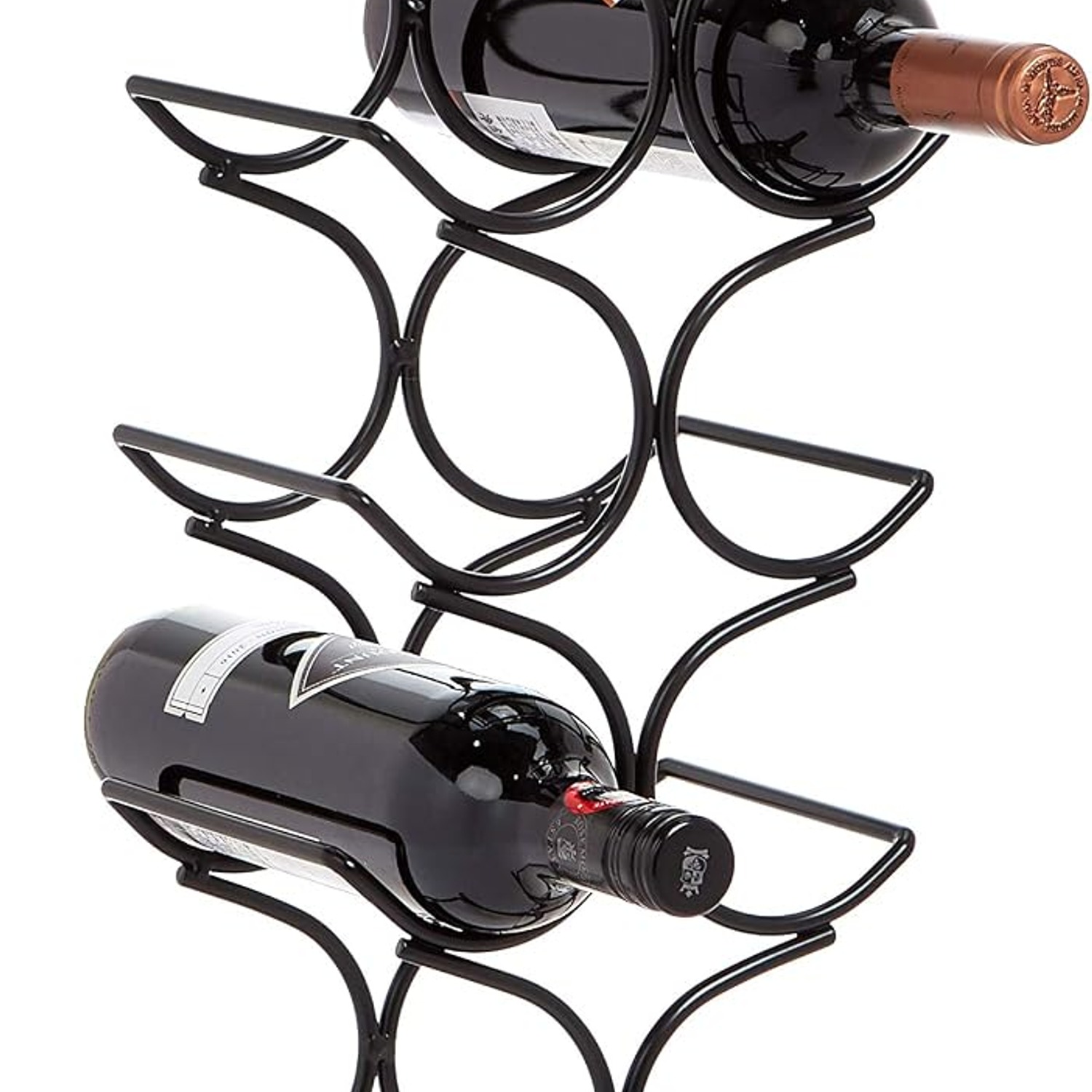
Natural cork needs moisture to stay sealed. When a bottle lies on its side, the wine stays in contact with the cork, the cork stays swollen, and the seal holds. Stand the same bottle upright for a long stretch and the cork dries from the inside. A dry cork shrinks slightly, air seeps past it, and the wine oxidises. You end up with something flat and tired instead of what you paid for.
This matters less for screw caps, which seal mechanically. But most homes have a mix of closures, and lying everything down costs nothing. This rack stores all twelve bottles horizontally, so you do not need to sort by closure type or remember which ones are at risk.
The second benefit of horizontal storage is purely practical. Lying bottles fit more densely and you can read the labels from the front, which makes picking a bottle quicker than rummaging through a shelf of upright necks.
Size, and why 16 cm matters more than you think
The specification that does the most work here is depth. At 16 cm deep, this rack fits where almost nothing else does.
Think about the gaps in your kitchen. The space between the fridge and the wall. The dead zone at the end of a run of cabinets. The strip beside a pantry door. These are usually 15 to 30 cm wide and they collect nothing but dust and the occasional broom. A rack this narrow turns that waste into useful storage.
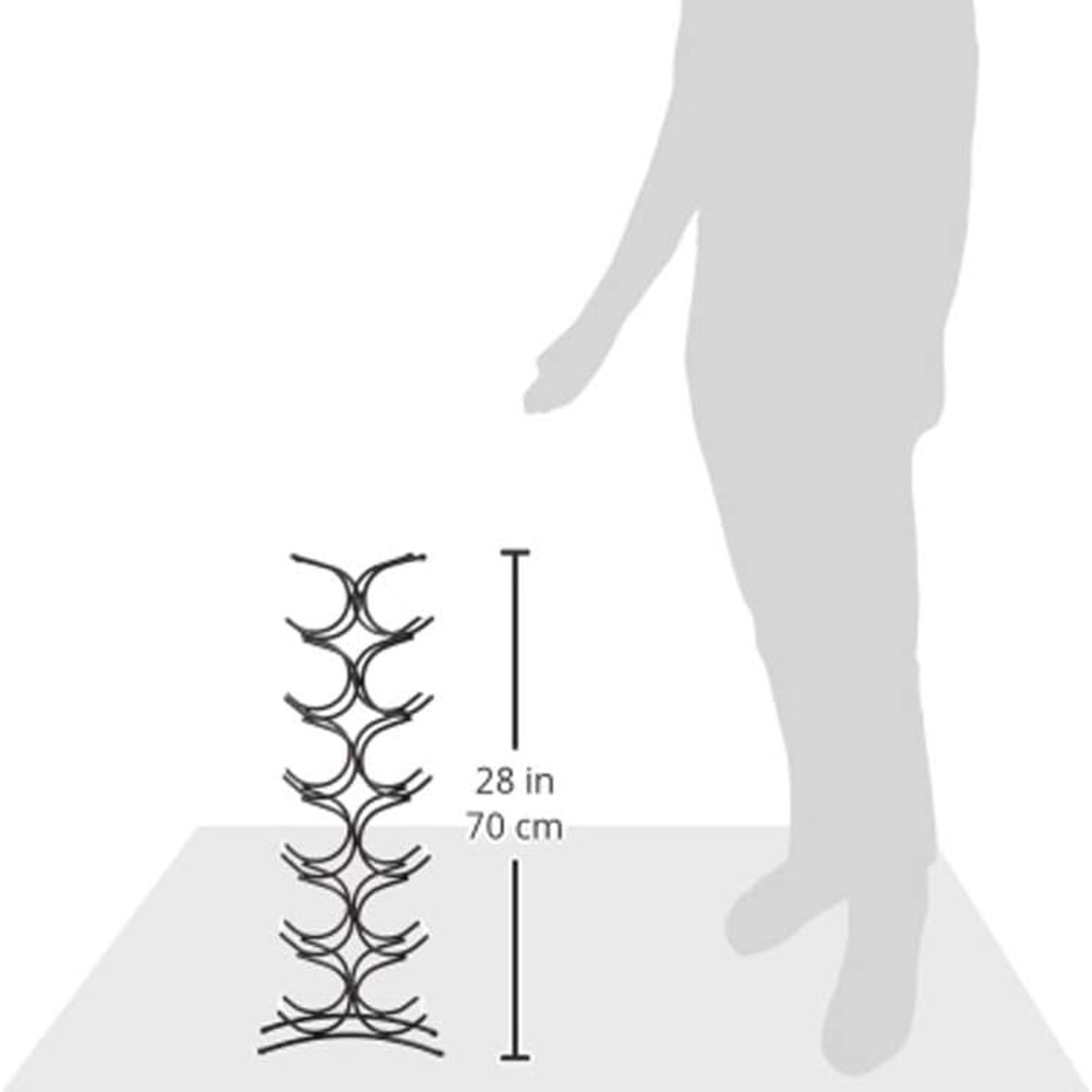
The width is 24.9 cm, which is roughly the span of a dinner plate. The height is 67.8 cm, so it comes up to about hip level on most adults. That height is worth checking twice if you plan to put it on a countertop. A standard kitchen counter sits around 90 cm high, and the gap to the overhead cupboards is often 50 to 60 cm. If that is your situation, the rack belongs on the floor or on a lower sideboard rather than the counter.
Measure before you order. Take the depth of your gap, the width, and the vertical clearance, and write all three down. A rack that is 3 cm too tall for the spot you planned is a frustrating thing to discover after unboxing.
What metal gives you
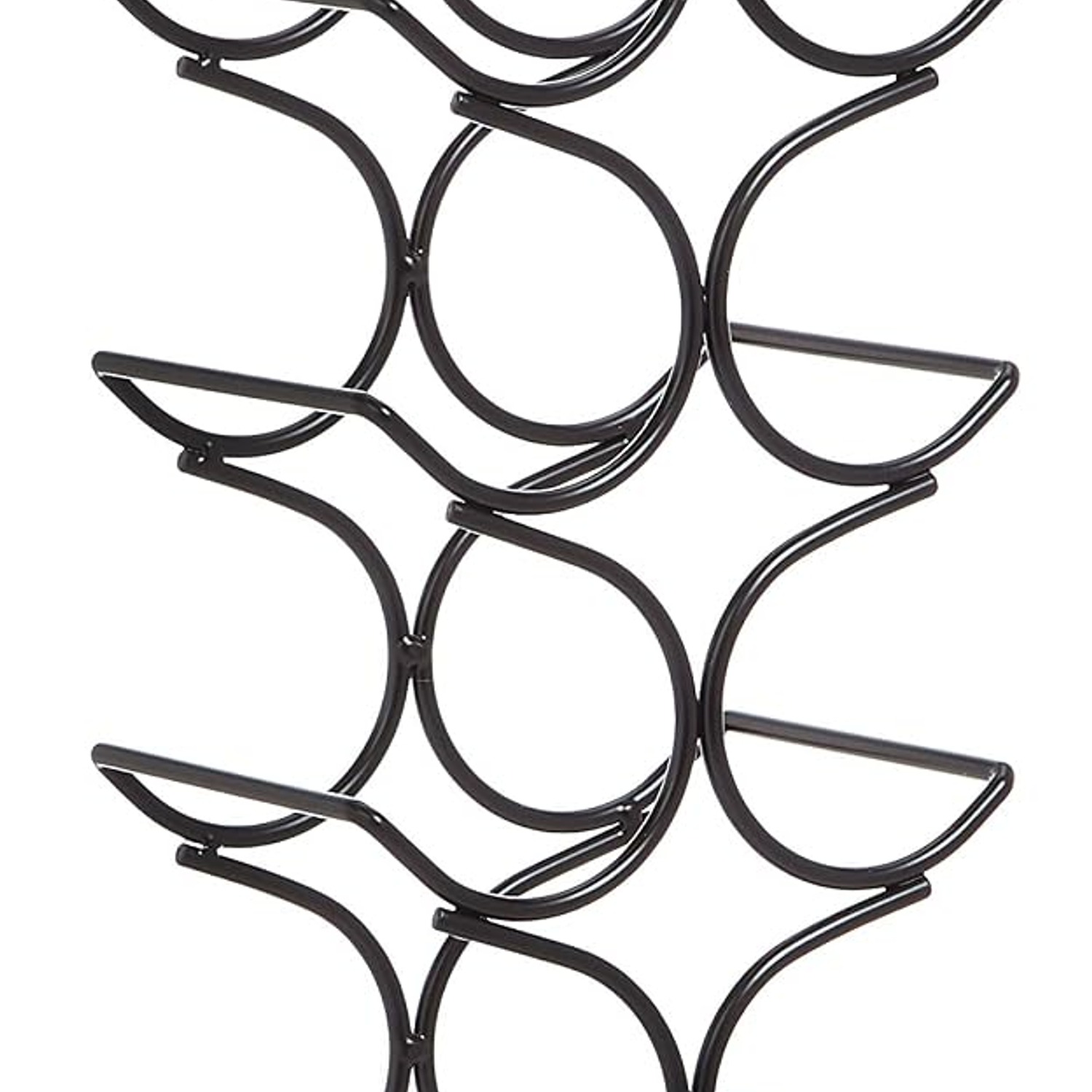
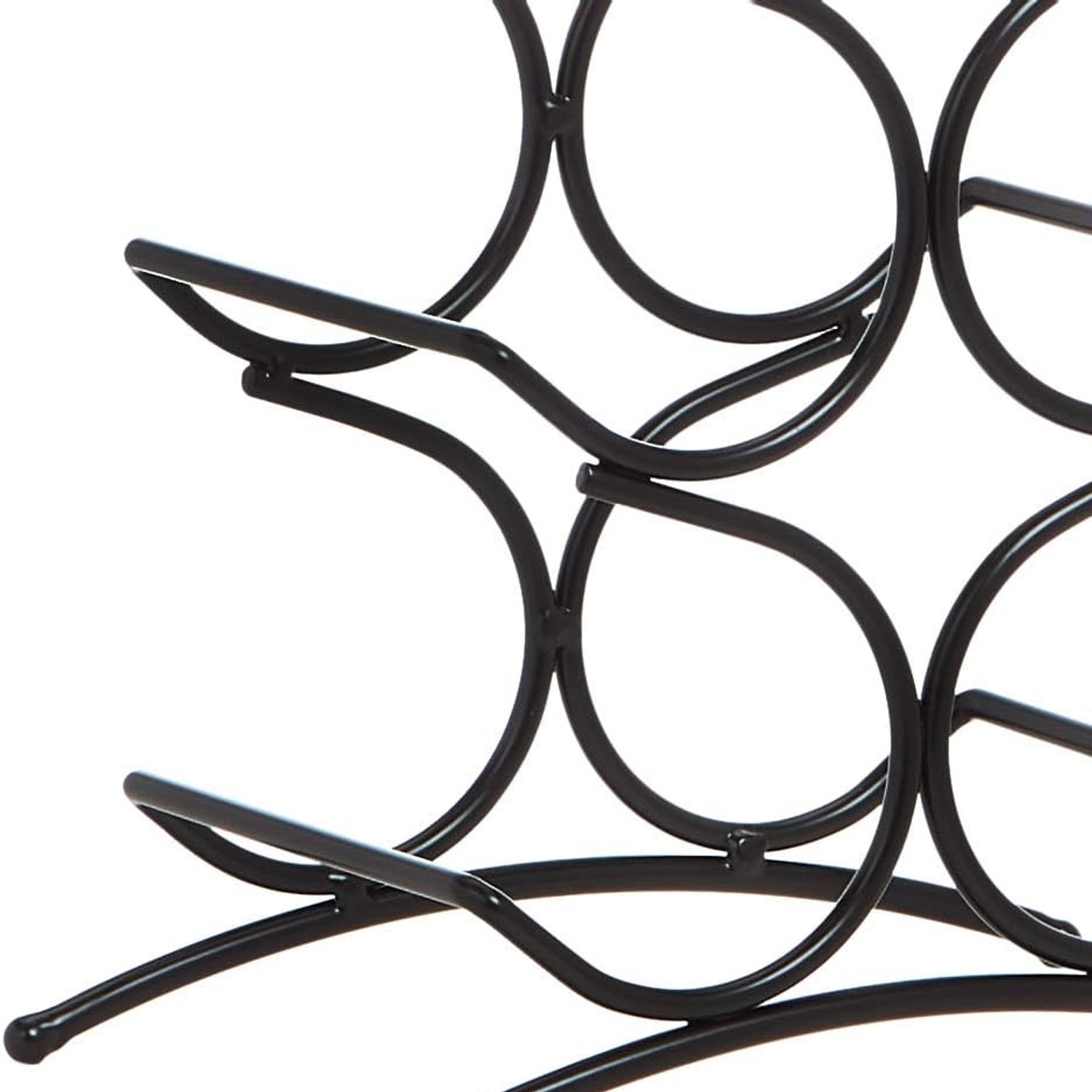
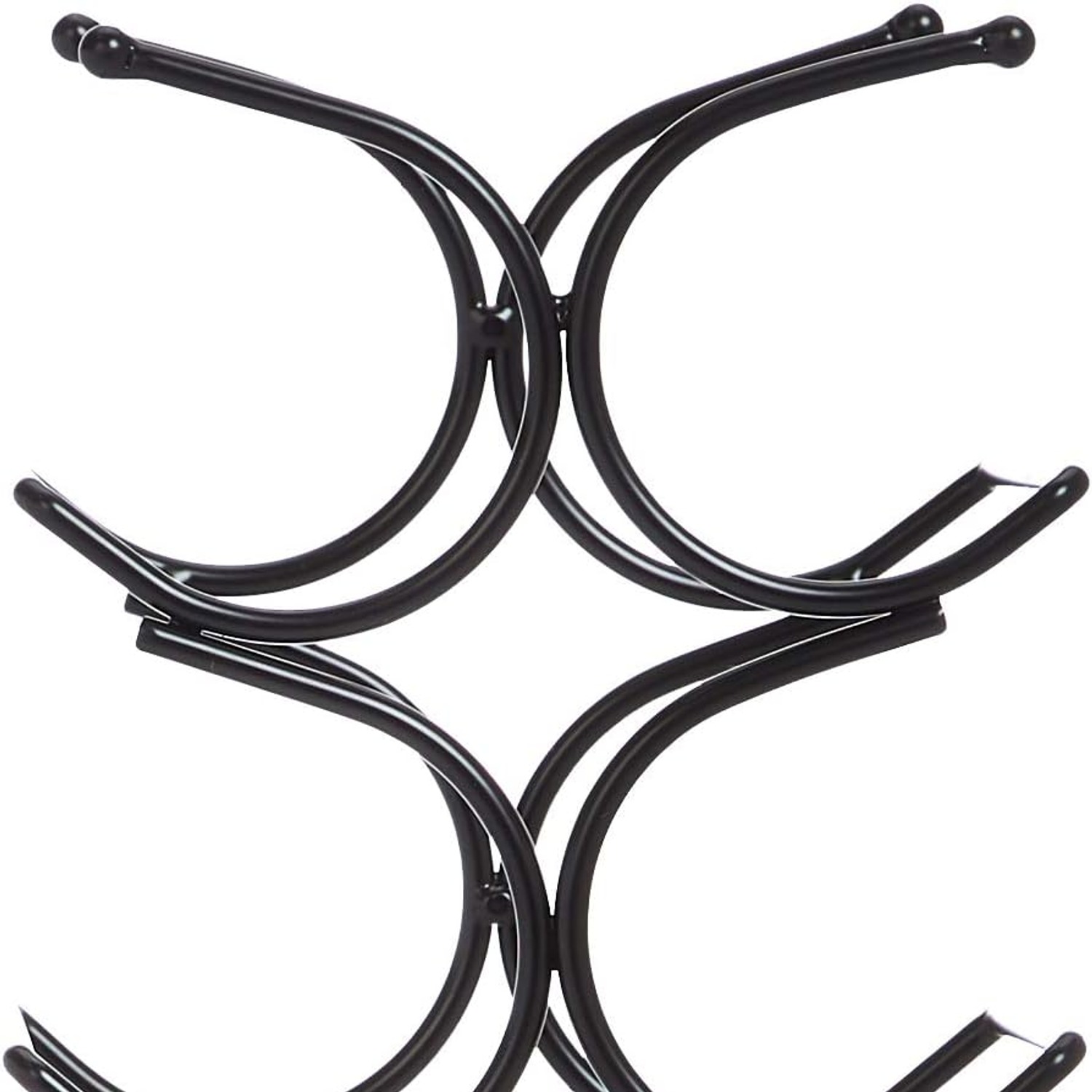
The frame is metal with a black finish. Compared to the alternatives, that combination has a few clear advantages.
Timber racks look warm but they are bulky. The shelves and uprights need thickness to carry the load, so a timber rack holding twelve bottles takes up noticeably more room than a metal one with the same capacity. Plastic racks are light and cheap but they flex under weight and tend to look like what they cost.
Metal gives you strength in a thin profile. That is the whole reason a 16 cm deep unit can safely carry a dozen full bottles, each weighing well over a kilogram. The empty rack is only 2.09 kg, which makes it easy to carry into position with one hand before you fill it.
Black is the other half of the equation. It is the most forgiving finish in a kitchen or dining room because it reads as a shadow rather than an object. It sits happily beside oak, white laminate, gray stone and stainless steel. If you have ever tried to match a timber tone to existing cabinetry and got it slightly wrong, you will appreciate how much easier plain black is.
Who this suits
This rack makes most sense for a few kinds of household.
Apartment dwellers get the most out of it. When floor space is measured carefully, a 16 cm deep unit that holds twelve bottles is efficient in a way bigger furniture is not. It also moves easily when you move house.
Casual collectors who keep a case or two on hand will find twelve is close to the right number. Enough to cover a dinner party, a gift or two, and the weeknight bottles, without pretending you need a cellar.
People setting up a small bar corner often pair a rack like this with a sideboard and a few glasses. At hip height it works as part of a serving area rather than something hidden away.
It is less suited to serious collectors with fifty bottles and a temperature controlled plan. It is also not the answer if you only ever have two or three bottles at a time, where a countertop stand would do.
Where to put it
Three things matter when you pick a spot.
First, keep it out of direct sunlight. UV breaks down wine over months and fades labels faster than that. A north facing window in full afternoon sun is the worst place in the house for a wine rack.
Second, avoid heat. Next to an oven, a dishwasher vent, a fridge compressor or a heater, the temperature swings constantly. Wine prefers a steady, cool temperature, and swings are harder on it than a slightly warm but stable spot.
Third, mind vibration. Constant shaking disturbs sediment in older reds. On top of a washing machine is a poor choice, and so is a spot where a heavy door slams against the wall all day.
A hallway cupboard alcove, the shaded end of a kitchen, or a dining room sideboard against an internal wall will all do nicely.
Loading and keeping it steady
Load from the bottom shelf up. It keeps the center of gravity low, which matters once you are carrying over fifteen kilograms of glass and liquid. Make sure the floor or counter underneath is flat and firm. On a soft rug the rack can lean slightly, and a lean plus a full load is not what you want near a wall of glass.
If the rack rocks even a little, move it rather than shimming it. A level base is the simplest safety measure there is.
Care
Care takes about thirty seconds a month. Wipe the metal with a dry cloth to lift dust. If something sticky has dripped on it, use a barely damp cloth and dry the metal immediately so you do not leave water marks on the finish.
Skip the scourers, the scouring powder and the strong solvents. All three can scratch or dull a painted black surface, and once the finish is marked you cannot really put it back.
Pull the bottles out once or twice a year and give the shelves a proper wipe. It takes five minutes and it is a good chance to notice the bottle you forgot you had.
The short version
Twelve bottles, metal frame, black finish, 16 cm deep and no assembly. That is the whole pitch, and it is enough.
If you have wine sitting in boxes or scattered across three different surfaces, this gives it one place to live. Measure your gap, check the height clearance, pick a spot away from sun and heat, and load it from the bottom up. It is a small piece of furniture that quietly fixes a problem most homes have never properly solved.