
The complete guide
How To Choose A Countertop Wine Rack That Actually Fits Your Kitchen
The problem with loose bottles
Wine has a habit of piling up in the wrong places. A couple of bottles from dinner last weekend, one somebody brought over, one you are saving. They end up standing in a corner of the counter, behind the toaster, or lying flat in a cupboard where they roll every time you open the door.
Standing bottles upright for weeks is not ideal either, because the cork can dry out and shrink. And loose bottles on a counter are simply in the way. You shuffle them to chop vegetables, you shuffle them back, and eventually one gets knocked.
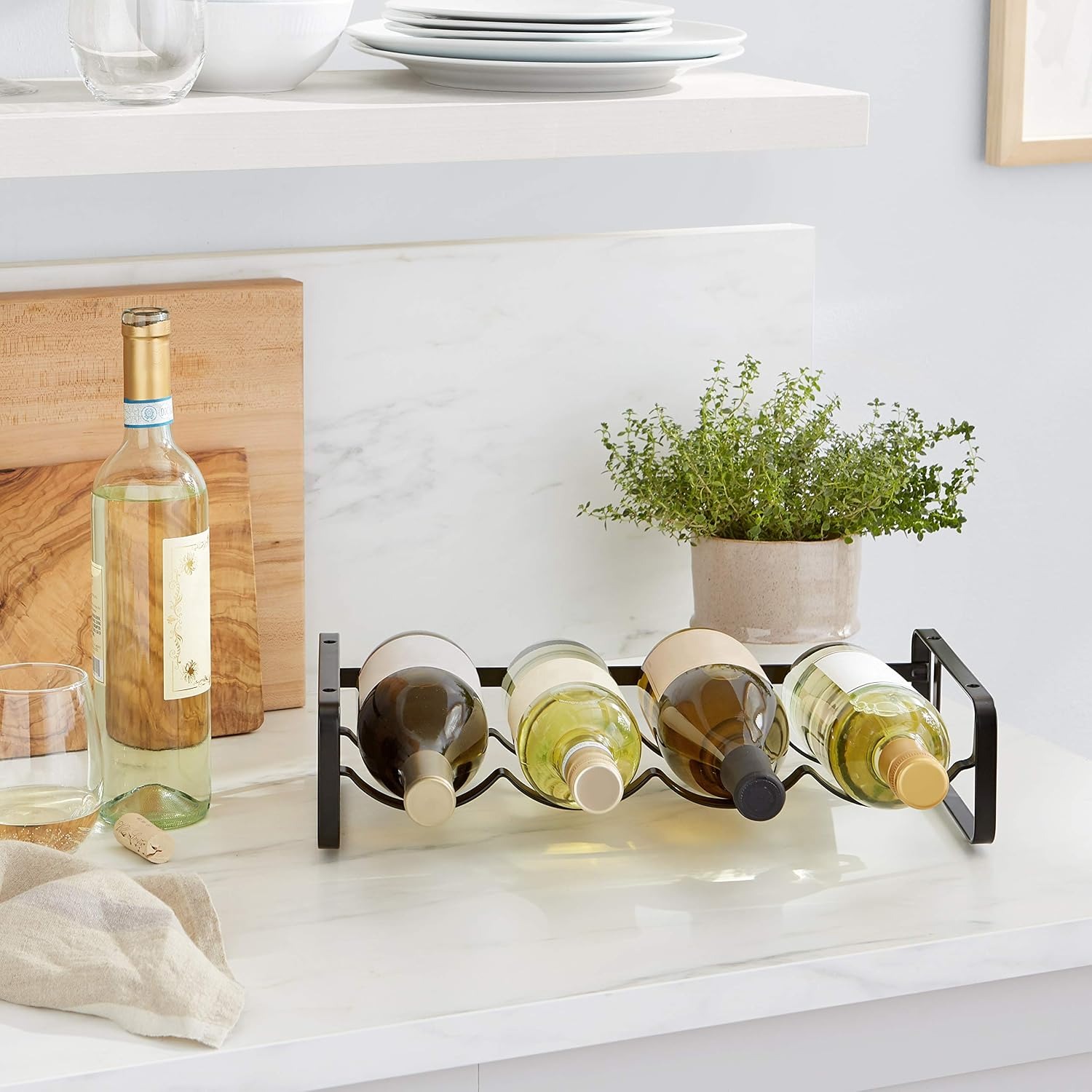
A countertop wine rack fixes a small, annoying problem. It gives four bottles a fixed address, lays them on their side the way wine likes to be stored, and keeps them from wandering around the kitchen.
How this rack works
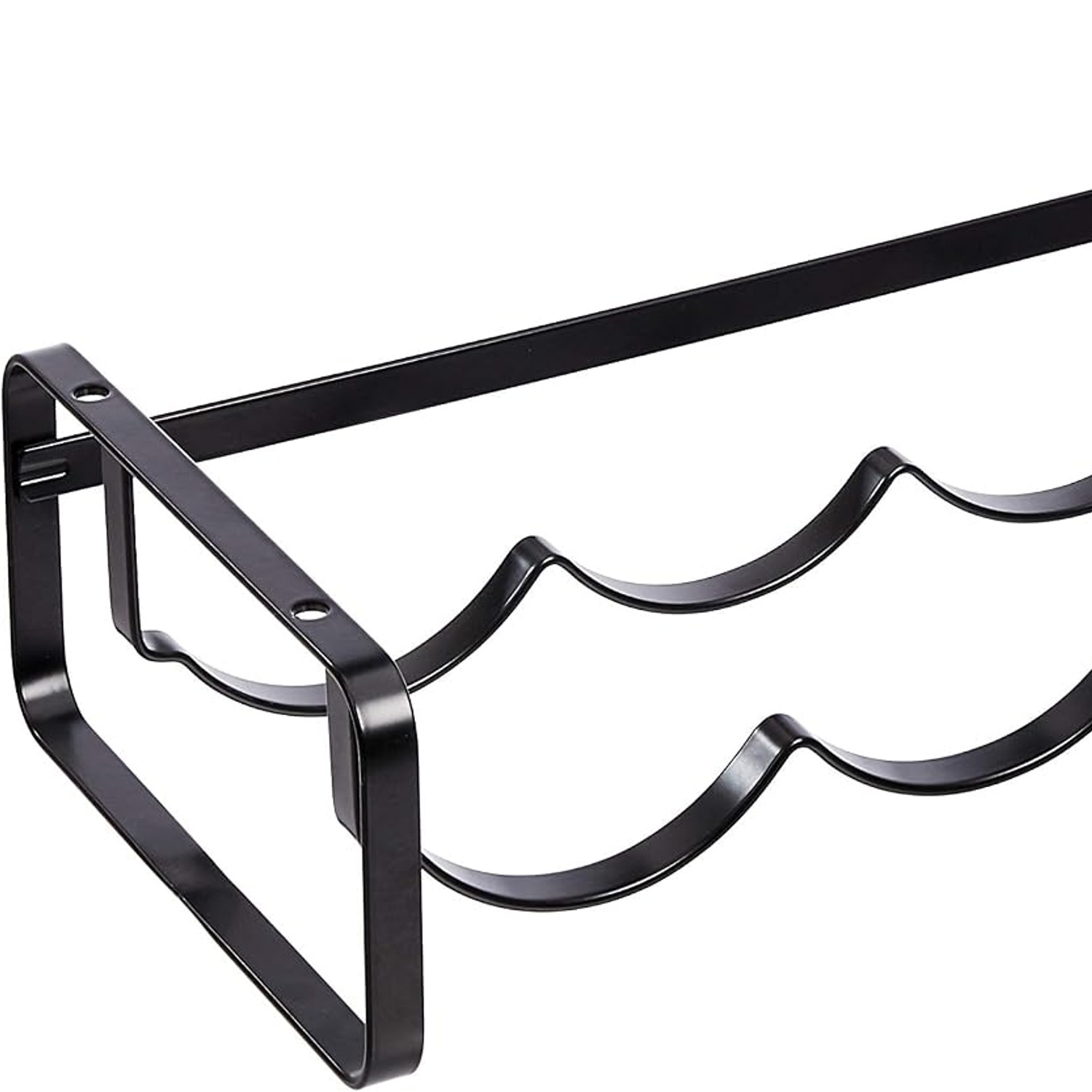
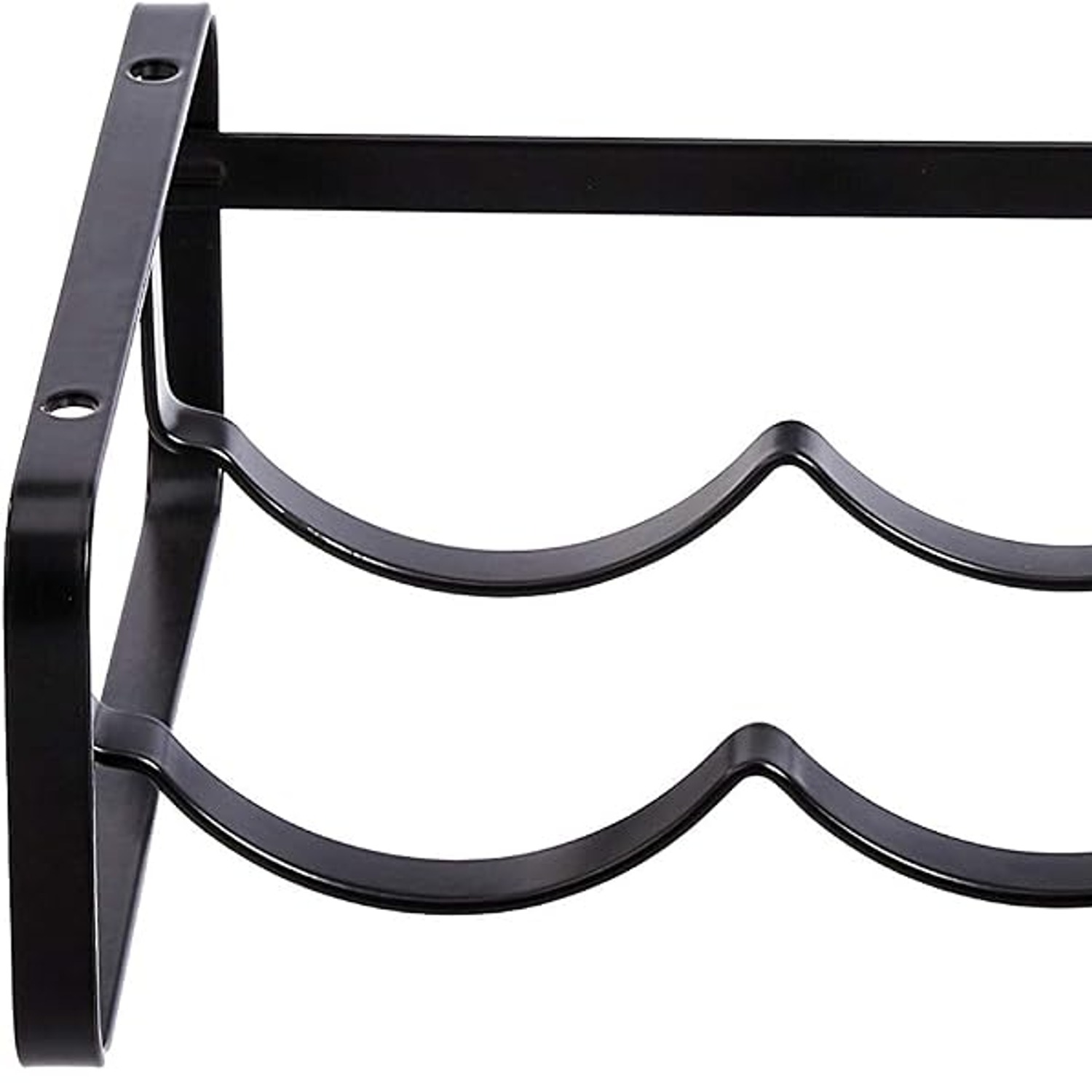
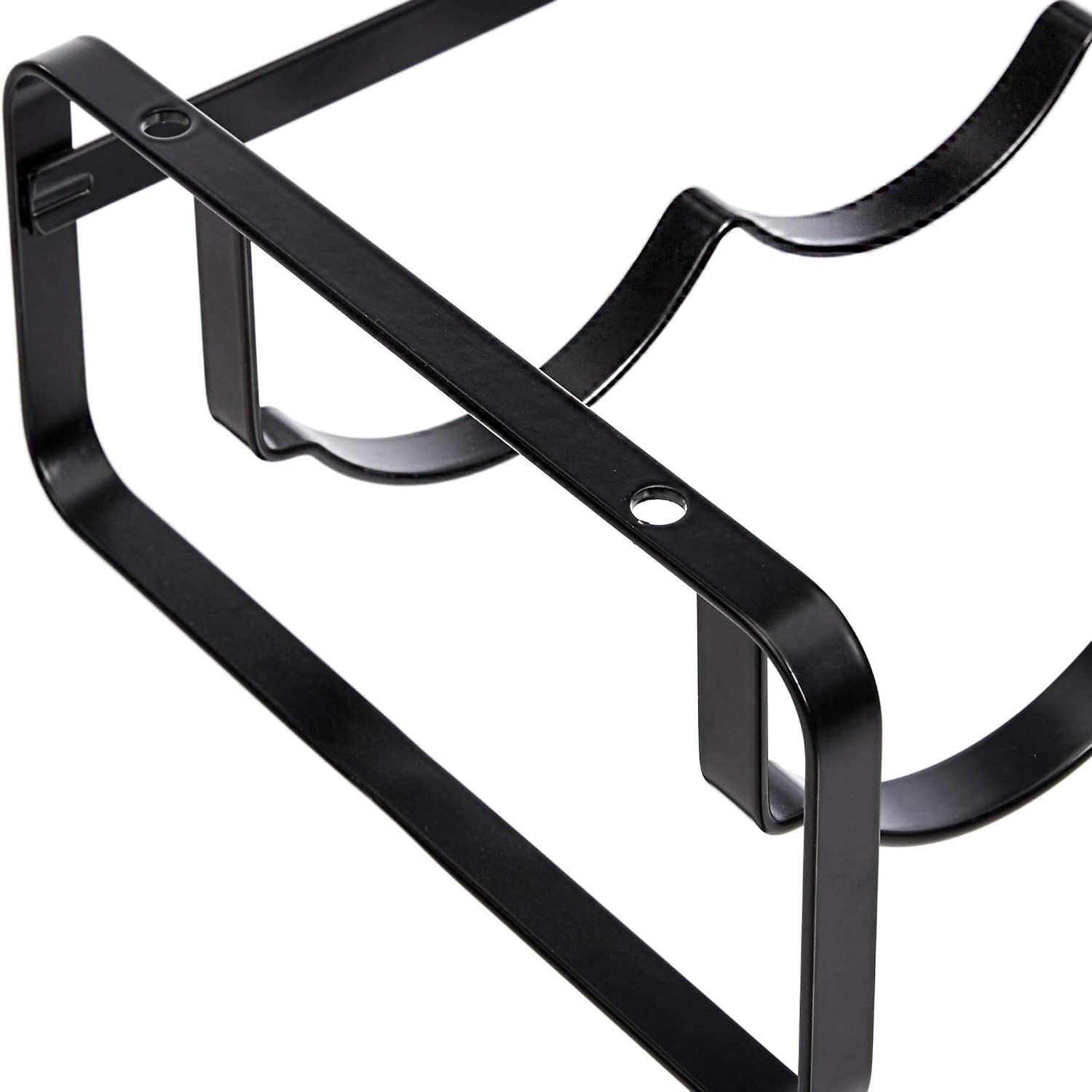
The design is a wave. Instead of a flat shelf, the steel is bent into a repeating curve so that each bottle drops into its own recess. That recess does the work. The bottle sits down in the dip rather than balancing on a flat plane, so a bumped counter or a closing drawer will not send it rolling.
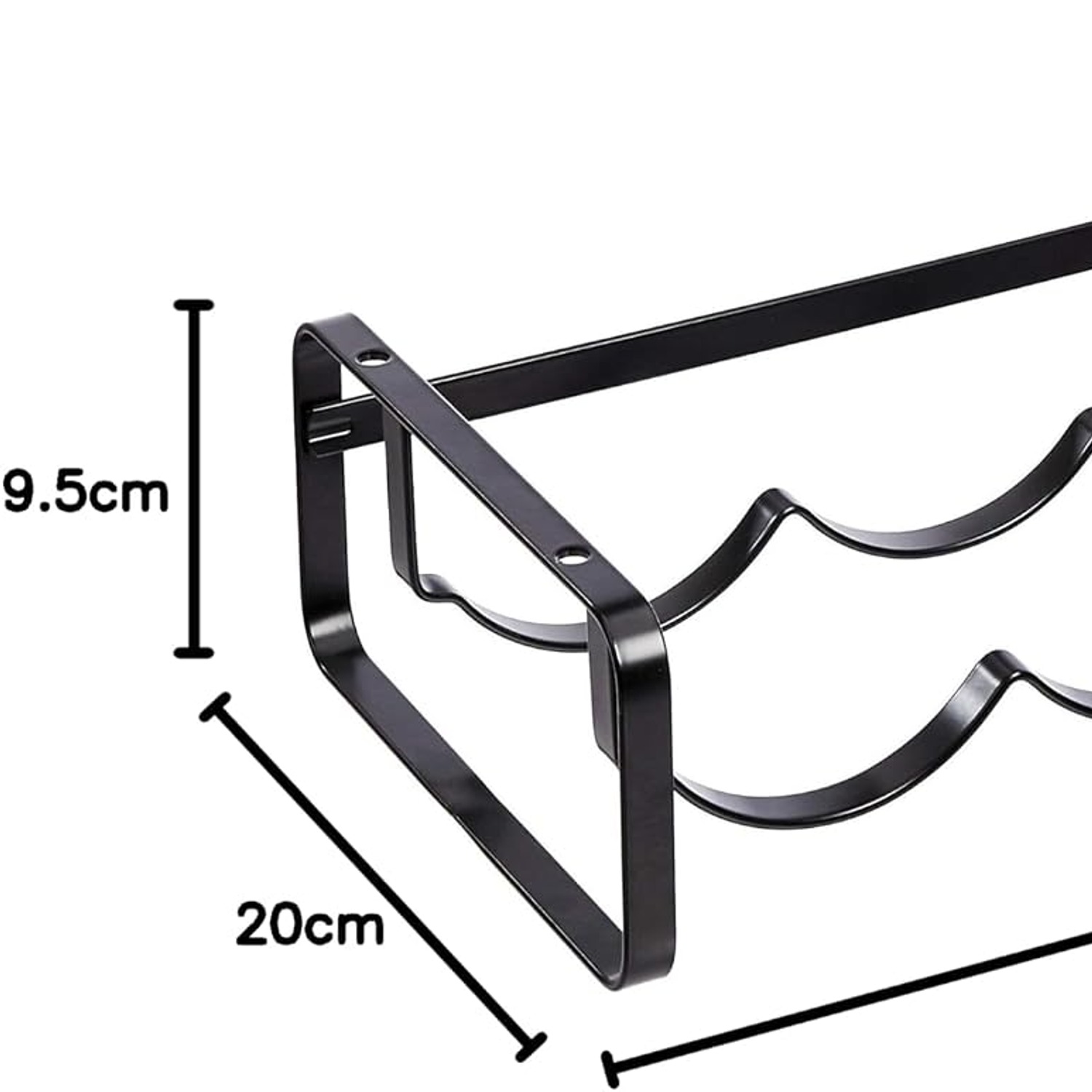
Four cradles across 40 cm of width means four standard wine bottles with a comfortable gap between them. The whole rack is 9.5 cm deep and 20 cm high, which is the spec that decides whether it works for you. Twenty centimeters of height is low enough to slip under most wall cabinets and onto most pantry shelves. Nine and a half centimeters of depth is shallow enough to sit along the back strip of a counter without encroaching on your working space.
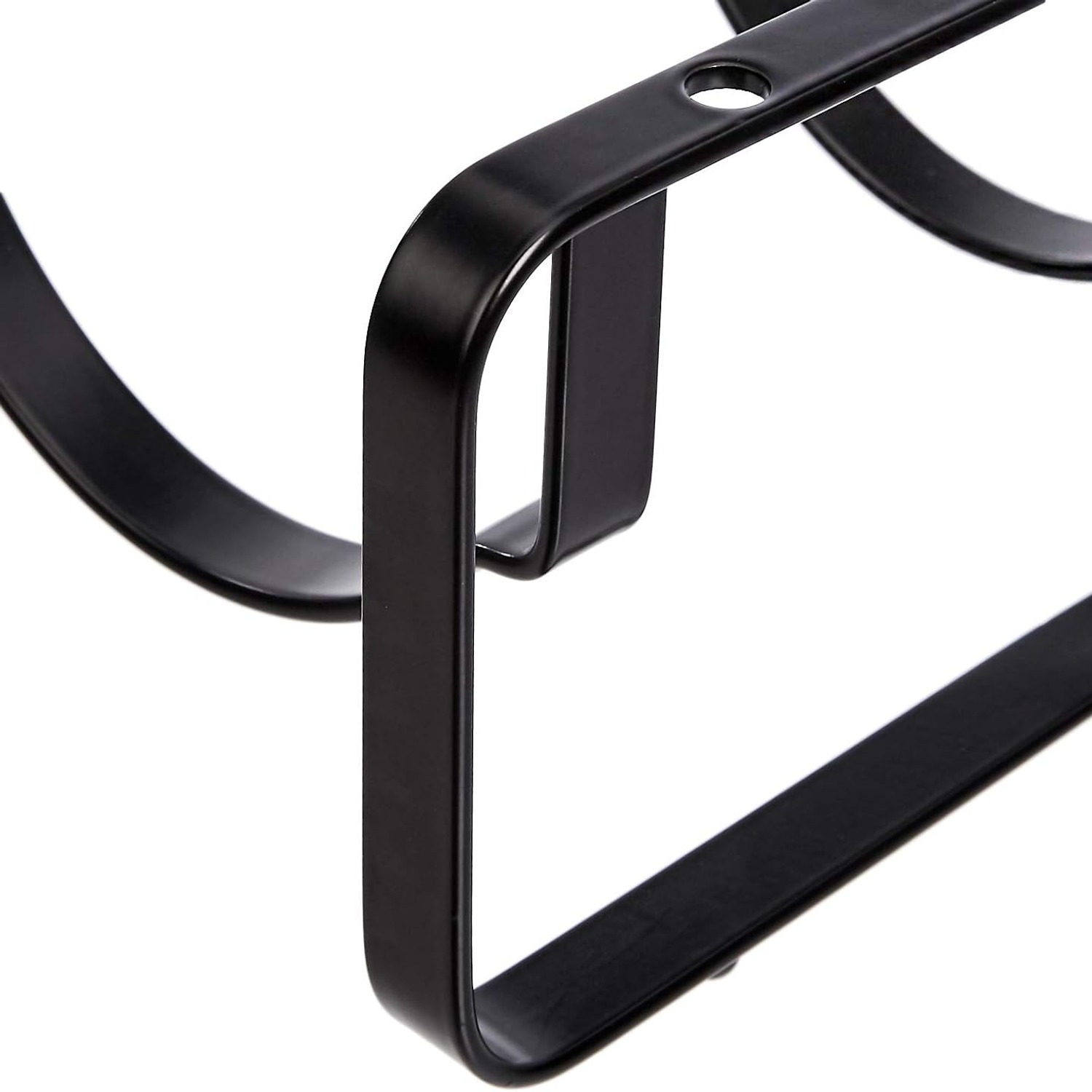
The frame is metal alloy steel in black. Steel is what keeps the profile this slim. A timber rack holding four bottles needs thicker sections to stay rigid, which pushes the footprint out. Steel also means there is nothing to re-glue, re-oil or tighten in two years.
It weighs 635 g empty. Light enough to lift and wipe underneath, substantial enough that it does not slide around when you pull a bottle out.
Stacking, and why it matters
Most people start with four bottles and end up with more. The usual answer is to buy a bigger rack and throw the small one away. This one stacks instead, up to three tiers.
Three racks together hold twelve bottles while still using the same 40 by 9.5 cm patch of surface. You grow upward, not outward, which is the only direction most kitchens have spare. There is no connector or hardware involved. The second rack sits on the first, the third sits on the second.
A practical tip. Load the bottom tier before you add the next rack, and keep the heaviest or most awkward bottles down low. It is the same logic as packing a box.
If you live in a rental, this stacking idea matters more than it sounds. You cannot drill a wall for a mounted rack and you probably do not want a floor-standing cabinet in a kitchen you will leave in a year. A stack of three countertop racks is portable, needs no fixings, and packs into a moving box easily. People hunting for the best wine rack for a rental kitchen tend to land here for exactly that reason.
Who it suits
This rack is for the everyday drinker rather than the serious collector. If you have four to twelve bottles at any one time and you want them organized and reachable, it is a good match. Apartment kitchens, bar carts, sideboards, the shelf above a fridge, a pantry, a small home office bar, they all work.
It is also a sensible gift. It needs no assembly and no decisions from the recipient, so a housewarming or a birthday gift lands well. That is why it turns up on lists of the best wine gift for new homeowners.
Who it does not suit. If you are storing fifty bottles for years, you want a dedicated cellar unit or a temperature-controlled cabinet. A countertop rack keeps bottles tidy and correctly oriented, but it cannot control temperature or block light.
How to choose, step by step
Start with the tape measure. Width is 40 cm. Depth is 9.5 cm. Height is 20 cm. Check all three against the spot you have in mind, and if you plan to stack, multiply the height by the number of tiers before you check cupboard or shelf clearance.
Then think about the surface. A counter with a splashback is ideal because the rack can sit snugly against the back wall. A sideboard works if the top is deep enough that the rack is not perched near the edge. A bar cart works if the shelf is stable and you do not plan to wheel it around constantly.
Next, think about light and heat. Wine does not like either. Direct afternoon sun through a kitchen window will cook a bottle faster than most people expect, and the strip of counter next to an oven goes through daily heat cycles. Pick a shaded, stable spot. This makes the difference between storing a bottle for a few months and watching it deteriorate.
Consider bottle shapes too. Standard 750 ml still wine bottles are the design target. Sparkling and champagne bottles are wider and heavier, so test one before assuming a full row will fit. Burgundy-shaped bottles with wider shoulders also take up more room than a slim Bordeaux shape, so four of them may feel snug.
Finally, decide on quantity up front. If you already own eight bottles, buy two racks now rather than one. Buying the matching rack later works, but ordering together keeps the finish consistent and saves a second delivery.
Looking after it
Maintenance is about as light as it gets. Wipe the steel with a dry cloth when you dust the counter. If a drop of wine runs down a bottle neck and onto the frame, wipe it with a barely damp cloth and dry it straight away. The thing to avoid is letting moisture sit in the cradles.
Skip abrasive pads, scouring powder and harsh solvents. They scratch finishes and dull the look. There is no dishwasher option here, so hand cleaning only.
When you wipe down your counter, lift the rack instead of dragging it. At 635 g empty that is easy, and it saves the countertop from scuff marks. Take the bottles out first if you are moving a stacked set.
Rotate your stock while you are at it. Pulling the oldest bottle forward each time you add a new one is a thirty-second habit that stops a bottle sitting forgotten at the back for three years.
The short version
This is a four-bottle countertop wine rack in metal alloy steel, black, 40 cm wide by 9.5 cm deep by 20 cm high, weighing 635 g. Each bottle sits in a recessed wave cradle so nothing rolls. It needs no assembly, and it stacks up to three tiers for twelve bottles in the same footprint.
Measure your spot, keep it out of sun and heat, wipe it with a dry cloth, and add tiers when the collection grows. For most kitchens that is the whole story.